Why a Granite Marker Costs More Than Its Stone
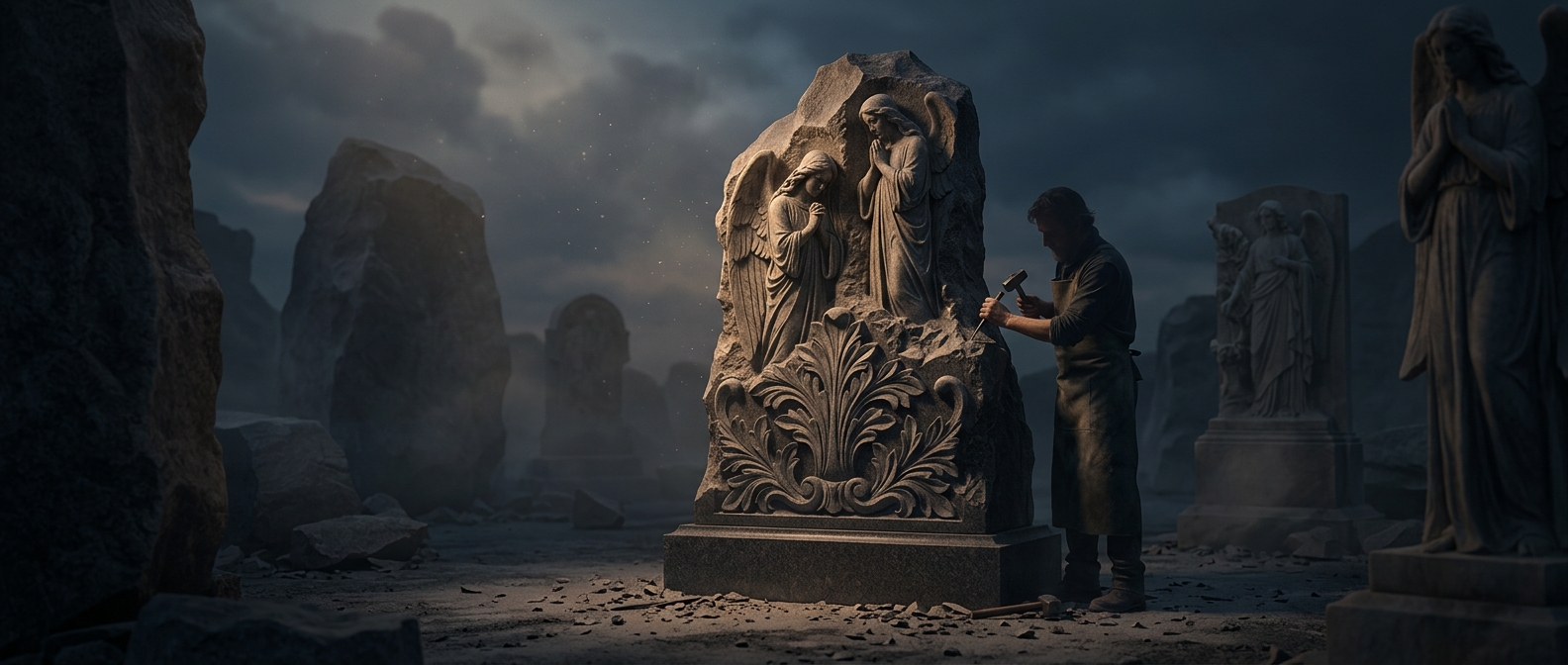
The price of a memorial reflects more than the raw block. Granite is hard and durable, but that hardness makes shaping and lettering a controlled industrial job rather than a simple matter of carving by hand. A stonecutter must turn a heavy, rough piece into a finished surface, then place names and designs so they remain legible and balanced on it.
Precision Adds Labor and Equipment
Cutting, smoothing, and lettering call for different tools and skills. A mistake in the lettering can be difficult to correct once it has been cut into the stone; layout therefore matters as much as operating the machinery. Carving creates letters by removing stone, while laser etching uses a machine to mark a design onto the surface. Either approach requires setup and careful positioning, especially when a marker includes more than plain text.
That work helps explain why two markers made from similar granite can have different prices. A standard design can use a repeatable production process. A custom shape, elaborate lettering, or detailed image demands additional planning and machine time, and may require more hands-on finishing. Buyers are paying for the transformation of the stone and the precision of its inscription, not just for the material.
A Heavy Object Must Also Be Finished and Handled
The marker’s size brings another practical constraint: granite is cumbersome to move, so cutting and finishing must be coordinated with safe handling and delivery. The cost accumulates across the stages between block and finished memorial. The result is a lasting object whose apparent simplicity—a name cut into stone—depends on specialized work that is easy to overlook.