The furnace must do more than start a fire
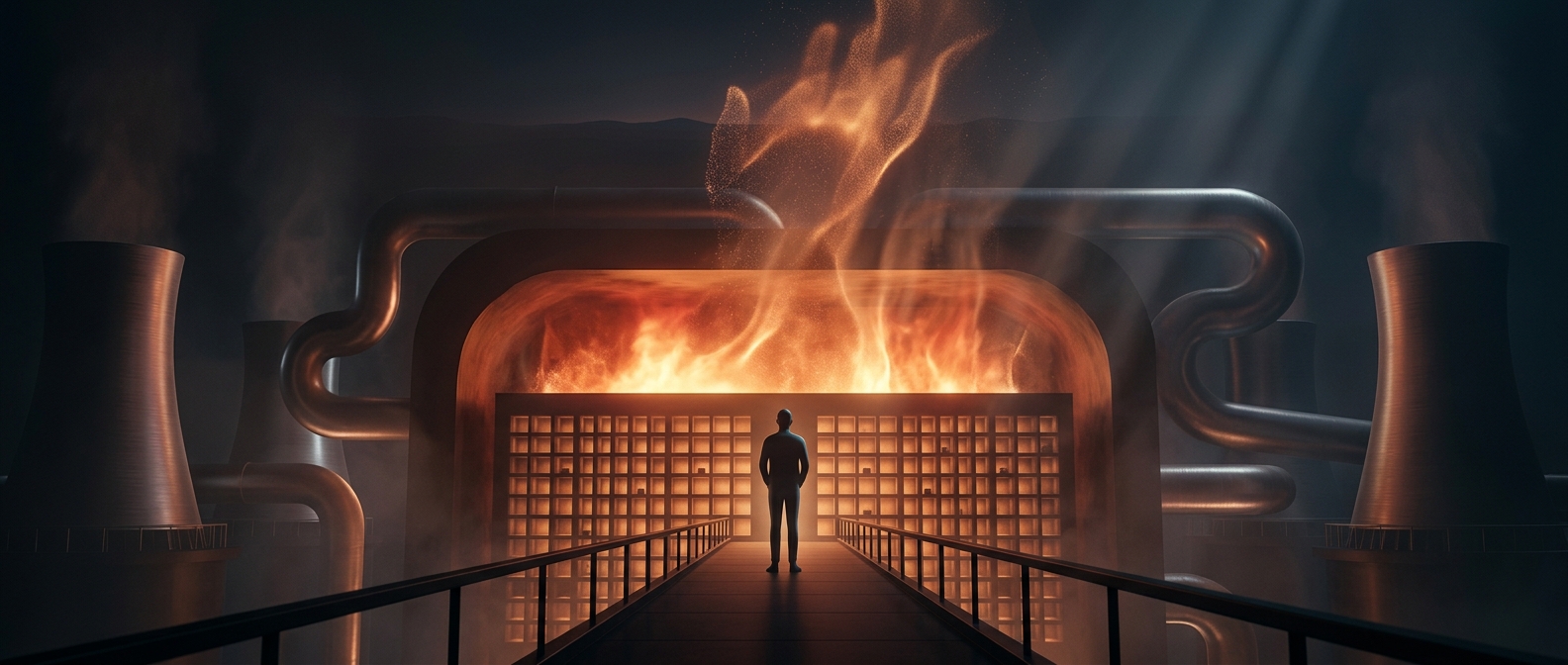
A cremation chamber is an insulated industrial furnace, not an open flame. Before the process can proceed, the chamber must reach a high operating temperature. Then it has to supply heat continuously as the body warms, loses water, and breaks down through combustion. Evaporating water takes substantial energy, while the furnace also loses heat through its walls and exhaust.
That is why briefly igniting the contents would not be enough. The chamber’s heat has to remain steady so the process can continue reliably rather than stall as energy is absorbed by the load or carried away in hot gases.
Heat is an operating cost, not just a fuel bill
Fuel or electricity is only part of the cost of running a crematorium, but the furnace’s energy demand makes each operating cycle a significant expense. Operators have to balance reliable completion against the cost of keeping equipment hot and managing the hot exhaust. A well-insulated chamber can reduce heat escaping through its walls, but it cannot eliminate the energy needed to heat the contents or replace losses during operation.
The practical consequence is that cremation’s energy use comes from maintaining controlled conditions throughout a long process—not from a dramatic burst of flame. The furnace must keep doing work after ignition, when the visible fire is only one part of what is happening inside.