Why a turbine blade has a wooden core
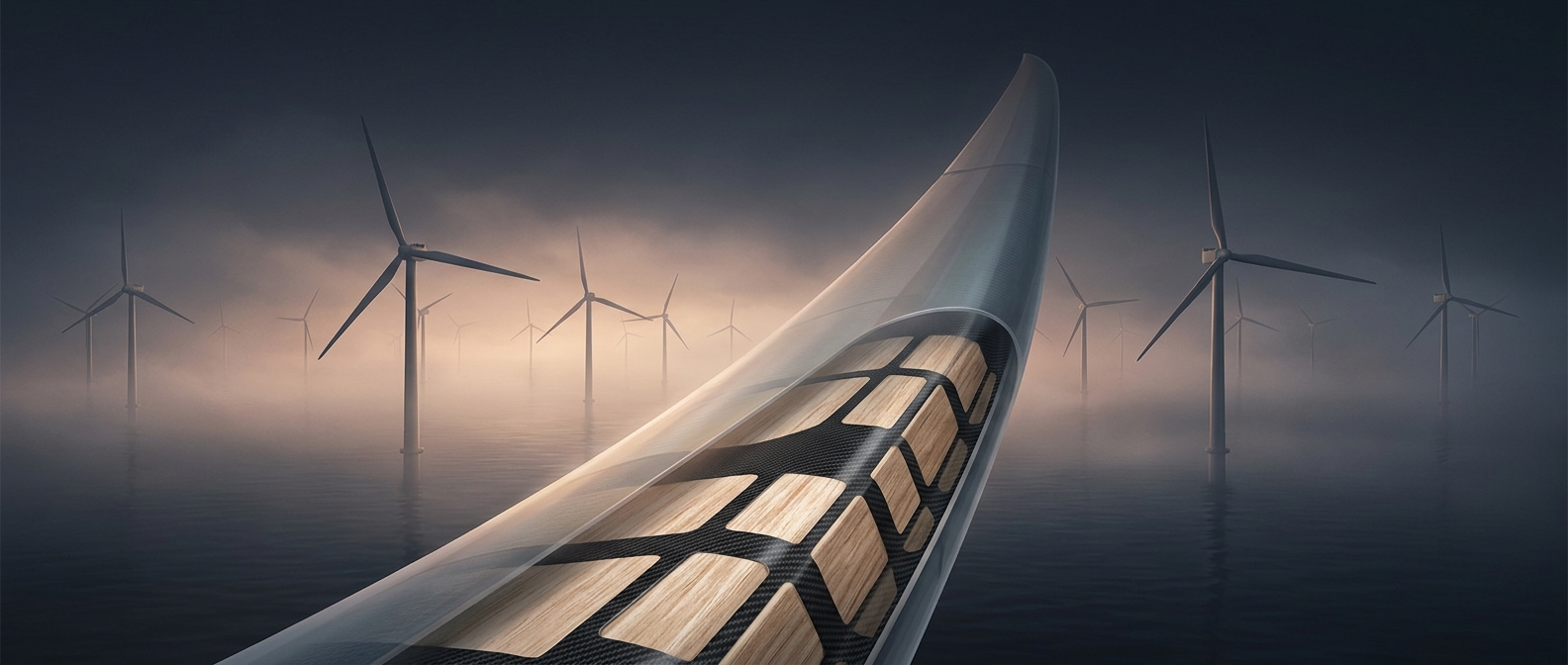
A wind-turbine blade is not a solid slab of fiberglass. It is a large, layered structure: strong outer skins surround a lightweight core. That arrangement works like a stiff panel, resisting bending without making the whole blade prohibitively heavy. Balsa is useful because its low weight and cellular structure let it support those outer layers while adding stiffness.
The choice has consequences beyond the factory. As blades have grown, manufacturers have needed more core material, and balsa harvested in equatorial regions has become part of a global supply chain. When demand rises quickly, buyers can compete for wood faster than reliable, carefully managed sources can expand. That can make harvesting in natural forests more attractive, especially where oversight and traceability are weak.
The tradeoff behind “green” materials
Balsa is not the only possible core; engineered foams and other materials can also be used. But changing materials means weighing more than a blade’s performance. Manufacturers must consider cost, availability, manufacturing methods, and whether a substitute can meet the structural demands of a very large blade.
That creates an uncomfortable link: a material chosen to keep renewable-energy equipment light can put pressure on forests if its supply is not responsibly managed. The environmental benefit of a turbine therefore depends partly on an ordinary industrial question—where its core wood comes from.