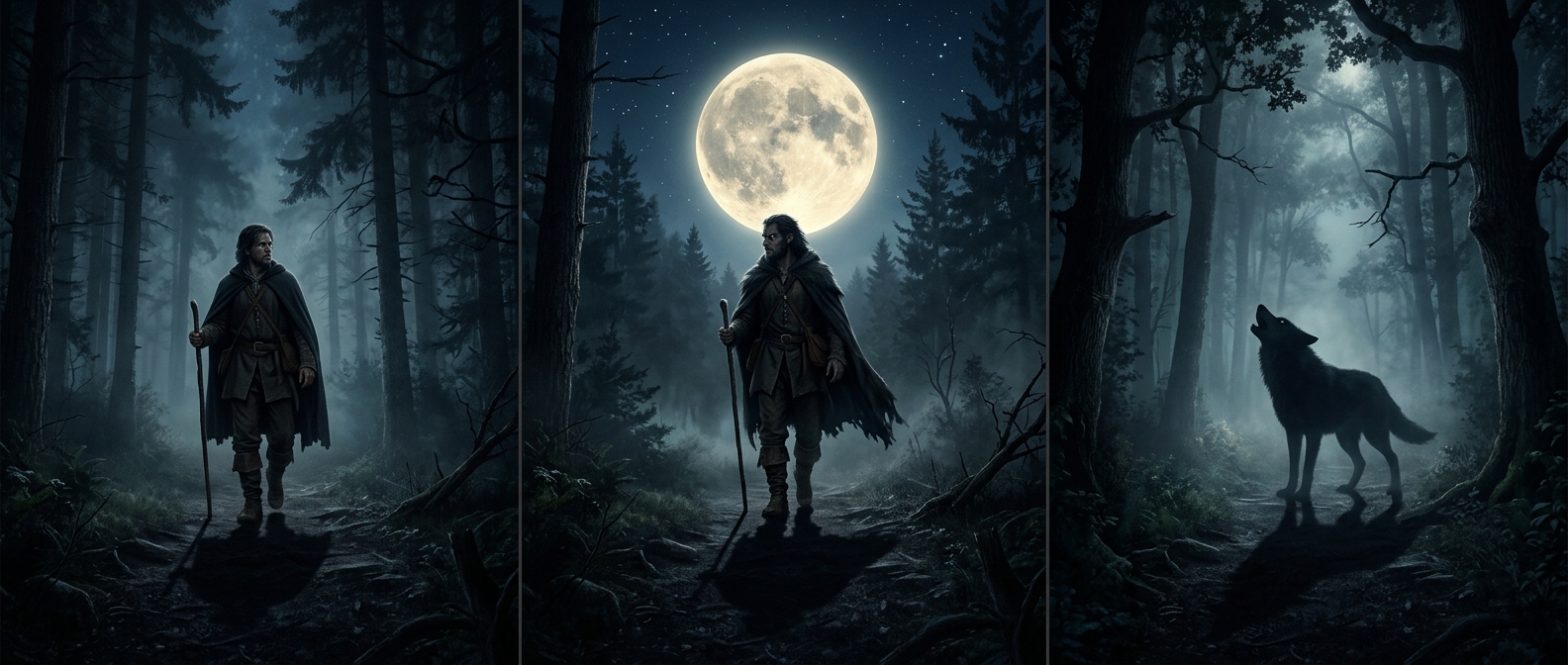
When a Wolf Could Be a Neighbor
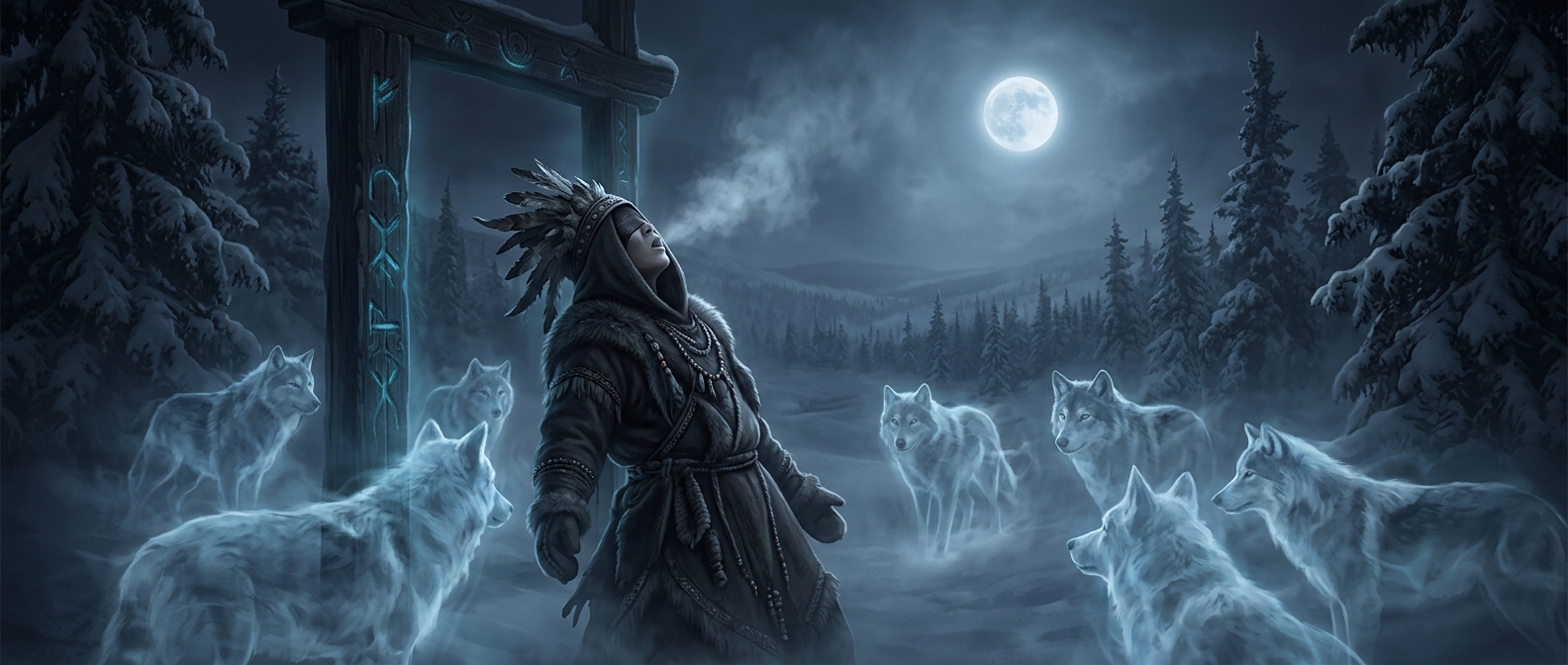
The werewolf story made a frightening possibility feel personal: the danger outside the farm might have a human face. In a world where people and livestock lived close to forests, a wolf’s presence could threaten animals and unsettle anyone traveling after dark. Folklore added a further uncertainty—not simply what was prowling, but who it might be once daylight returned.
This idea belongs to a broad European tradition of human-animal transformation, not to one uniform set of beliefs shared by every German village. Stories varied, but the shifting between person and beast gave them a powerful social edge. A wolf could be imagined as an outsider in the woods; a wolf in human form brought that danger into the village itself.
Moonlight as a Boundary
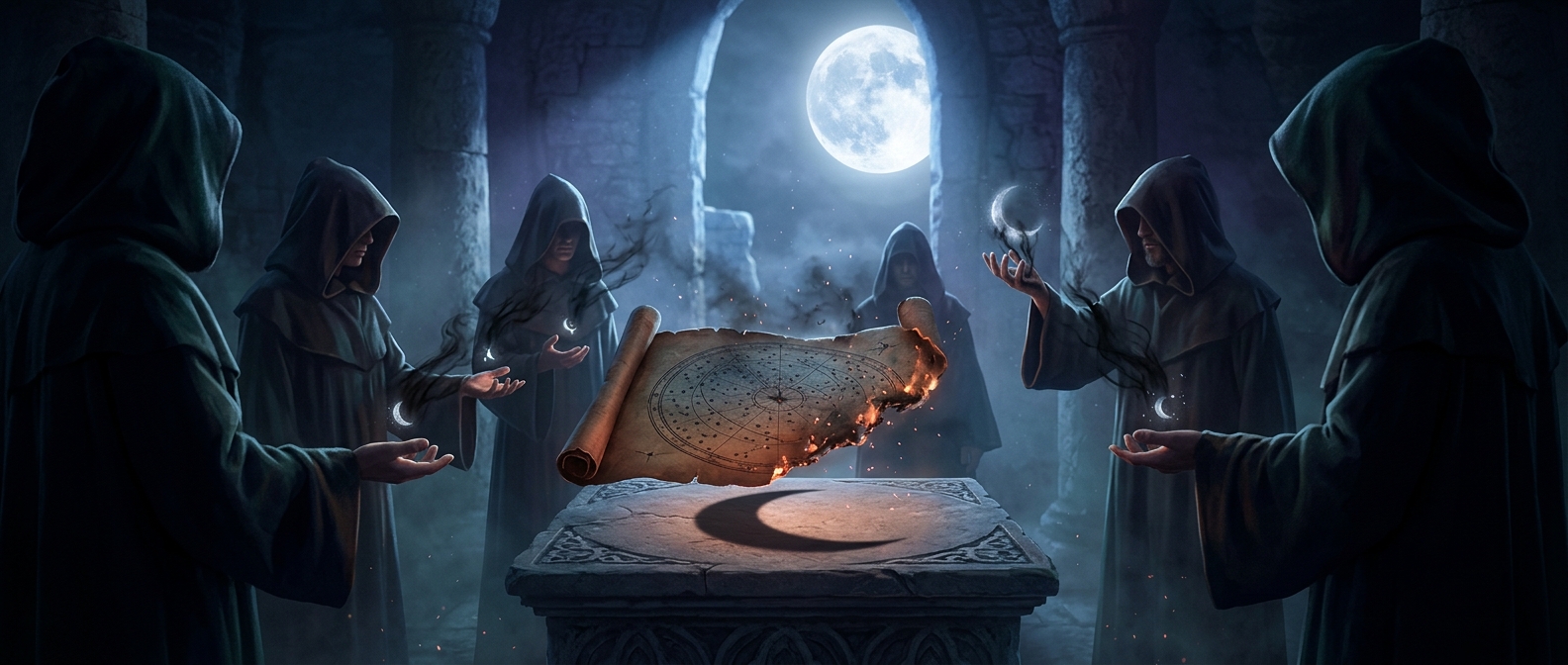
Night helped the transformation feel plausible. In dim light, a distant shape or sound was hard to identify, and a howl could make the forest seem close. The full moon, bright enough to reveal movement but not enough to make it clear, offered an especially vivid setting for stories about crossing from one form of life to another.
Such tales did more than explain an animal’s appearance. They turned the ordinary limits of safety—home versus forest, human versus beast, neighbor versus stranger—into uncertain boundaries. That is why the most unsettling detail was not merely a wolf on the path: it was the thought that the person seen by day might belong to the forest at night.