Why astrology belonged in a university curriculum
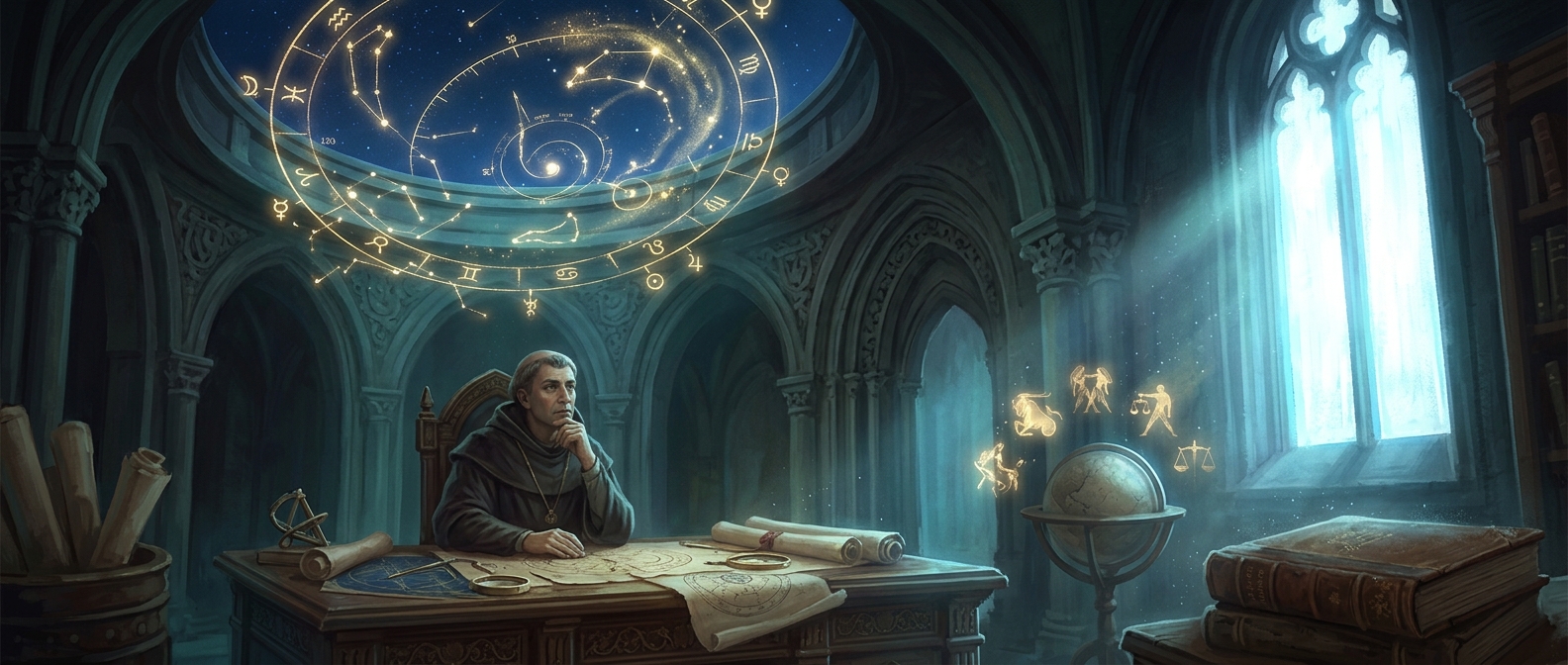
For many medieval and early modern Europeans, astrology was not a separate pastime so much as a practical use of astronomy. To cast a horoscope, practitioners had to calculate where the Sun, Moon, and planets appeared in the sky. Those calculations connected astrology to mathematics, while its proposed influence on the body connected it to medicine.
Medical astrology offered a way to interpret illness through the heavens. A physician might consult a patient’s horoscope or the positions of celestial bodies when deciding what a sickness meant or when to treat it. This approach rested on a different picture of nature from modern medicine: the heavens and the human body were thought to participate in a shared system of influences. Astrology’s place in education therefore reflected the period’s assumptions about how knowledge fit together, not simply a lack of interest in observation.
What changed during the Enlightenment
From the seventeenth century onward, natural philosophers increasingly sought explanations that could be tested through observation, measurement, and repeatable experiments. Astronomy advanced by describing and predicting celestial motion mathematically; astrology’s claims about how those motions shaped individual lives were much harder to test by the same standards. As the boundary between acceptable natural knowledge and unsupported influence shifted, astrology lost standing in many learned institutions.
The transition was gradual and uneven, not a single decision that swept astrology out of every university at once. Its academic decline also did not mean that people stopped consulting horoscopes. It meant that the work of calculating the skies and the work of interpreting them as signs of human fate came to be treated as different kinds of knowledge. That split is why astronomy became a central science while astrology moved to the margins of formal scholarship.