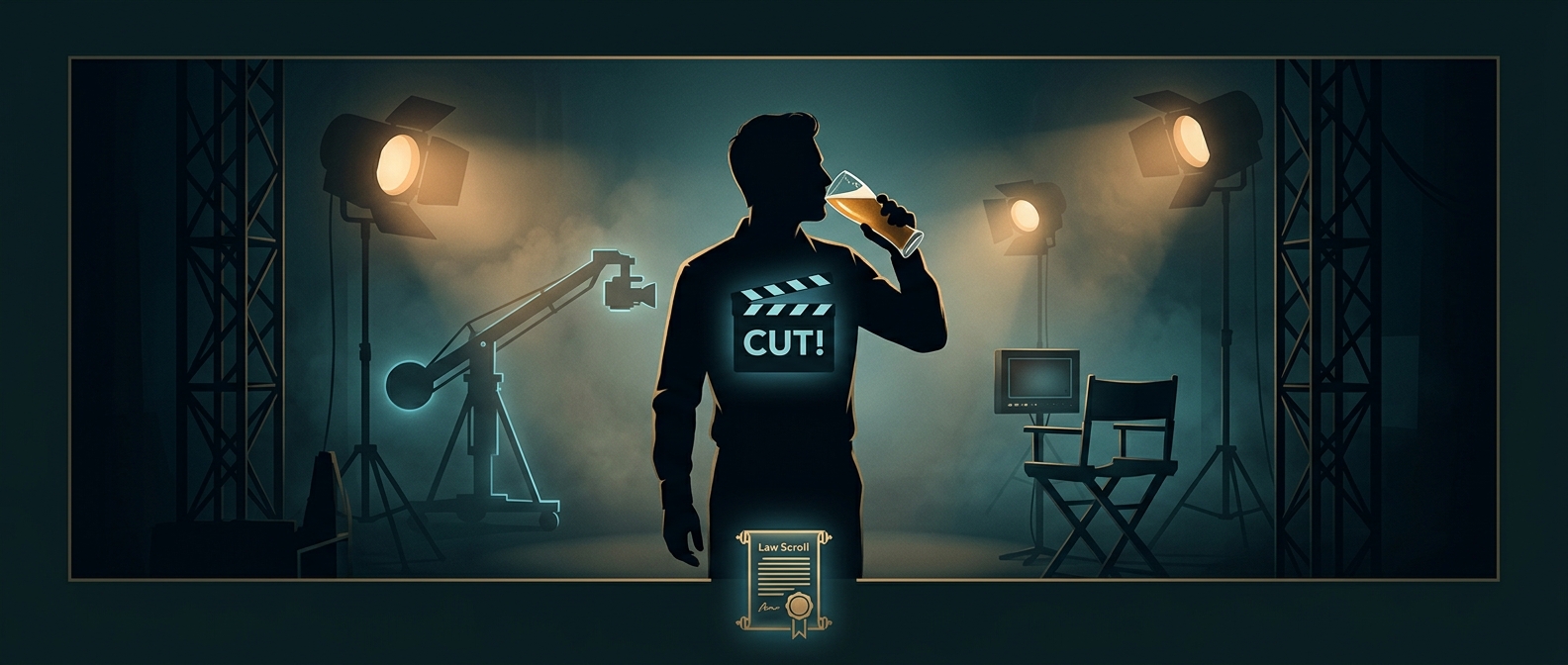
The Cut Happens at the Moment of Consumption
A sip is easy to imply without showing it. An actor can raise a glass, touch it to their lips, and lower it; a cut to another shot can carry the scene past the part that broadcast guidelines restrict. The viewer fills in the missing action, while the ad avoids depicting a completed swallow.
That small gap changes how alcohol advertising is staged. Directors can focus on the bottle, the pour, a toast, or the people enjoying one another’s company. The drink remains visible as a product, but the camera stops short of showing it enter someone’s body. A close-up of a face or a quick change of scene can make the moment feel natural rather than conspicuously interrupted.
A Rule That Shapes the Picture
The constraint is a production problem as much as a standards issue: the scene has to suggest drinking while keeping the prohibited action offscreen. Actors may mime the gesture, and editors can cut away before the swallow. The result is a familiar advertising shorthand—lips meet glass, then the story moves on.
Because the missing motion is so brief, viewers may barely notice the workaround. But it is a clear example of how a broadcast rule can shape an ad’s visual language: the audience understands the sip precisely because the ad does not show it.