A spinning target hides the exact landing point
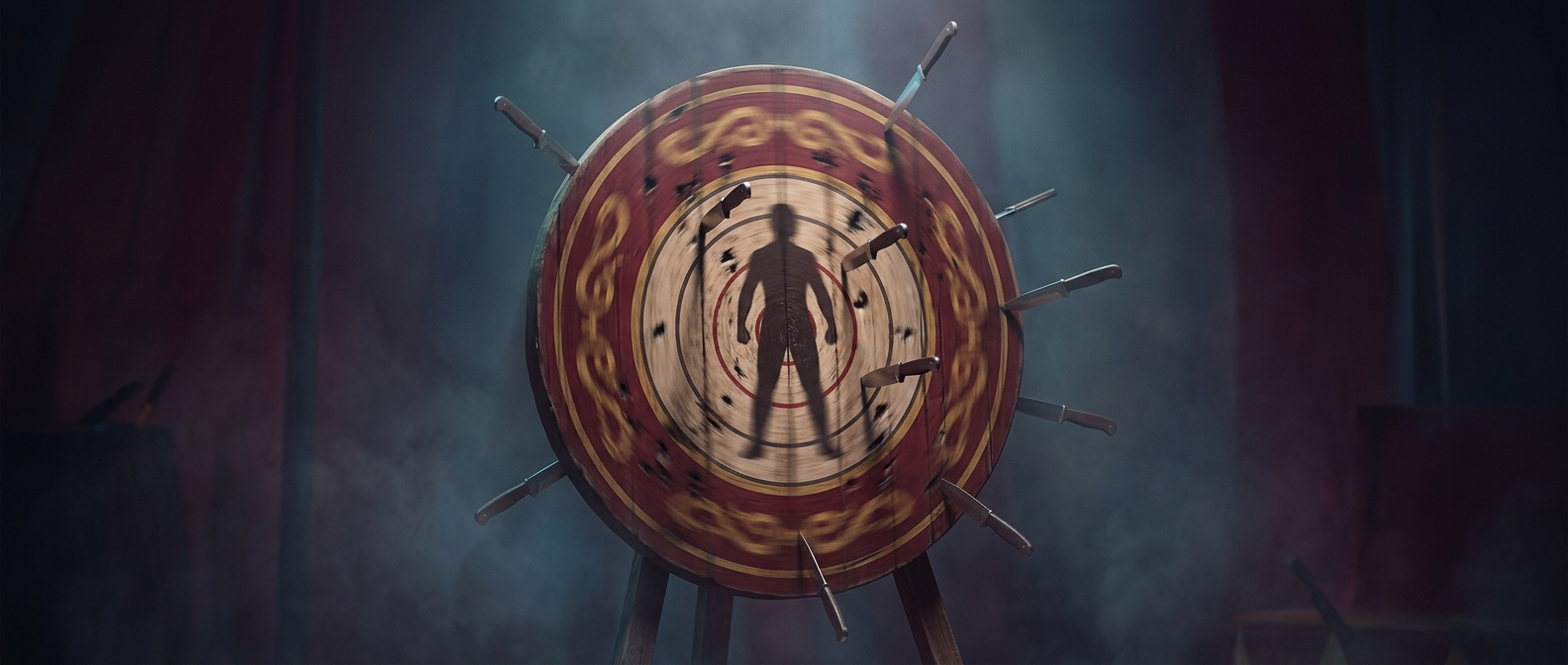
When a knife hits a rotating target, the target keeps moving beneath it. The knife, its impact point, and nearby marks shift across the viewer’s field of vision, making it harder to judge the gap between the blade and whatever the stunt is meant to avoid. Motion can also make a near miss and a cleanly placed throw look less distinct from the audience’s perspective.
That visual uncertainty is the illusion: spectators see a fast, dangerous sequence without getting a steady view of every landing. The apparent margin for error grows because the placement is harder to inspect, not because rotation makes the throw physically forgiving.
The motion changes what the audience can read
A fixed target offers a clear reference: viewers can compare each knife with earlier impacts and see how close it comes to a mark. Rotation continually changes that reference. The eye has to follow both the spinning surface and the knife, while each new impact may be difficult to locate before the target turns again.
For the performer, the rotating target remains a real moving object that must be judged and timed. For the audience, its motion obscures the precision involved. The result is a stunt that can look more chaotic—and more forgiving—than the actual task of placing a knife.