The trick is controlling where the force goes
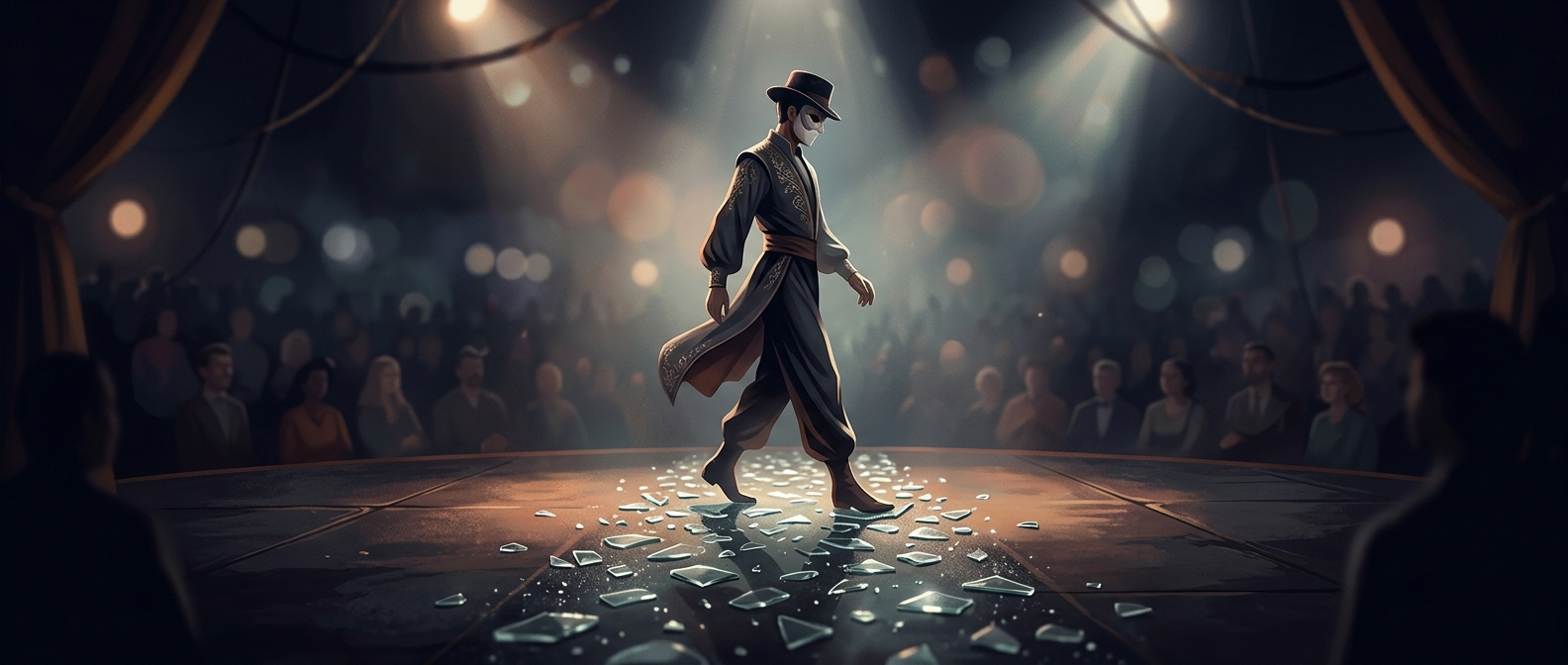
A bare foot looks vulnerable because a glass shard can concentrate pressure along a tiny, sharp edge. In a performance, the setup changes that contact: thick pieces are tumbled until their edges are smooth, then packed closely together. The foot meets a crowded, relatively level surface instead of isolated points poised to cut it.
That matters because pressure depends not just on how hard the foot presses, but on how small an area carries that force. When the foot settles across many pieces, its weight is spread over more contact points. Rounded edges also make it less likely that one shard will slice into the skin.
Why the walk still takes care
The glass is not harmless. Smooth edges can still scrape or bruise, and a piece that shifts, tips, or breaks can create a dangerous edge. Performers therefore need the surface to stay tightly packed and must place their feet deliberately rather than stamp, twist, or slide across it. The stunt depends on a prepared bed of glass—not on ordinary broken glass becoming safe to walk over.
The visual tension comes from a mismatch: the audience sees something associated with sudden cuts, while the performer is stepping onto a surface engineered to reduce sharp contact and spread the load. A small change in the glass’s shape and arrangement makes the feat possible, but leaves little room for an unstable step.