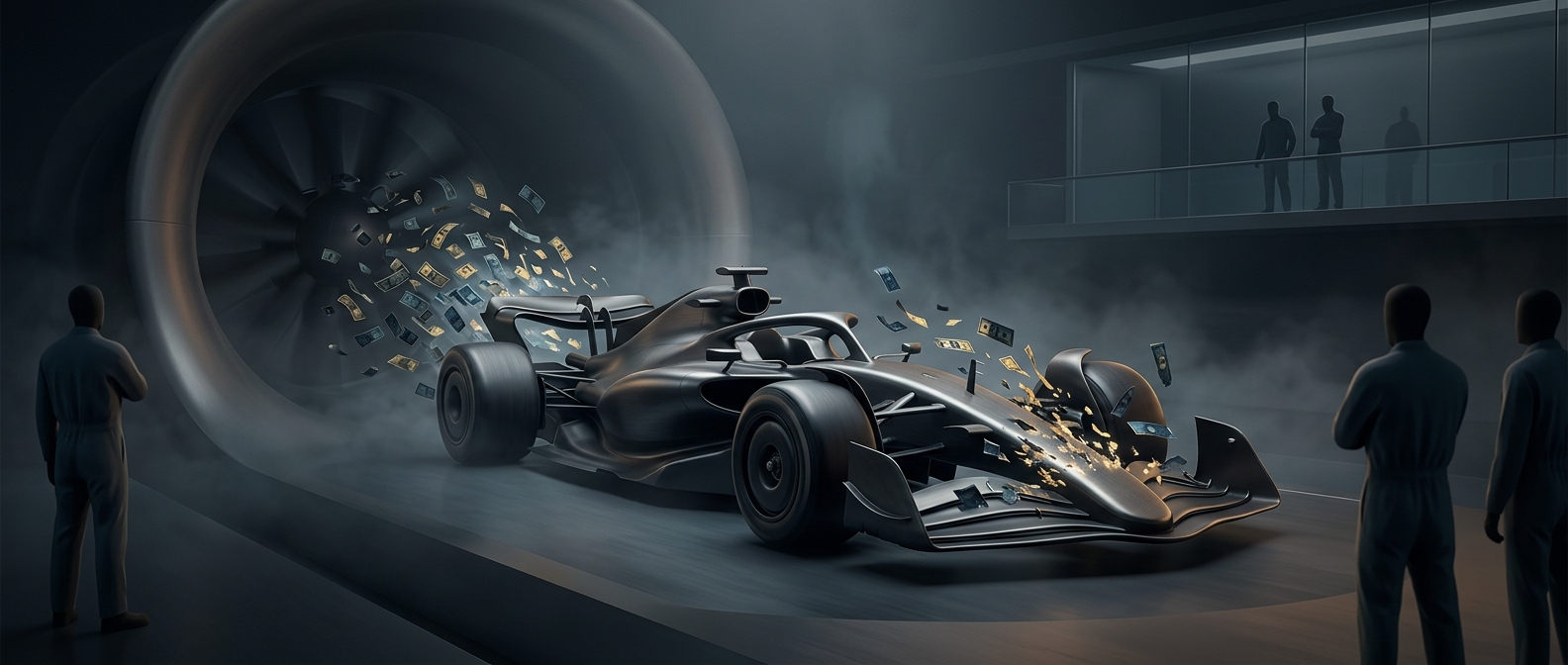
Why aerodynamic testing can become an arms race
A wind tunnel lets a team study how air moves around a car without building a full-size prototype for every idea. Engineers test a scale model, measuring forces such as downforce—the pressure that helps the tires grip the track—and drag, which slows the car on straights. They can change a wing shape or body panel, run the test again, and see whether the tradeoff is worthwhile.
The advantage is not just having a tunnel. A well-funded team can invest in better equipment and staff, test more variations, and feed useful results into the next design. Each improvement can suggest another experiment. Because aerodynamic performance strongly affects lap times, that cycle can turn a large budget into an advantage that is difficult for a smaller team to match.
Limits change how teams spend their time
A cap makes tunnel access a scarce resource, so engineers have to choose which questions are worth testing. They may use computer simulations to screen ideas first, then reserve physical tests for the designs most likely to work. The limit does not guarantee that every team finds the same solution; it constrains how much each can search for one.
That distinction matters. Without a ceiling, teams could respond to a rival’s breakthrough by buying more testing capacity and running more experiments, pushing costs upward across the grid. With restricted access, the contest shifts toward getting more insight from each test—and deciding which promising idea deserves the tunnel time.