Why a Dart’s Fins Help It Fly Point-First
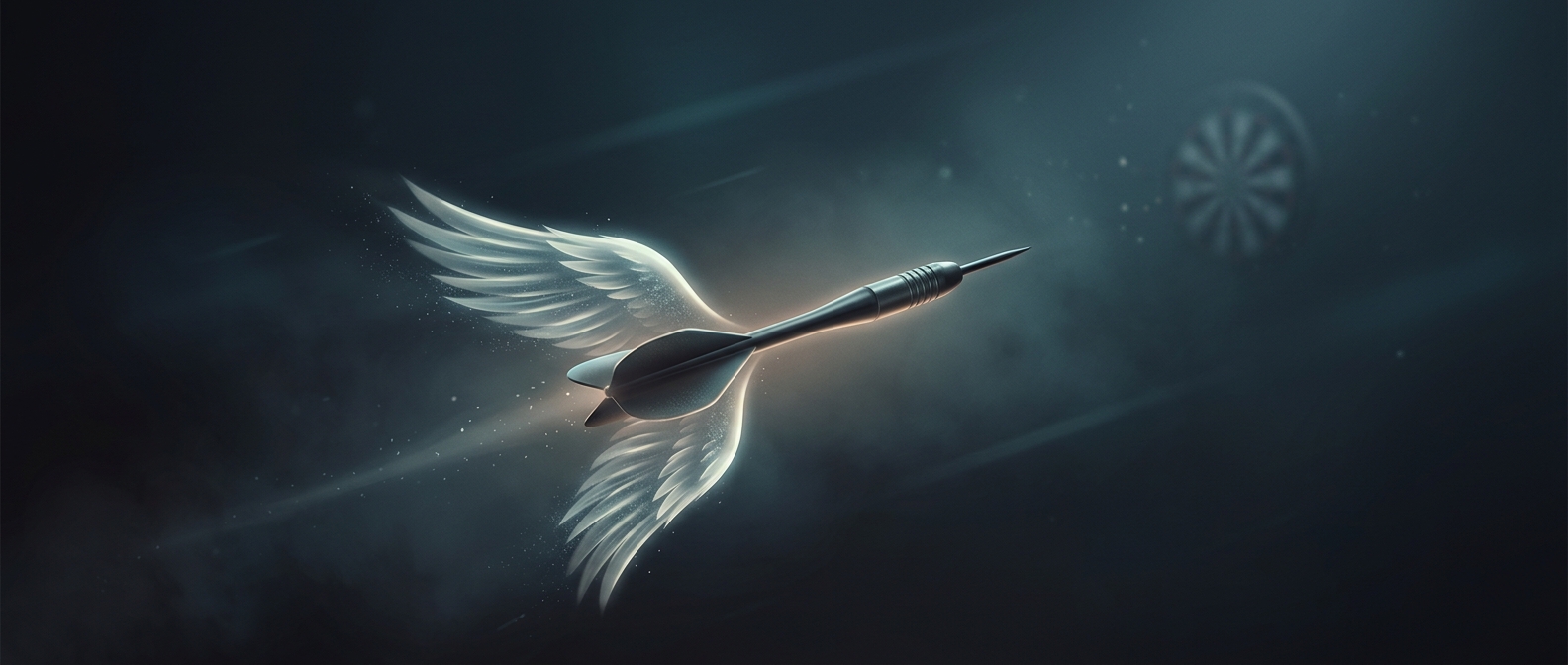
A dart is designed so its center of mass—the point where its weight balances—is toward the heavy front end. That arrangement makes the dart naturally want to travel with its tip leading, but it does not guarantee a steady flight. A small sideways wobble can turn into a tumble unless the dart has a way to correct itself.
Air Resistance Supplies the Correction
The fins, or flights, sit at the dart’s tail. If the dart begins to yaw—turn its nose away from its direction of travel—the tail is exposed to the airflow at an angle. Air pushes against the flights, creating a force behind the dart’s center of mass. That force nudges the tail back into line and turns the nose toward the direction of motion.
It is the same basic stabilizing arrangement used by a weather vane: the part that catches the wind is placed behind the pivot, so the front swings around to face into the airflow. The flights do not actively guide the dart; they make airflow itself resist departures from a nose-forward path.
Stability Has a Cost
Larger flights generally catch more air and can steady a dart more strongly, but they also create more drag. Drag slows the dart and can make its path more sensitive to how it is thrown. A dart’s weight, balance, and flights therefore work as a system: the heavy nose provides forward bias, while the tail’s aerodynamic resistance corrects wobble without overwhelming the throw.
That is why the fins are at the back rather than the front. Put the stabilizing surface ahead of the balance point, and the airflow can amplify a sideways turn instead of correcting it—much as a weather vane would behave if its broad surface were mounted in front of its pivot.