How a scrap of dough became a memorable shape
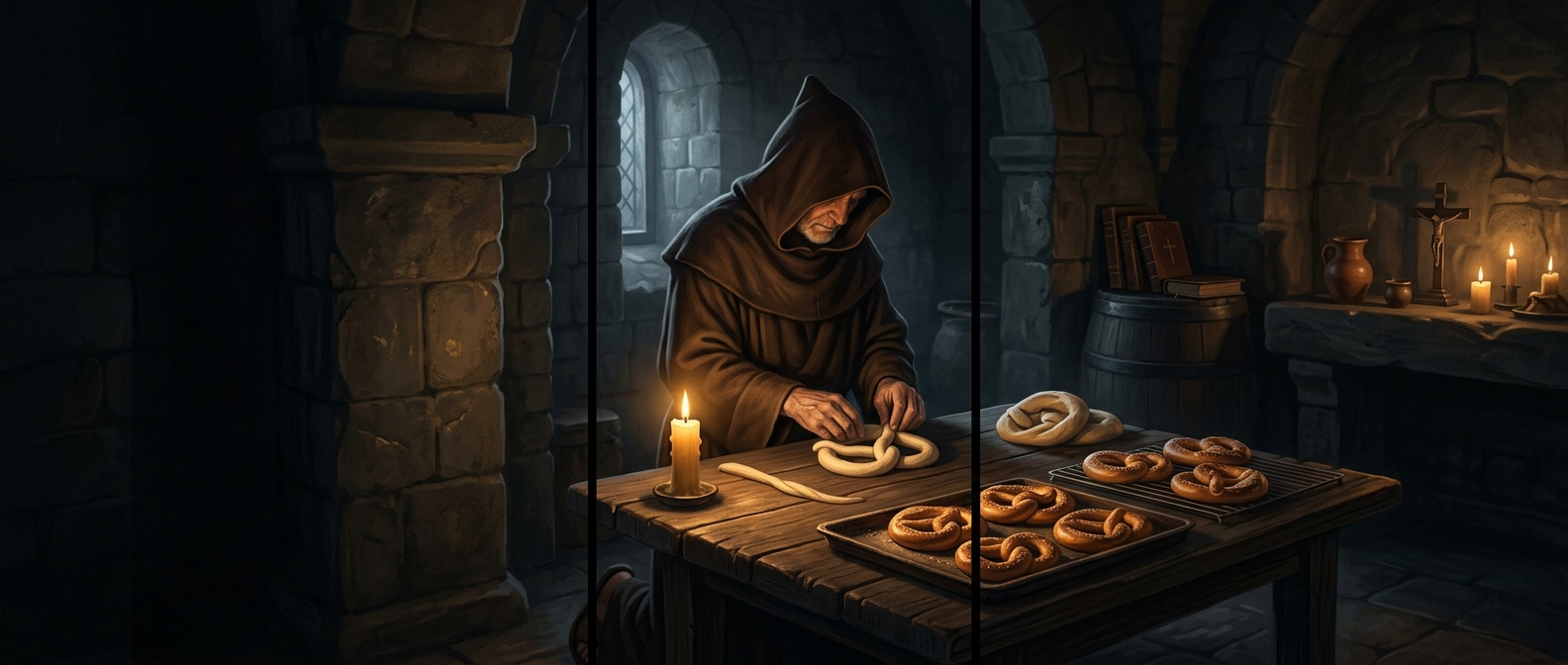
One familiar account of the pretzel’s beginnings places it in a monastery. Monks, the story goes, twisted leftover dough into loops resembling arms crossed in prayer, then gave the baked knots to children as a small reward or a way to keep them quiet. The shape made an ordinary bit of bread feel special—and easy to recognize.
The story fits a world in which bread was a daily staple and kitchens had reason to use dough efficiently. It also gives the pretzel a meaning beyond its ingredients: its crossed loops could call to mind a familiar gesture of devotion. But the origin is uncertain, so the monk-and-children tale is best treated as a traditional explanation, not a documented account of a single invention.
A shape that carried the story forward
A distinctive form can outlast the circumstances that produced it. Whether or not monks first made the pretzel this way, the crossed loops gave bakers a shape that could be repeated and customers a form they could identify. Over time, the knot became the defining feature of the food; the tale of monks and children offered an appealing explanation for why it looked that way.
That is the lasting charm of the origin story: it turns a practical act—using leftover dough—into a small scene of teaching and care, with a baked knot serving as both snack and symbol.