A Meal Built Around the Game
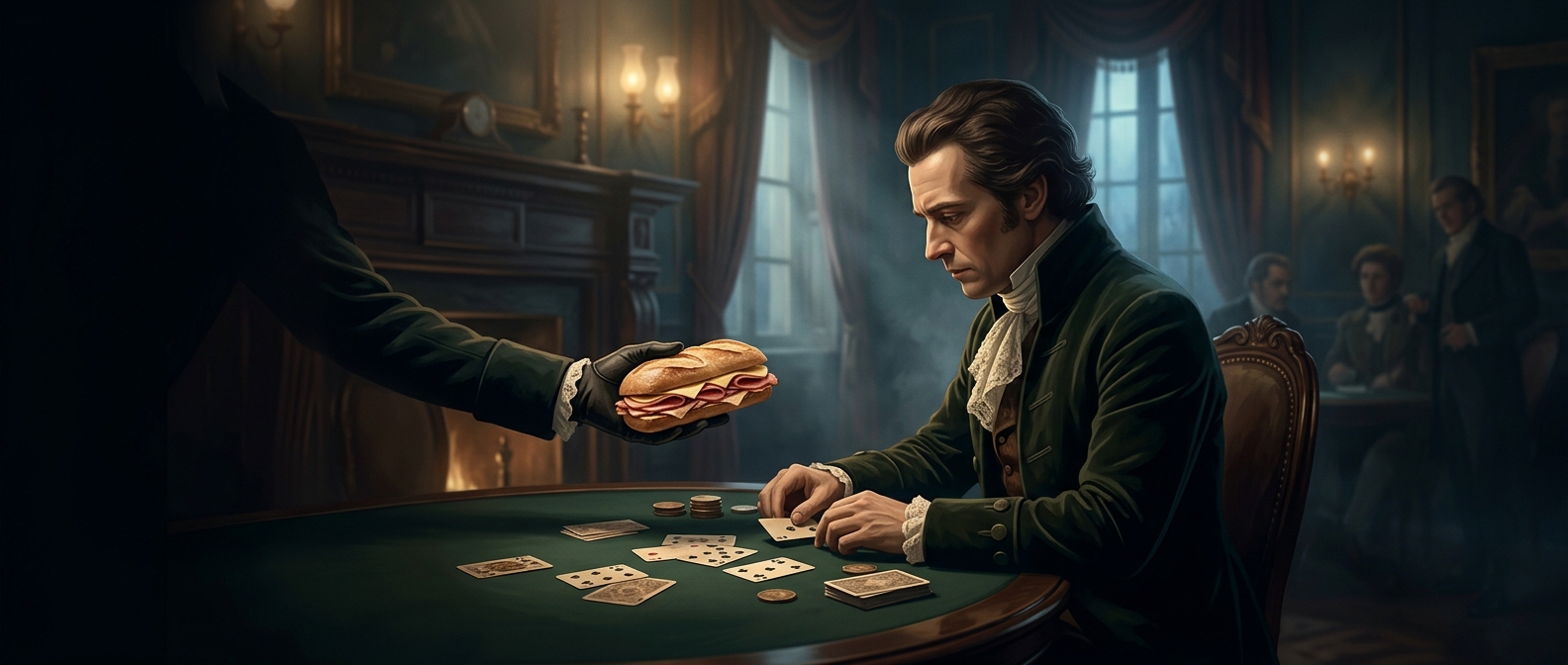
The familiar story centers on John Montagu, the fourth Earl of Sandwich, in 18th-century England. Rather than pause a card game for a formal meal, he reportedly asked for meat served between slices of bread. The bread made the food easier to handle at the table: players could eat without setting down their cards or coating their fingers in grease.
That small practical advantage is the point of the tale. Bread turned a messy dish into something portable and relatively tidy, fitting a meal into an activity that was not organized around eating.
How a Convenient Order Became a Name
The story says other players began asking for food “the same as Sandwich,” and the name stuck. The earl is therefore associated less with inventing the idea of putting filling in bread than with giving a particular, convenient meal a name that caught on.
People had paired bread with other foods long before the earl’s card table. What made the sandwich memorable was its usefulness: it could be assembled, carried, and eaten with little interruption. The card game supplied a vivid setting for explaining why that format appealed.
The Card Table’s Lasting Legacy
The origin story is commonly repeated, though the precise circumstances are reported rather than firmly documented. Its staying power comes from how neatly it links a simple design choice to a recognizable need: keep eating, keep your hands clean, and keep playing. Centuries later, the sandwich still solves much the same problem whenever a meal has to fit around whatever else is happening.