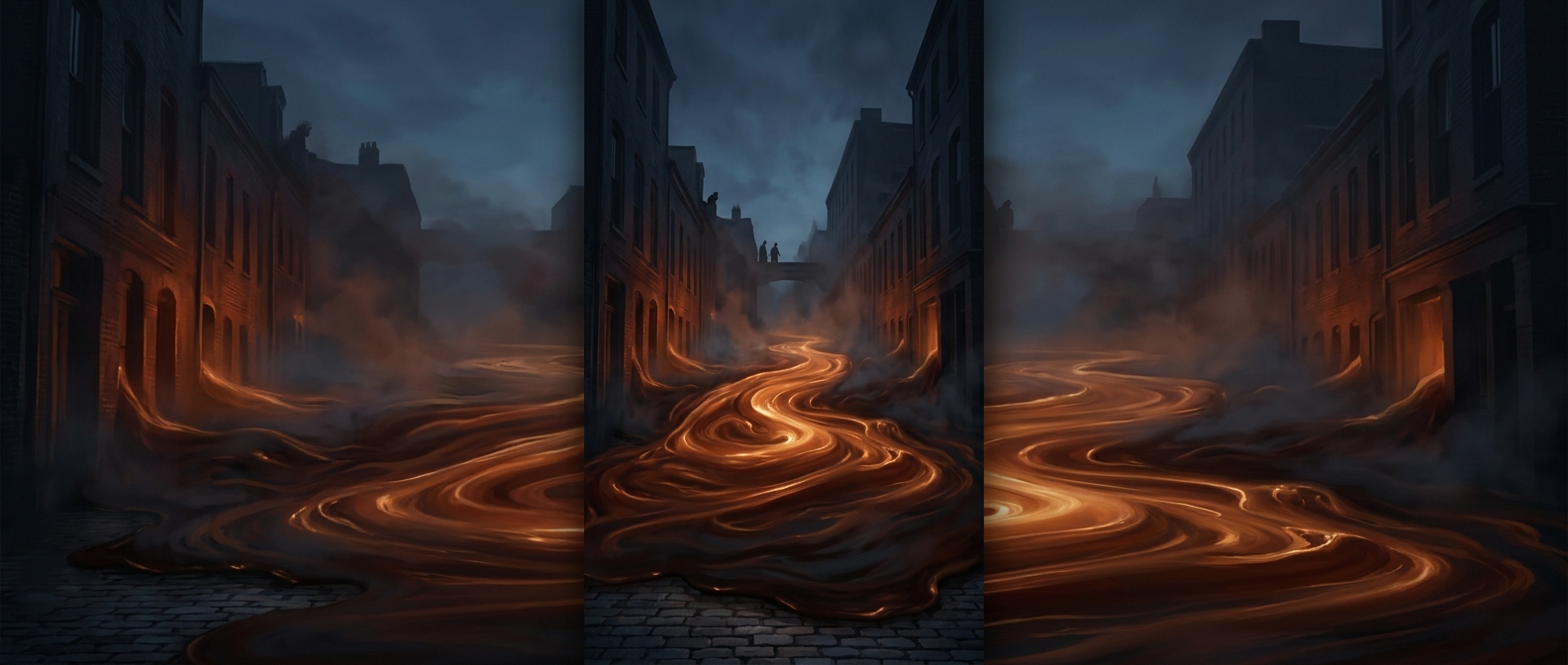
When a refinery’s sugar turned into a flood
Sugar is usually thought of as a solid fuel for people, not a hazard that can move through a building. But a refinery holds enormous quantities of it together. In the 1910 fire, heat softened and melted millions of pounds of raw sugar, turning stored crystals into a scalding, bubbling mass.
Sugar does not behave like water when it melts. It becomes thick and sticky, and intense heat can darken and break it down further. Yet in such a large volume, even a viscous mass can surge outward under its own weight—especially once it escapes its containment.
Why the fire became a trap
The danger changed when the molten sugar poured out of the refinery. Responders facing a building fire could suddenly be confronted by a moving, burning-hot material on the ground. Unlike smoke or flames, a flood of sticky sugar could surround people, cling to surfaces and make escape difficult; those caught in its path were trapped.
The disaster’s unsettling lesson was built into the material itself: a substance that is harmless in a bowl can become a physical hazard when stored by the ton and heated beyond control. In 1910, the refinery’s sugar did not merely burn—it became part of the fire’s path through the building.