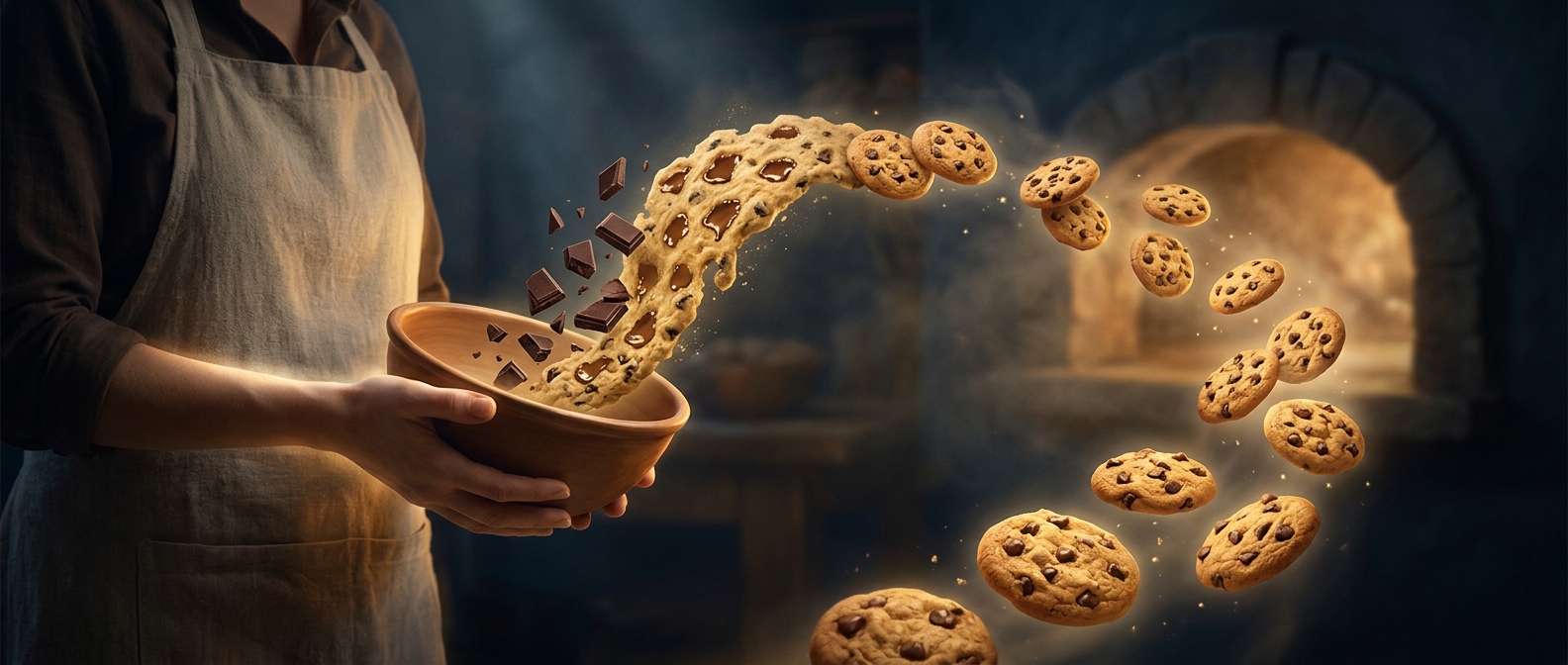
A failed melting plan became a new kind of cookie
Ruth Wakefield’s experiment worked differently from the way she expected: the chocolate softened in the oven, but it did not spread through the dough like coloring. Instead, pieces of chocolate remained distinct as the cookie baked around them. Once the cookies cooled, those pockets firmed up again, leaving a crisp contrast between the sweet dough and concentrated chocolate.
That accidental texture was the invention. Rather than discard the batch or keep trying to make the bar disappear, Wakefield served the cookies as they were. The uneven patches made each bite a little different—and made chocolate an obvious feature, not just an ingredient blended into the background.
From a bar to a familiar baking ingredient
The recipe became associated with Wakefield’s Toll House Inn in Massachusetts, where guests helped carry its reputation beyond the kitchen. Its success also changed how people could make the cookies: chocolate manufacturers began selling small pieces intended to be mixed into dough, sparing bakers the work of chopping a bar.
That shift—from improvising with a chocolate bar to buying ready-made morsels—helped turn an unusual recipe into an easy-to-repeat household staple. The defining chocolate patches were not the result of a carefully engineered cookie design; they were the visible trace of a plan that did not go as expected.