A shipping pouch became a brewing device
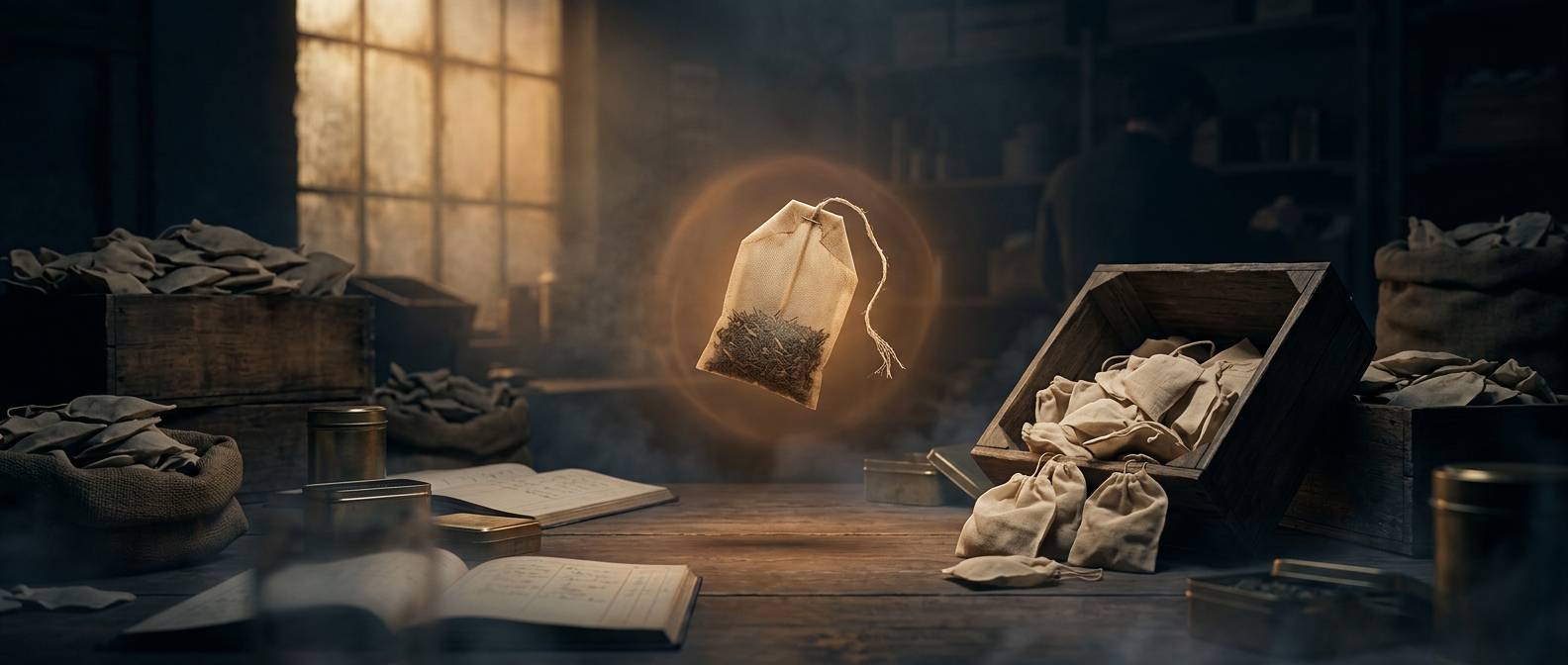
The surprise was not simply that customers used the samples differently. The pouch already solved two practical problems at once: it kept loose leaves together and let hot water reach them. Once immersed, water could move through the fabric, draw out tea’s flavor and color, and carry the infusion into the cup—while most of the leaves stayed inside.
That arrangement made brewing less messy. Instead of measuring loose tea into a pot and straining it afterward, a drinker could steep a single portion and remove it when the tea was ready. A wrapper intended for delivery had quietly become a tool for preparing the product.
From accident to design principle
A silk sample pouch was not automatically a finished tea bag. For regular brewing, the container had to let water circulate while holding back the leaves, and it had to be convenient to lift out after steeping. The accidental use revealed the central design idea; making it useful as a routine product meant treating the pouch itself as part of the brewing process.
That is why the story matters beyond a clever customer improvisation. The change shifted some of the work of tea-making from the drinker to the package. A small portion could be brewed directly in a cup, with the leaves contained from the start—a shipping solution that suggested a simpler way to make tea.