Mixing Wine Was Part of the Meal’s Social Code
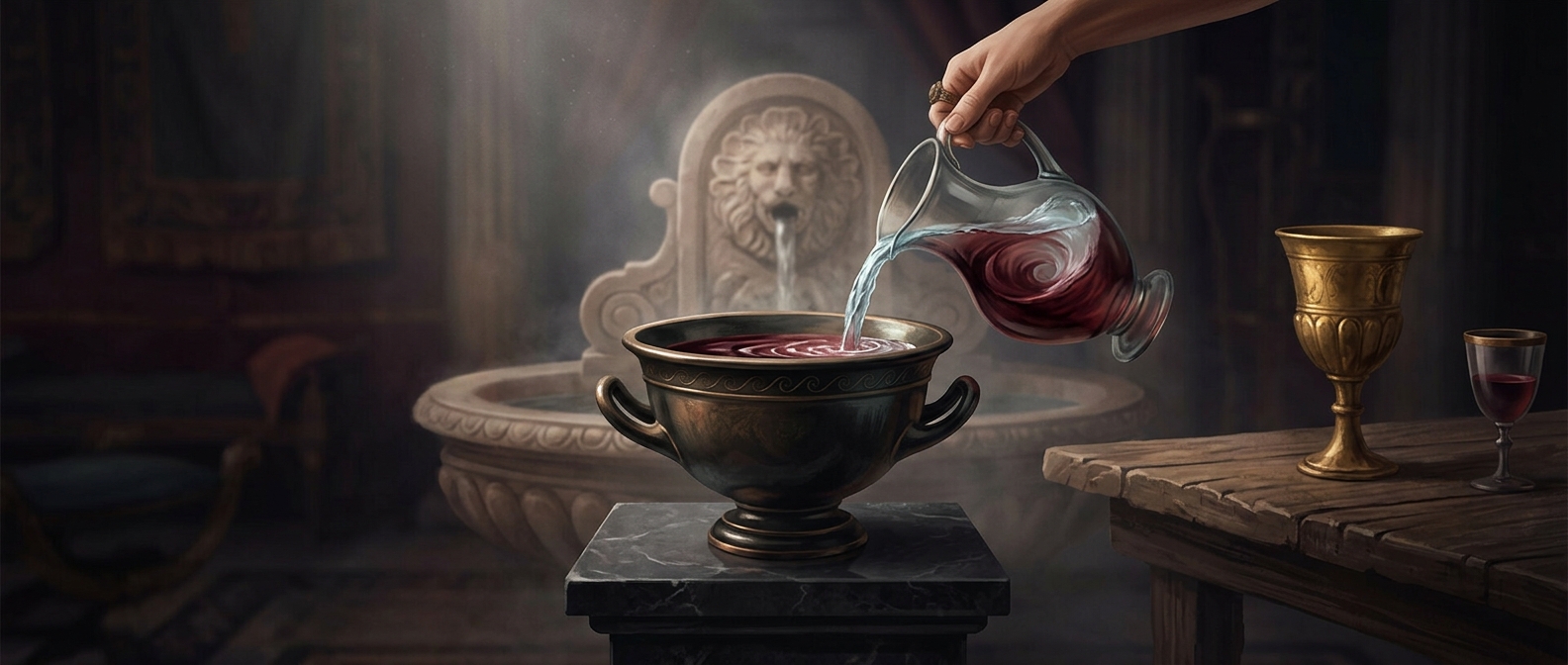
For Romans at a formal meal, wine was usually served after being mixed with water. The host or a designated server combined the two in a large bowl, then poured the blend into individual cups. The ratio could vary with the occasion and the drinkers, but the act of mixing itself mattered: it showed that wine was being consumed according to familiar dining customs, not gulped as an intoxicant.
Wine was often stronger and harsher than many modern table wines, and mixing could make it easier to drink. But the custom was not simply a practical way to weaken it. In Greco-Roman dining culture, measured drinking was associated with sociability and self-control. Drinking wine neat could therefore suggest excess or a lack of refinement—especially when contrasted with the composed behavior expected at an elite gathering.
What Went Into the Cup
Water was the ordinary mixer, and diners could encounter it cold or warm. Some wines were also flavored or altered with ingredients such as herbs, spices, or seawater. These additions could change the taste, help preserve wine, or reflect local production methods; they were not all ingredients added at every meal. Serving practices varied across households and circumstances, so “Roman wine” did not have one fixed recipe.
The distinction was as much social as culinary. A guest was expected to understand the rhythm of the meal and drink in a way others recognized as controlled. How someone drank could signal cultural polish just as clearly as what they drank. The striking implication is that a cup of undiluted wine was not merely a stronger choice: in the right setting, it could read as a public display of poor judgment.