Why families picnicked among the graves
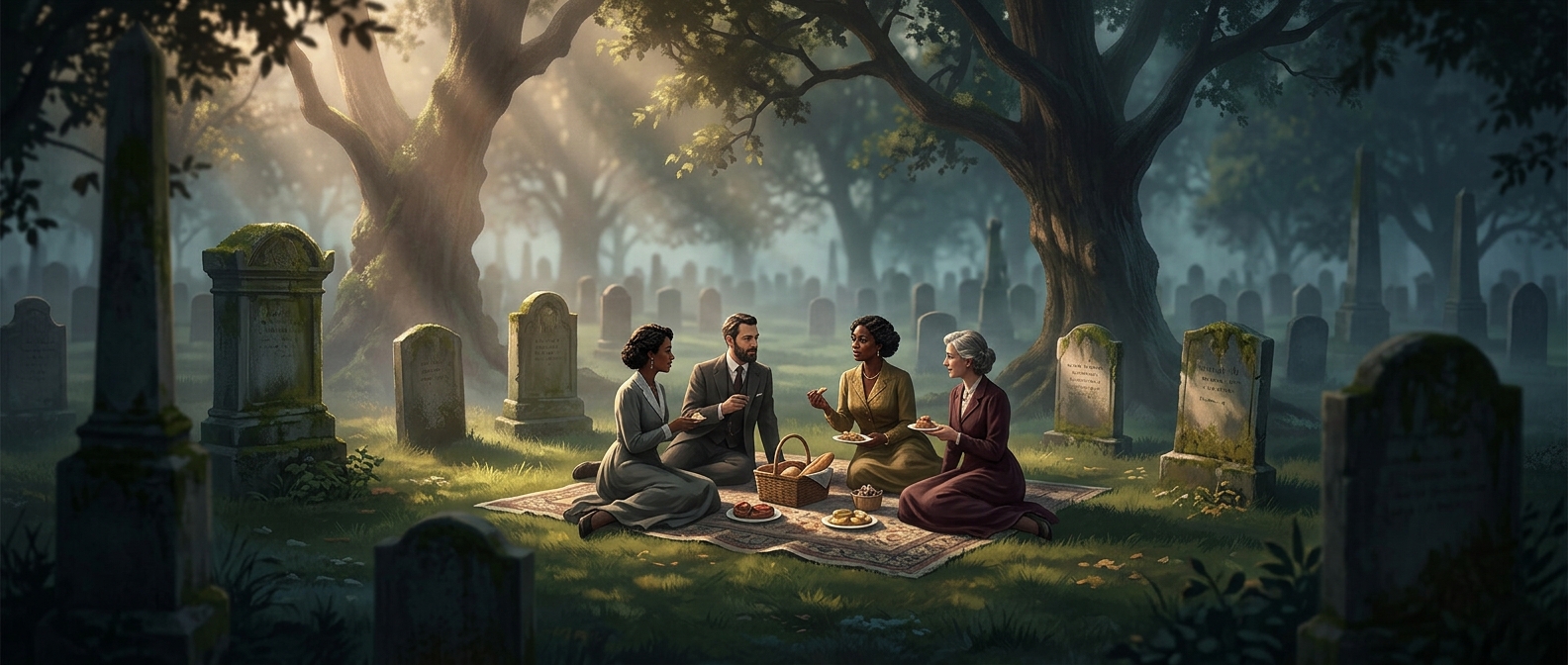
In American towns of the 19th century, a cemetery could offer something increasingly hard to find: a broad, leafy place to walk and sit. As cities grew, public parks were scarce, while burial grounds often occupied spacious sites planted with trees and laid out with paths. Families came not only to mourn, but also to escape crowded streets for an afternoon outdoors.
The cemetery as a designed landscape
This use grew from a change in cemetery design. Older burial grounds were often cramped churchyards; newer rural cemeteries, developed from the early 19th century, were planned as park-like landscapes. Winding paths, lawns, shade trees, and carefully arranged graves made them places to stroll as well as places of remembrance. Their quiet, orderly grounds offered a rare version of nature within reach of town.
A picnic there was not necessarily seen as disrespectful. Visitors could treat the grounds as shared civic space while still honoring the dead: they might visit family graves, leave flowers, or simply enjoy the setting. The same path could lead from a graveside visit to a shaded patch of grass.
Why the custom faded
As cities built more public parks, people had less reason to use burial grounds for recreation. Cemeteries also increasingly emphasized quiet visitation and respectful behavior, making casual gatherings less welcome. The shift reveals a practical consequence of limited public space: places designed for the dead temporarily served the living, until towns created parks of their own.