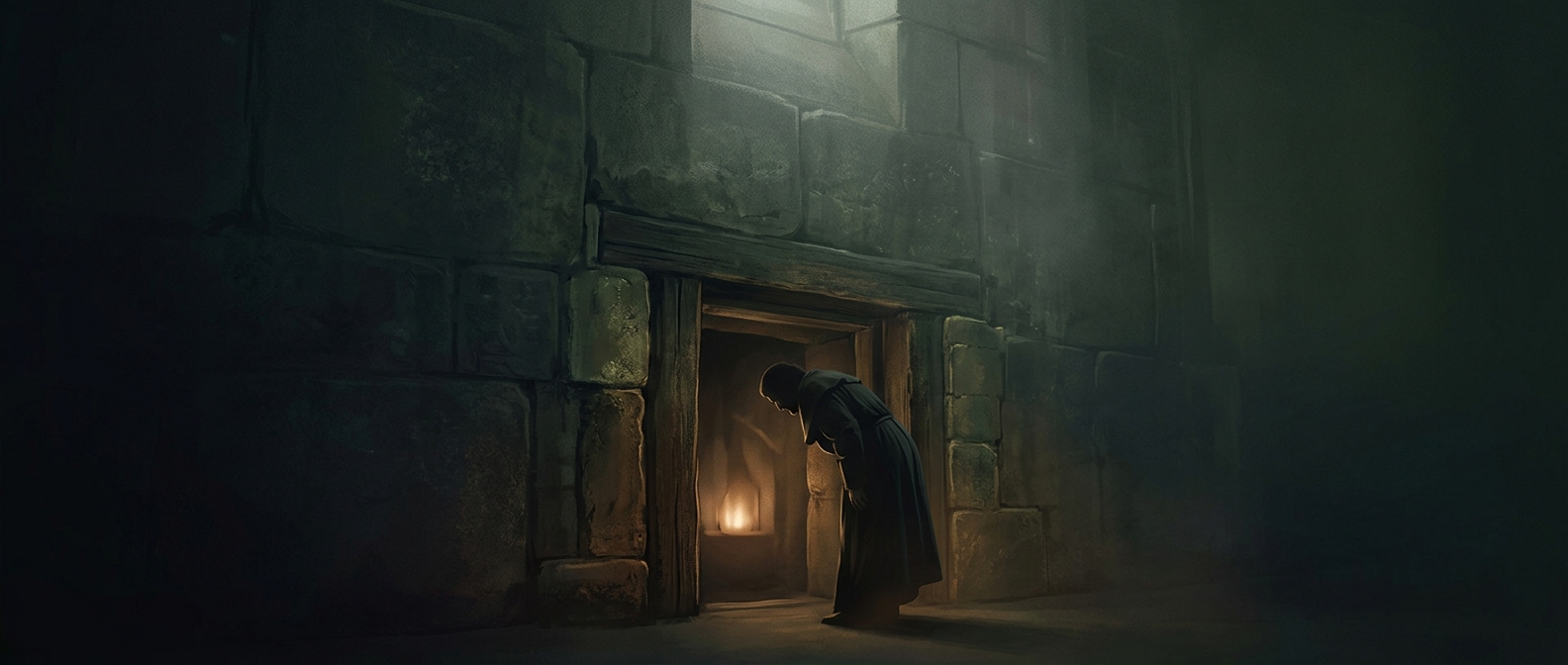
The doorway made submission part of entering
A deliberately low entrance turns a visitor’s body into part of the room’s choreography. To cross it, a person must slow down, lower their head, and bend at the waist. They cannot stride in upright or meet the occupant’s gaze at full height. The person already inside, by contrast, can remain standing—or sit on a raised platform—and appear physically higher.
That difference matters before anyone speaks. A greeting delivered after a bow begins on unequal terms: one person has had to yield space and posture, while the other has not. The doorway makes the visitor enact deference rather than merely being told to show it.
A threshold that controls the encounter
The effect comes from placing the constraint at the point of entry. A curtain or a low ceiling might make a room feel enclosed, but a low doorway requires each newcomer to perform the same deliberate movement. It also briefly limits their view and occupies their attention, making the transition into the room feel controlled rather than casual.
The design’s force depends on what happens beyond the threshold. If the occupant is positioned higher or can stay upright, the visitor’s bent posture sharpens the contrast. If both people must stoop, the doorway may instead make the room’s small scale more noticeable. In the power arrangement described here, the visitor’s body does the bowing before the conversation begins.