A staircase that followed the water
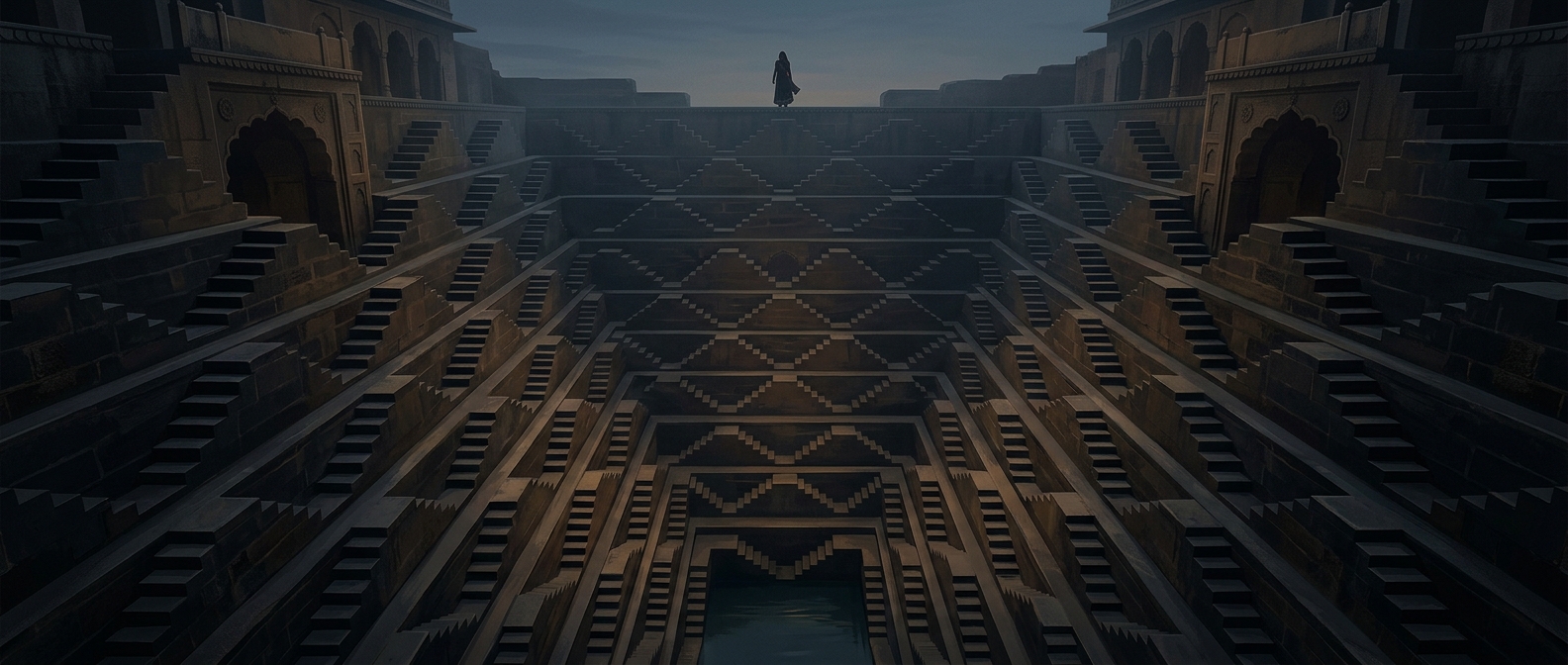
A stepwell turns the changing depth of groundwater into a route people can use. In a conventional well, a person stays at the rim and lowers a container on a rope. In a stepwell, broad flights of stairs descend through the structure, so visitors can reach the water themselves even when its surface drops during a dry spell.
That design made access less dependent on a single fixed-height opening. As the water level shifted with the seasons, the usable endpoint of the stairs shifted with it. The long descent was therefore practical infrastructure: the steps connected the everyday world above ground to a water source far below.
Why make the descent monumental?
A 13-story stairway required more than a simple shaft. Its builders had to shape a stable, descending space and provide landings where people could pause as they moved down. The architecture made the well’s depth visible and accessible rather than hiding it behind a narrow mouth.
That visibility also changed the experience of collecting water. Instead of standing alone at a rim, people could meet along the route and gather at the water’s edge. The structure served a basic need, but its scale turned that need into a shared place—and made the fluctuating level of groundwater something people could follow, one flight at a time.