Two towers, two contractors
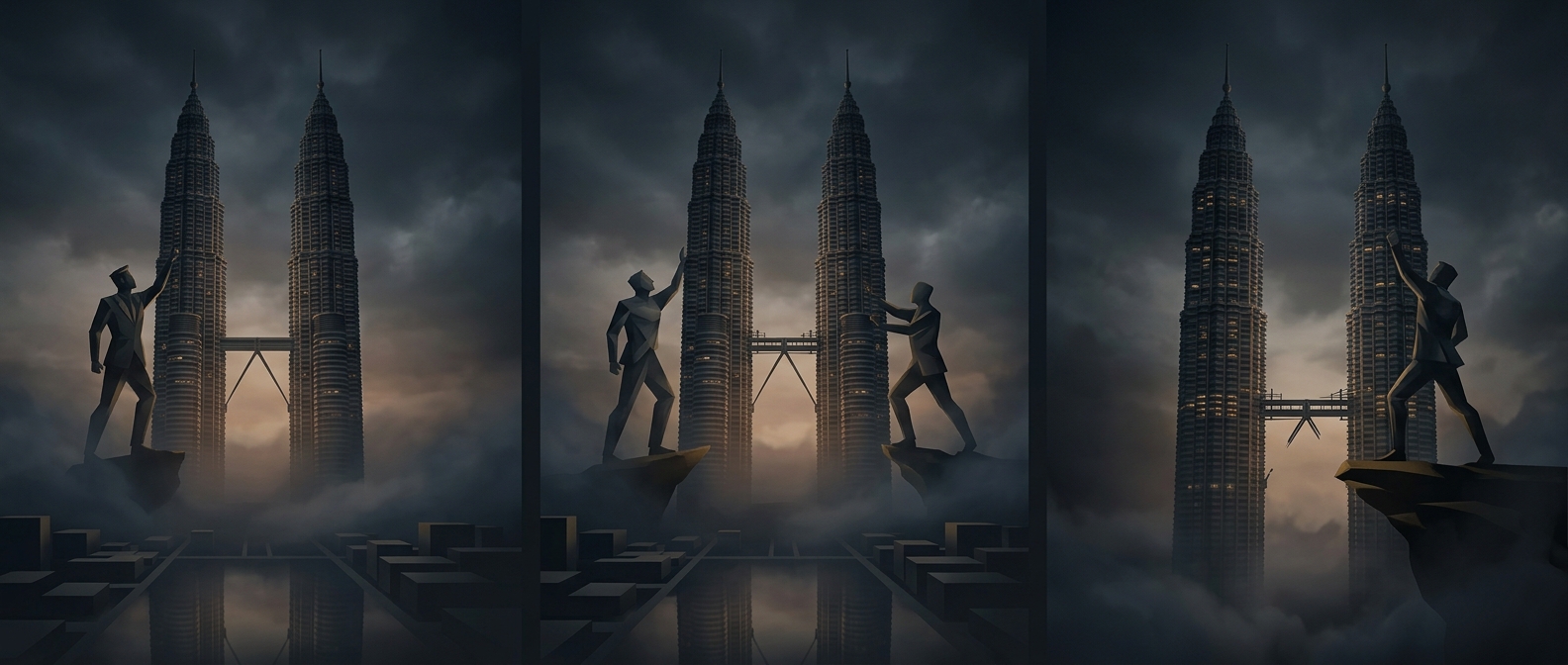
The Petronas Towers were designed as a matching pair, but each tower had its own construction team. Japan’s Hazama Corporation led the work on Tower 1; South Korea’s Samsung C&T led Tower 2. Dividing the job this way let crews build both structures at once—and gave the project a deadline-driven rivalry: each team could see how quickly the other was progressing.
The race did not mean the towers could be designed or built independently. They had to match in height, shape, and position, and their shared features had to line up. The 58-story buildings were designed by architect César Pelli, with a skybridge connecting them on the 41st and 42nd floors. That link made precision across the separate construction sites essential.
Competition inside a coordinated project
Building in parallel can save time, but it also multiplies the work of planning and supervision. The two teams needed to follow the same design and coordinate the points where the towers’ construction affected shared elements. A race to finish could push each contractor to maintain pace, while the project’s requirements kept that competition within a common plan.
The result was not two rival designs but one carefully matched landmark, delivered through separate construction efforts. The skyline still makes the strategy visible: a pair of towers that look like one composition, even though they were built by competing teams.