Why smoke stayed in the medieval living space
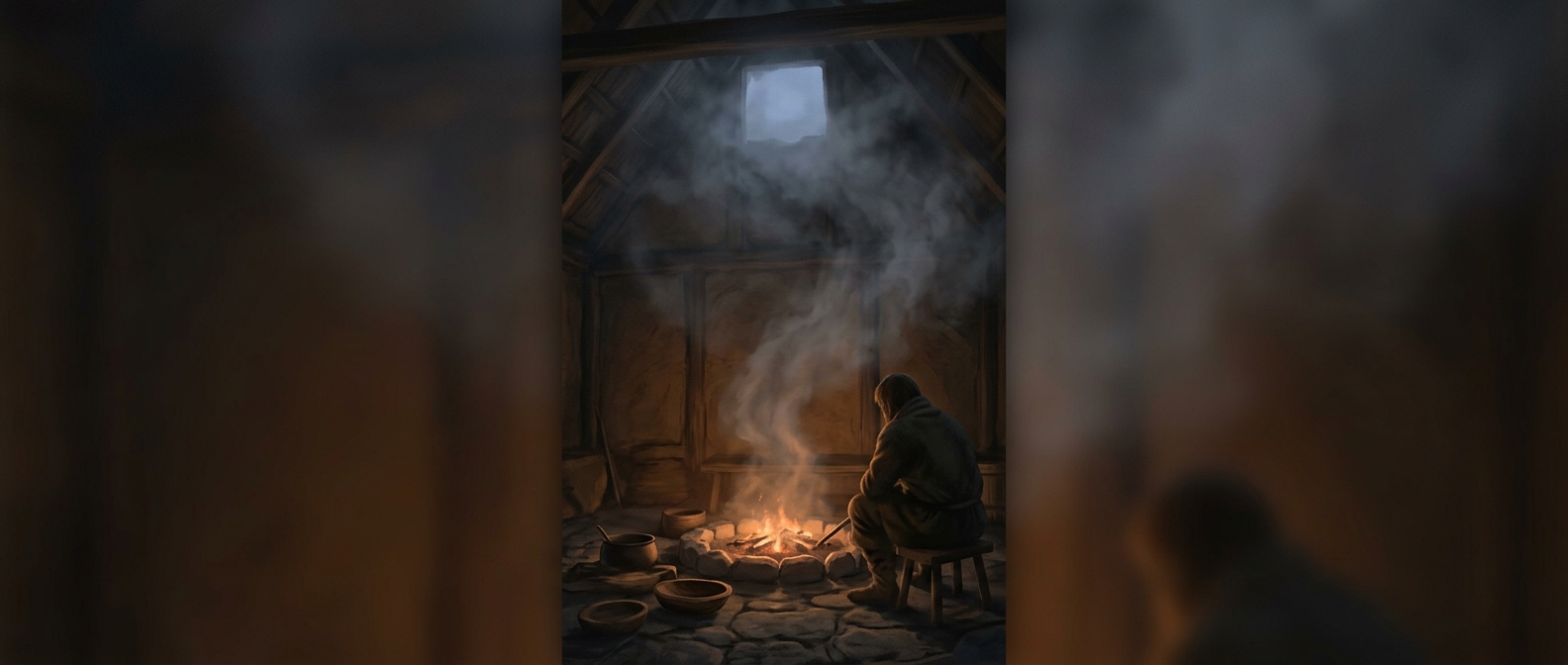
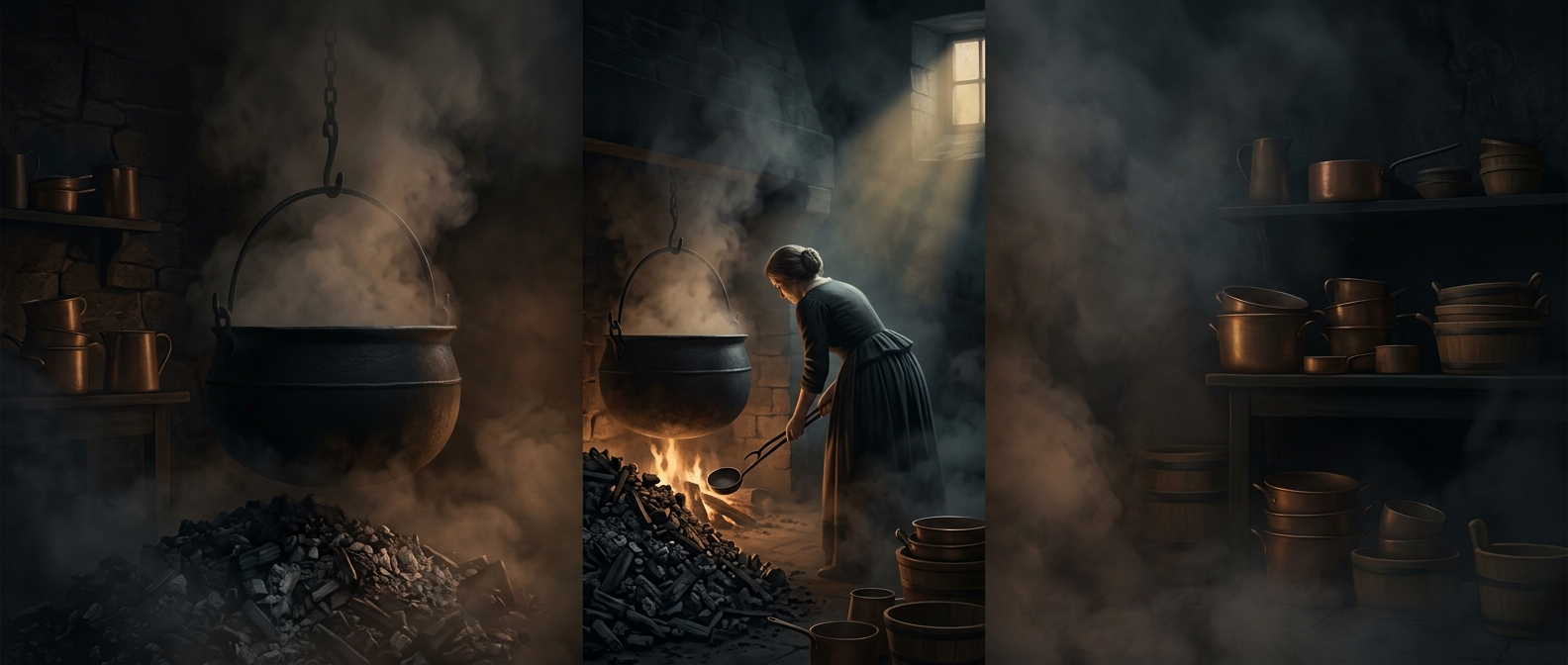
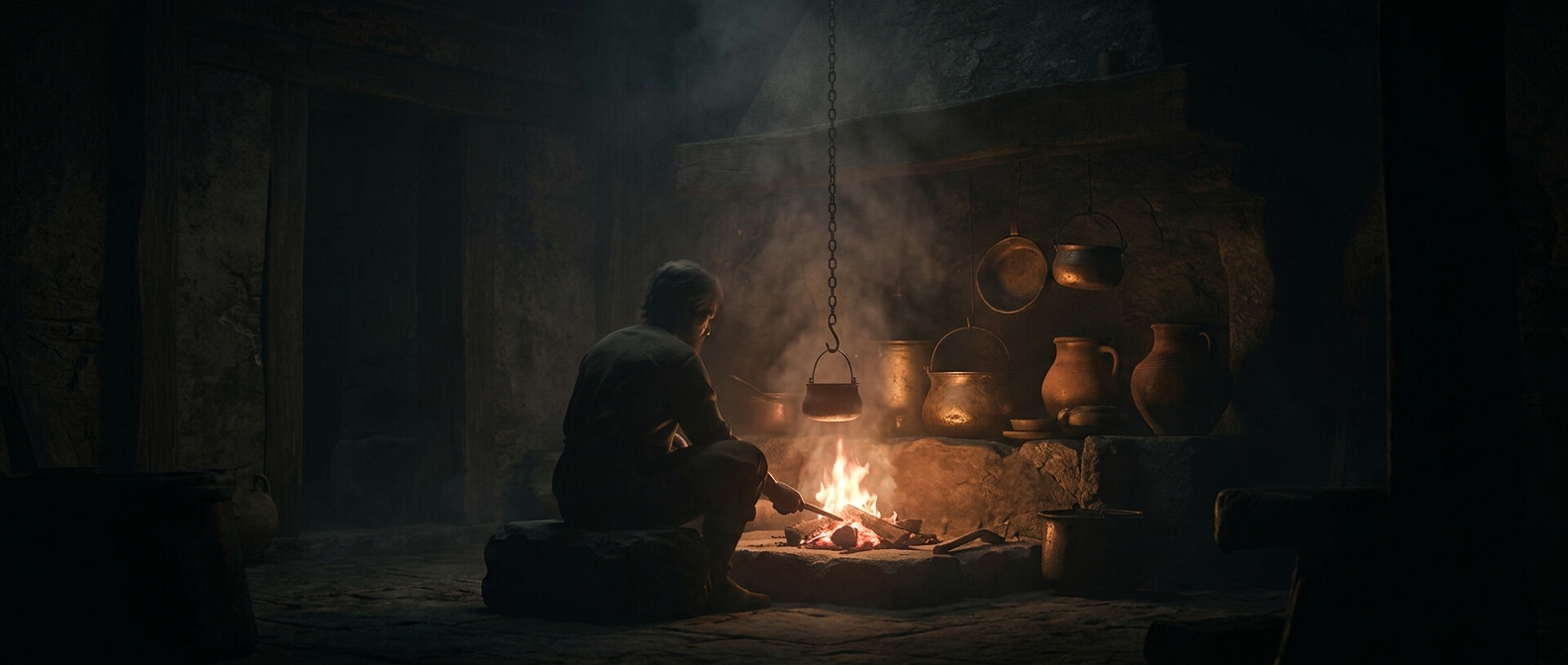
In many medieval homes, the hearth was not tucked into a separate, sealed kitchen. It sat in or near the main room, where the same fire cooked food and supplied warmth. That arrangement made sense when fuel was costly and a single fire served several needs—but it also meant that smoke entered the space where people ate, worked, and slept.
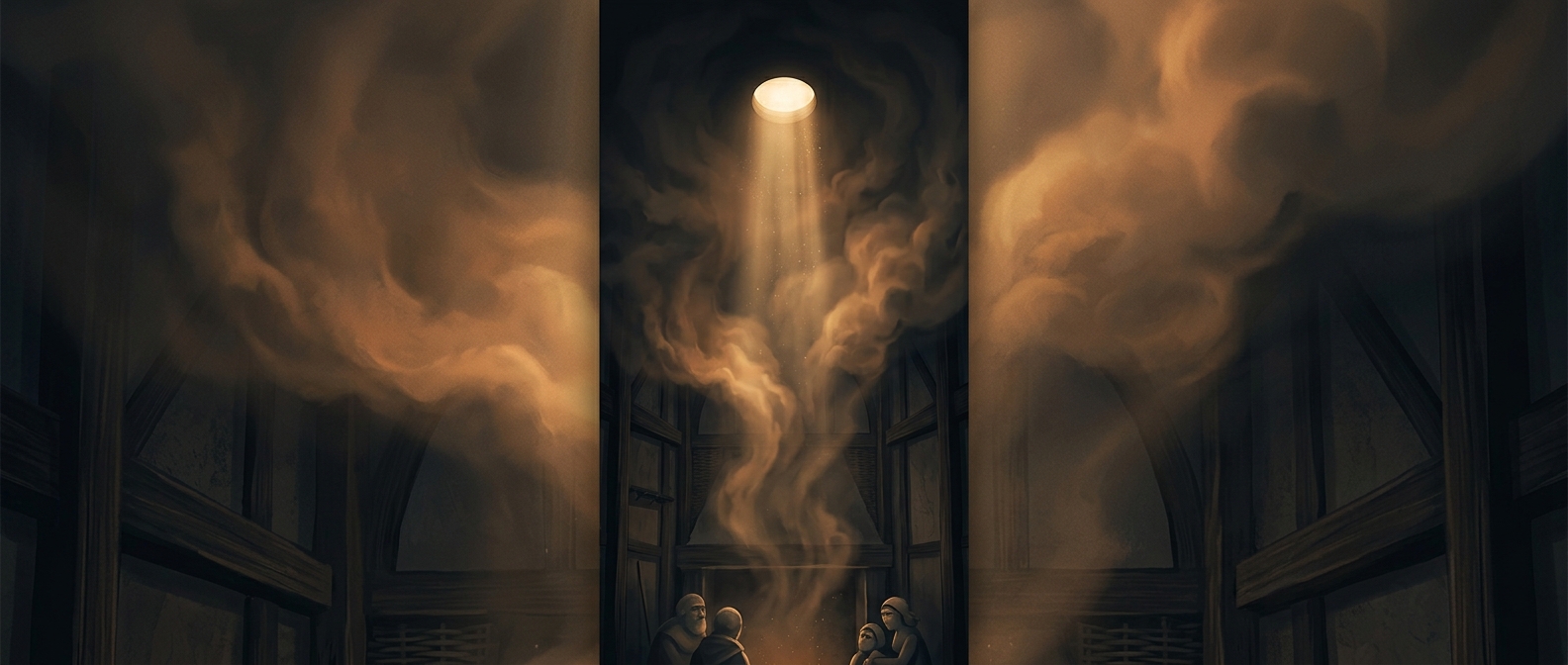
A fire releases hot gases and fine particles as fuel burns. In a room without a chimney, the smoke had to find its way out through openings such as a door, a window, or a gap in the roof. Some homes had a roof opening designed to let smoke escape, but wind and the shape of the building could make the draft unreliable. Smoke might rise toward the opening, spread under the ceiling, or drift back down into the room.
Why opening the house was not an easy fix
Letting smoke out also let warmth out. In cold weather, people had reason to keep doors and shutters closed, while an open roof vent could admit rain or wind. The practical choice was often imperfect: tolerate smoke, lose heat, or keep the fire small. Fuel quality and how a fire was managed also mattered, since damp wood and smoldering fires could produce especially smoky conditions.
Chimneys offered a more controlled route: a flue carried smoke upward and out above the roof. But they were not an instant, universal solution. Building one required materials, labor, and a suitable structure, so arrangements varied by place, period, and household means. For many people, the hearth’s warmth came with the smoke as part of the bargain.