How a Roman bathhouse held heat
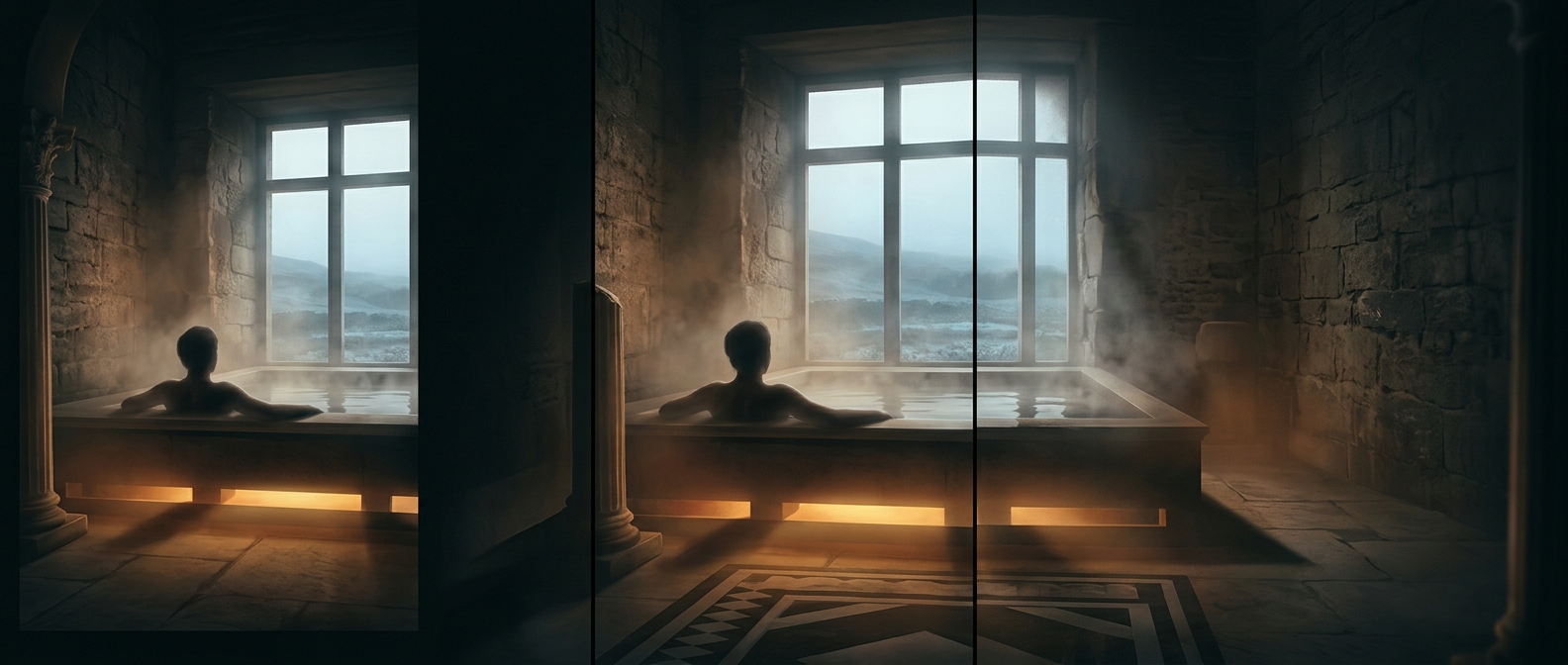
At Vindolanda, bathing depended on an engineered system rather than a tub of hot water. A furnace fed hot air into spaces beneath raised floors and through cavities in some walls. This hypocaust—a method of heating a building from below—warmed rooms to different temperatures, so bathers could move between hotter and cooler spaces instead of facing one abrupt plunge.
Keeping that system running took fuel and labor. The warmth was therefore a built feature of life at the fort, not a casual convenience: it brought Roman building technology into a military settlement on the northern frontier.
A routine built around time together
Roman bathing often involved more than washing. People could exercise, sit in heated rooms, and use oil to loosen dirt and sweat before scraping it from the skin with a curved tool called a strigil. The sequence made a visit take time, turning the bathhouse into a place where people encountered one another repeatedly rather than rushing in and out.
That mattered at a fort far from Rome. Soldiers’ lives were organized around duty, but shared facilities gave them space for conversation and leisure beyond the barracks. The bathhouse’s importance lay not only in its warmth, but in the social routine its rooms made possible: a frontier outpost could feel connected to Roman habits through the ordinary act of spending an afternoon bathing.