A victory paid for in more than one way
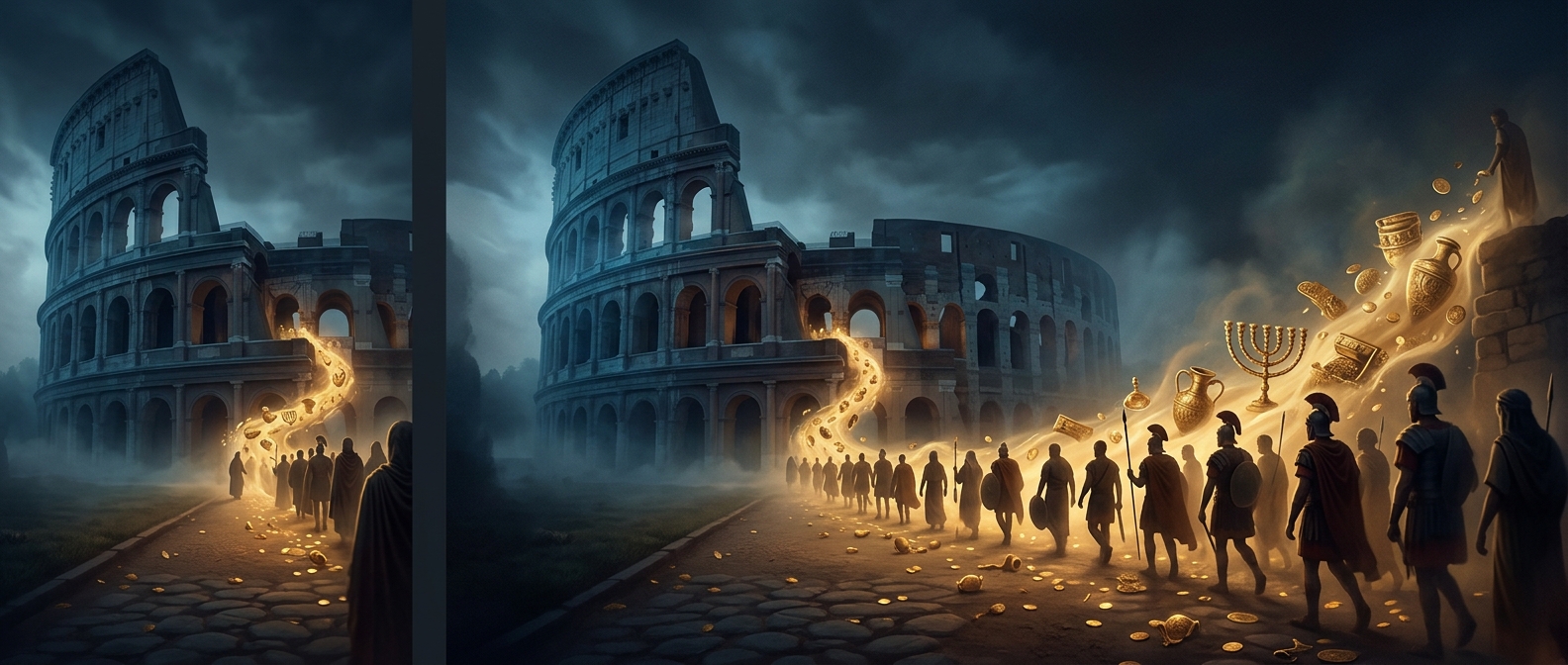
Rome’s sack of Jerusalem in 70 CE yielded valuable spoils, including objects taken from the Second Temple. The captured wealth helped fund the building program of Emperor Vespasian, who had seized power after a civil war. Among its most conspicuous projects was the amphitheater later known as the Colosseum.
The money mattered, but so did the spectacle of where it went. Vespasian placed the new arena on the grounds of Nero’s enormous private palace, replacing part of an imperial pleasure complex with a venue for public events. The choice made the building a visible claim: the new dynasty presented itself as giving back to Rome what an earlier ruler had reserved for himself.
The monument turned conquest into a public message
The Colosseum was not simply a treasury converted into stone. Its construction required large-scale planning, materials, skilled trades, and labor. Enslaved people captured in the war were brought to Rome, but the surviving evidence does not establish that they alone—or that any particular group of captives—built the arena. Their forced displacement was part of the same triumph that supplied the spoils and celebrated Roman power.
That triumph was made legible to people who might never enter the building. The Arch of Titus, erected after Titus’s victory, shows Roman soldiers carrying sacred objects from the Jerusalem Temple, including a large menorah. The image and the amphitheater belonged to a broader public story: Rome had conquered, and the Flavian emperors could turn victory into both civic entertainment and lasting architecture.
The Colosseum’s origin therefore carries two histories at once: a public venue built in the heart of Rome, and the conquest, plunder, and enslavement that helped make the Flavian display of power possible.