A theater roof built like a ship’s rigging
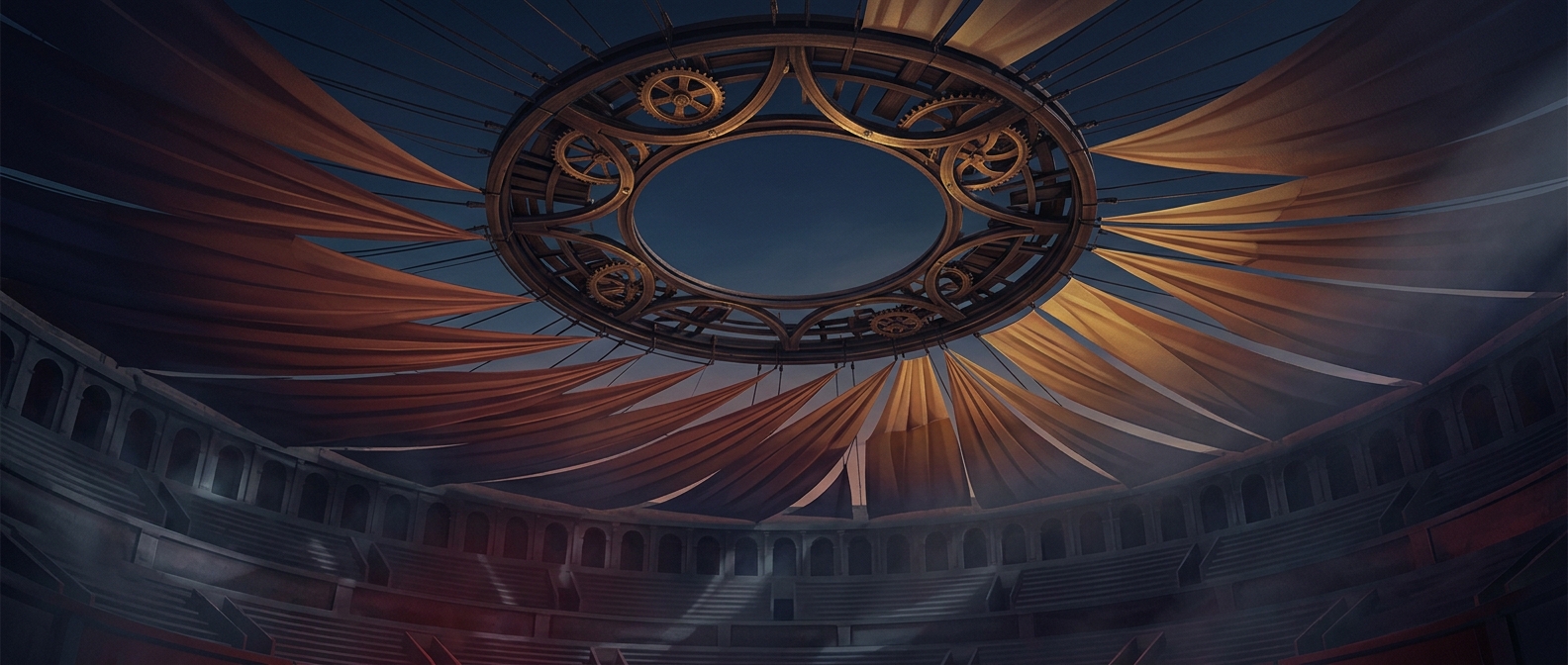
The Colosseum’s velarium was a vast canvas awning stretched above the seating to shield spectators from direct sun. It was not a solid roof: the fabric was arranged in sections and supported by a framework of ropes and poles around the amphitheater’s upper rim. Working those lines let a crew extend or draw back the covering.
That made the shade a practical engineering problem. A canopy large enough to cover much of the audience had to be raised, tensioned, and managed without becoming an unwieldy sheet of cloth. The ropes carried the load; the crew had to coordinate their movements so the fabric stayed supported rather than bunching or sagging.
Why sailors were the right crew
Roman naval personnel brought experience with the same basic challenge at sea: handling ropes, sails, and large flexible surfaces under tension. Their work on the velarium applied that specialized skill on land. The awning was not simply a decorative addition that attendants could pull open; it was a piece of large-scale rigging that required trained hands.
The shade could make the seats more tolerable, but it did not turn the arena into an indoor, climate-controlled space. Its achievement was more specific: it put naval-style rope work to use in managing sunlight over a huge public crowd. At the Colosseum, spectators’ comfort depended in part on a crew doing the sort of coordinated labor usually associated with a ship’s deck.