Why the Dome Has an Open Center
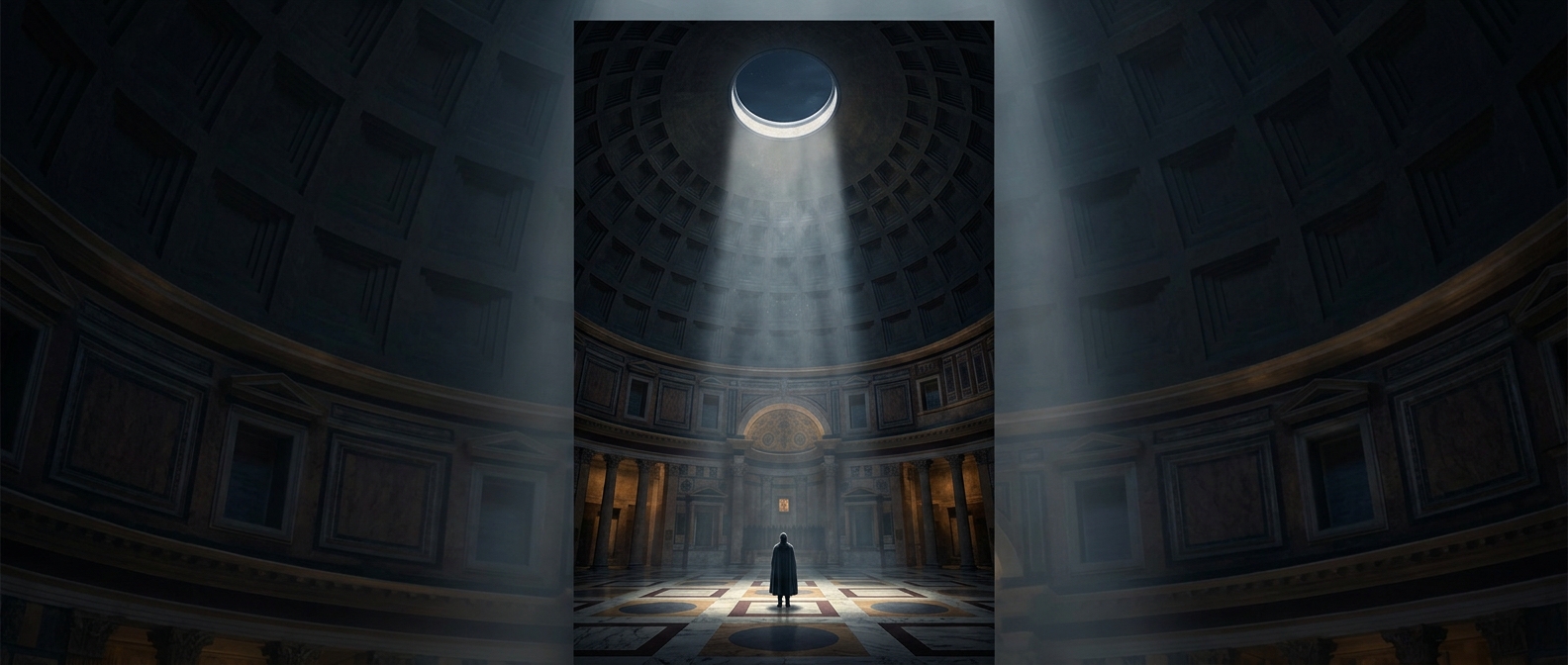
The Pantheon’s dome rises over a circular room, and its opening—the oculus—is the only direct source of daylight. As the sun moves, the beam shifts across the interior, making the building’s vast, curved space perceptible through changing light rather than windows in the walls.
The opening also changes the engineering of the dome. The highest part of a dome is especially demanding to support; leaving out its center removes material where it would add weight without enclosing another room. The Pantheon’s builders also varied the concrete and used recessed panels, called coffers, to reduce the dome’s load as it rises. The result is a huge roof that does not need a solid cap.
A Roof That Includes the Weather
Because the oculus is open, the interior is not sealed off from the outside. Rain can fall onto the floor, so the building’s design has to manage water rather than keep every drop out. The shallow slope guides it toward drains, while the broad floor gives it room to disperse on the way.
That arrangement makes the opening more than a dramatic feature: it ties the room’s structure, lighting, and drainage together. On a rainy day, the Pantheon remains a functioning interior—not because the roof keeps the weather out, but because the building gives the water somewhere to go.