How sunlight completes the stone serpent
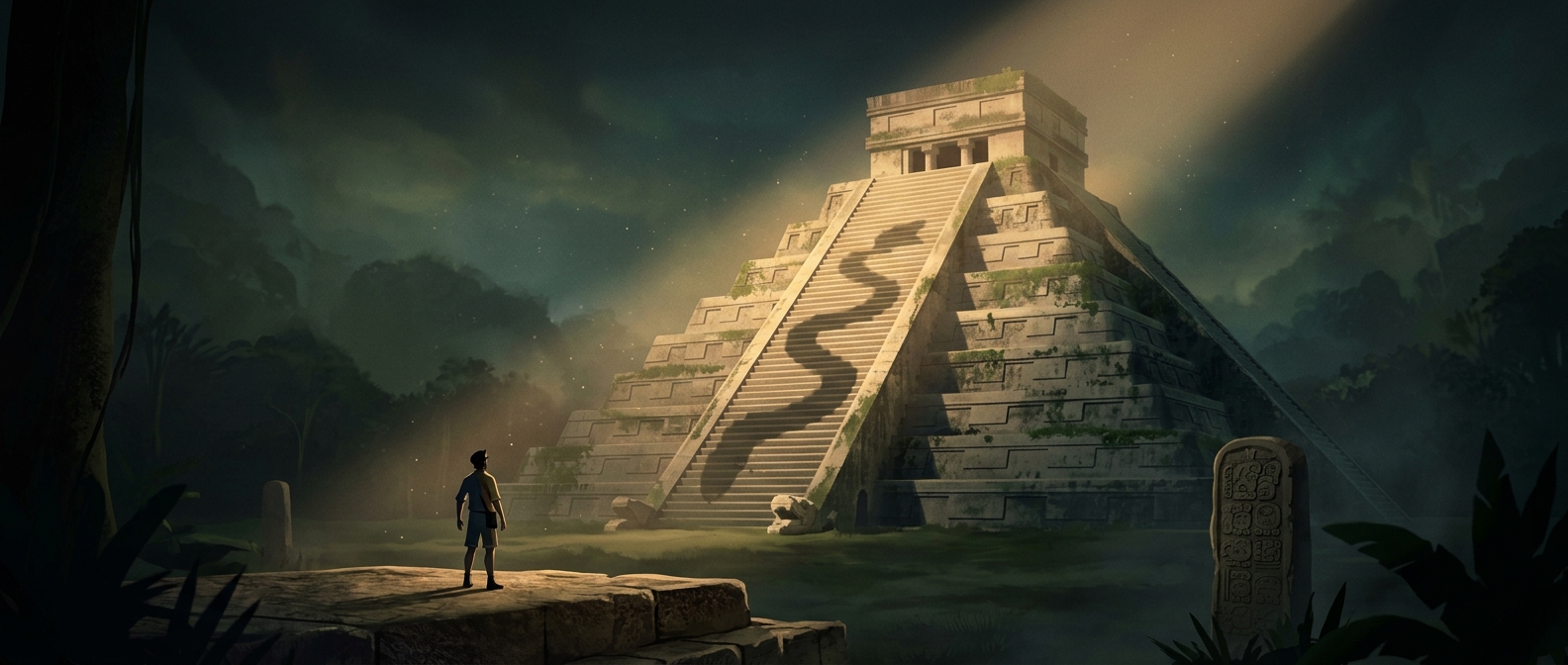
At Chichén Itzá, the pyramid known as El Castillo is built around four stairways, each bordered by a sloping stone balustrade. Along the northern stairway, a row of carved triangular forms gives the balustrade a zigzag edge. Near the base, that line meets a sculpted serpent head. When the Sun sits low enough in the sky, the corners of the pyramid cast alternating patches of light and shadow across the slope, making the triangles appear to continue down toward the head.
As the Sun shifts, the patches change position. The result is not a moving statue but a visual sequence: the serpent’s body seems to lengthen or ripple along the staircase before fading as the angle of the light changes. The building itself supplies the pattern; sunlight provides its motion.
A temple shaped for a powerful symbol
The serpent is associated with Kukulkan, a feathered serpent deity important in Maya tradition. At El Castillo, the image is integrated into the architecture rather than simply carved onto a wall. A visitor watching from below could see the building’s hard edges become part of a larger, animated figure—an effect that links the temple, the sky, and a sacred symbol in one view.
The shadow display is especially associated with the equinoxes, when day and night are nearly equal in length. Its appearance depends on the Sun’s angle, so the effect develops and changes rather than switching on like a modern light show. That gradual transformation is the memorable part: for a short time, the pyramid seems to make its own serpent move, using no mechanism beyond carefully shaped stone and the changing sky.