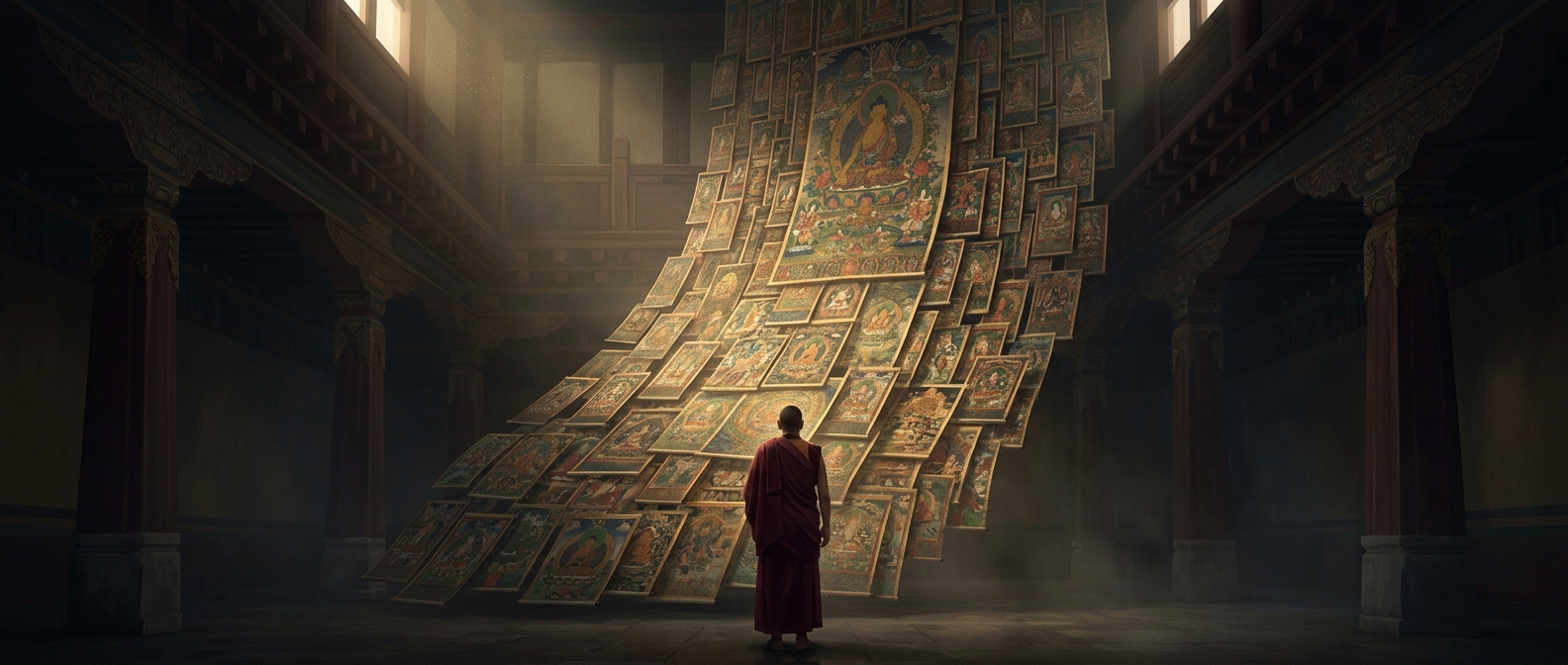
Why the Potala’s painted scrolls mattered
A painted scroll is more than a picture that can be rolled up. In Tibetan Buddhist practice, such images can make a sacred figure or teaching visible during prayer and ceremony. Unrolled for viewing and rolled away afterward, they are portable objects of devotion—unlike the palace’s wall paintings, which are fixed in place.
A collection shaped by palace life
The Potala served as a seat of religious authority and government as well as a residence. Its rooms supported worship, formal events, study, and administration. Painted scrolls suited that setting: they could be brought out when needed, displayed in a particular space, and protected between uses. Over generations, objects made for different religious and ceremonial purposes became part of the palace’s holdings.
The distinction between a scroll and a mural matters in a complex built across many levels. A mural belongs to the room; a scroll can move with the people and rituals that give it meaning. The collection records not just what the palace looked like, but how its inhabitants used its spaces.