A repeated figure with a changing gesture
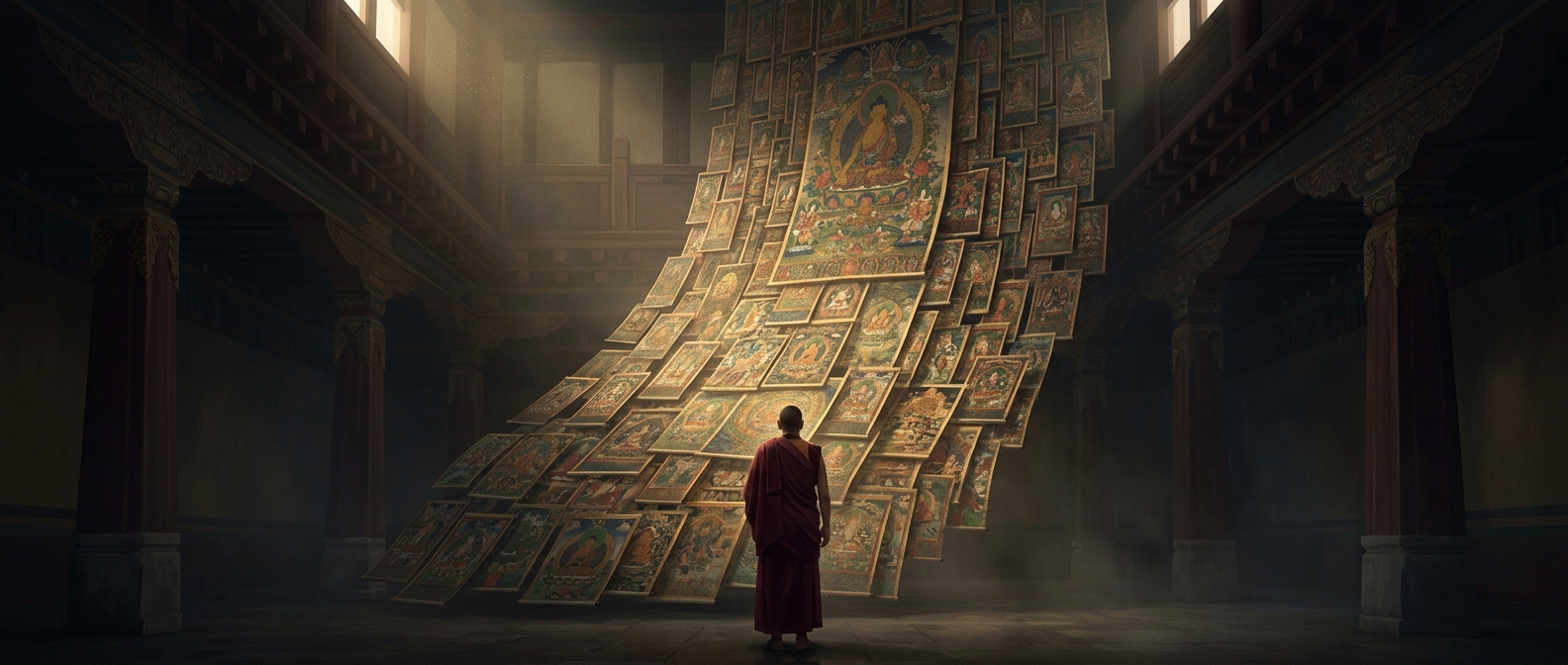
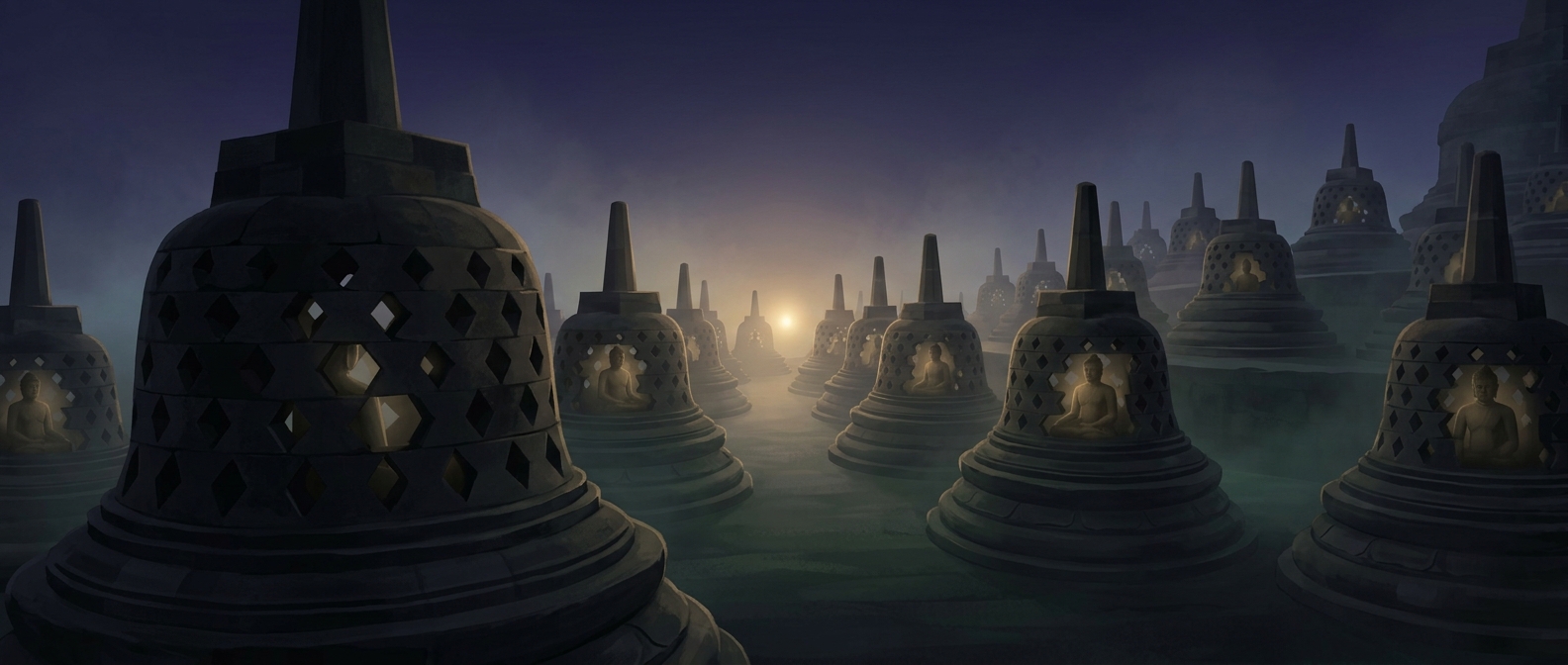
Borobudur’s seated Buddhas are not simply copies placed wherever space allowed. Their positions and hand gestures—called mudras, symbolic poses made with the hands—help give the temple’s repeated imagery a pattern. On the square terraces, figures sit in niches along the walls; higher up, more Buddhas appear inside perforated, bell-shaped stupas.
Some gestures differ according to the direction a statue faces. In Buddhist iconography, these poses can identify particular aspects of the Buddha and carry meanings such as meditation, reassurance, or calling the earth to witness. The distinction may be subtle: a visitor often has to look closely at the hands rather than the face.
Repetition turns the climb into a reading
Borobudur is arranged as a series of rising terraces. As visitors move upward, the architecture guides them from enclosed, image-filled galleries toward open circular platforms and the central stupa. The many similar figures make the change in setting especially noticeable: the lower levels invite close inspection, while the upper levels feel more open and less crowded with carved detail.
That layout makes the statues part of the experience of moving through the monument, not just decoration. A visitor can follow the procession of figures, compare gestures, and notice how the temple’s visual order shifts with each level. The small differences reward attention; the repeated forms make the whole climb feel deliberate.