How a Carved Stone Screen Softened Indian Sunlight
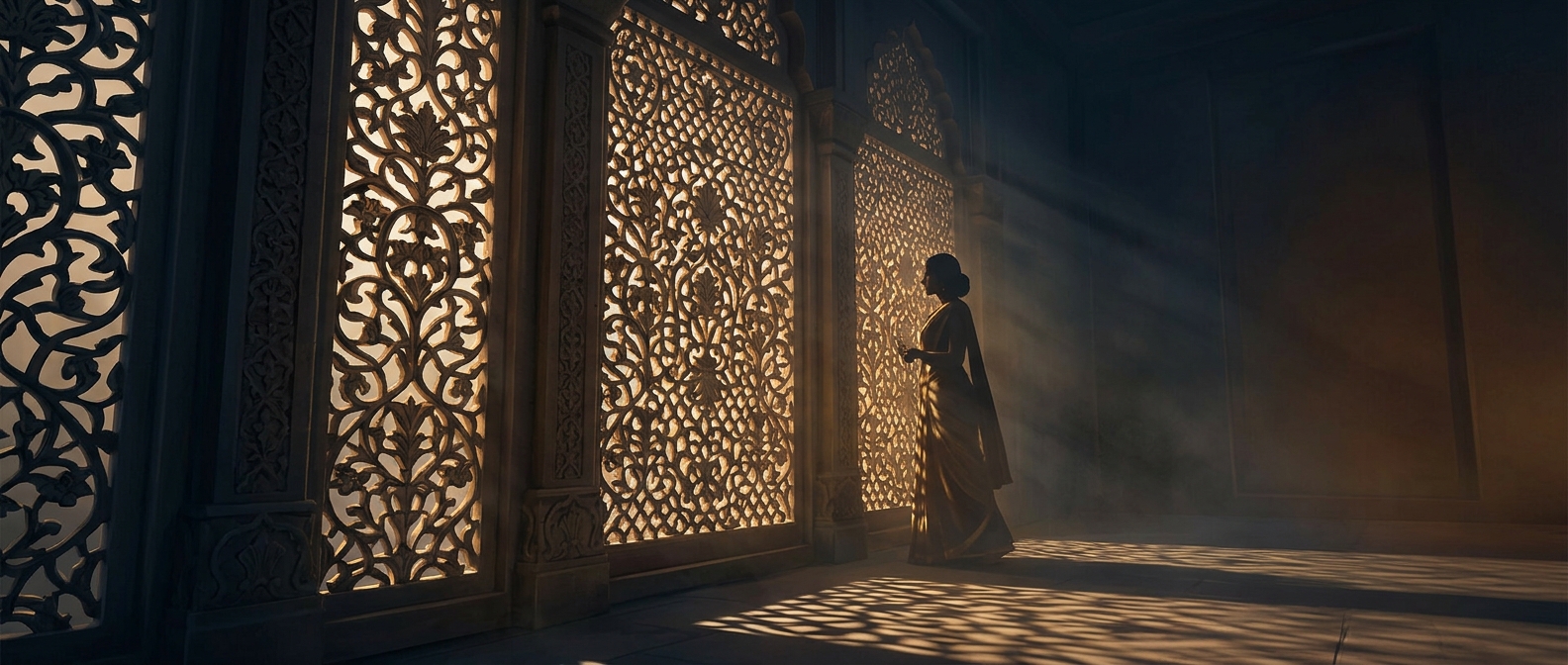
A solid wall stops the sun, but it also stops air and leaves the room dark. A carved stone lattice—a screen pierced with a repeating pattern of openings—offered a more selective boundary. The stone ribs blocked part of the direct sunlight, while the gaps admitted daylight and allowed air to pass.
That combination mattered in hot weather. Shade reduced the sun’s direct glare and heat on the interior; moving air could help occupants feel cooler by carrying warmth away from the body. The screen did not cool a room like a machine. Its effect came from managing light and airflow without sealing the opening.
The Craft Was in What Carvers Left Behind
Making a lattice required more than cutting a pattern into stone. Carvers had to remove enough material to create openings while leaving a connected framework strong enough to hold together. Every narrow rib was part of both the design and the structure. A denser pattern could provide more shade and visual screening, but it also left less room for light and air.
The result changed with the sun. Light passing through the openings broke into patches and patterned shadows that shifted across floors and walls. From inside, occupants could receive daylight and some privacy without closing themselves off from the outdoors. The window was therefore not simply a decorated wall: its pattern shaped the room’s light, ventilation, and view at once.