A seed built for a shoreline journey
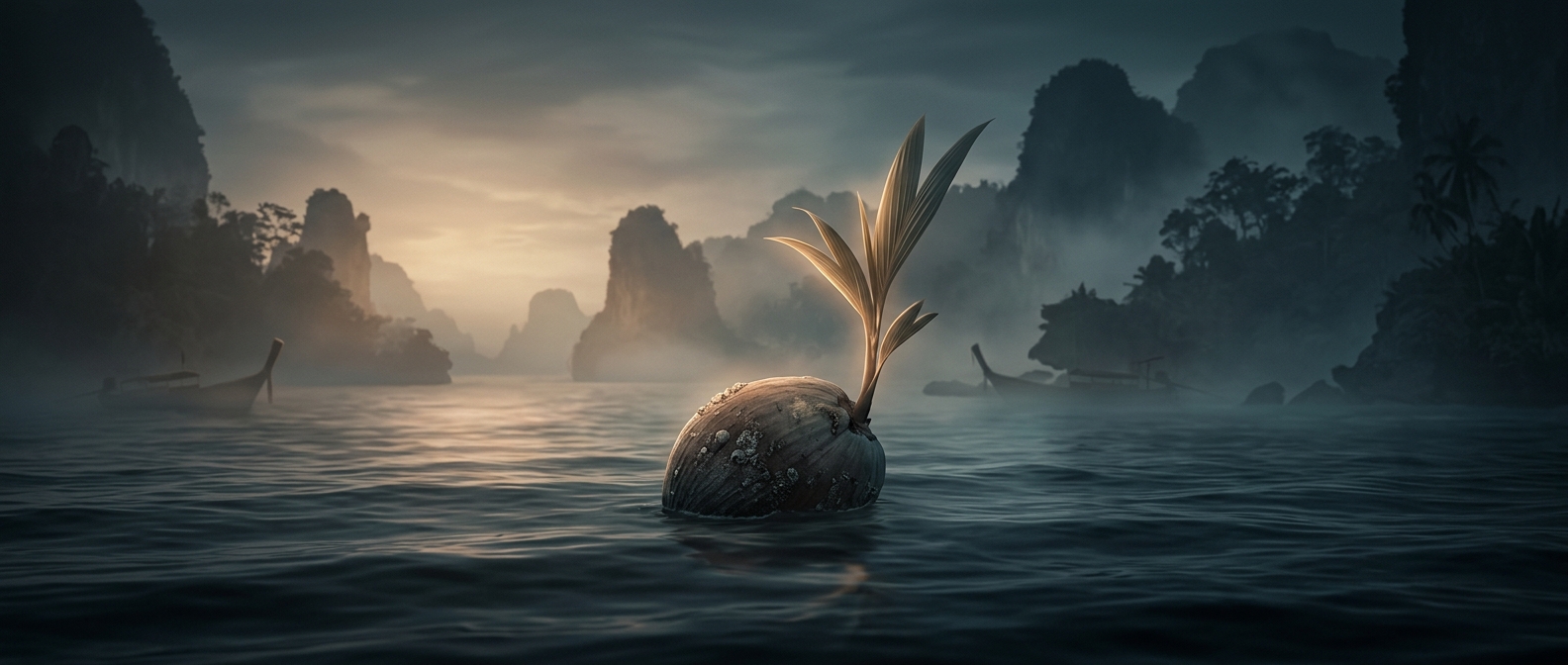
A coconut is not simply a seed that happens to bob. Its thick outer husk contains buoyant fibers and pockets of air, while its tougher inner shell shields the seed inside. Together, those layers help keep seawater from quickly damaging the part that can sprout. If currents carry a coconut to land while it is still viable, it can take root in the warm, wet conditions favored by coconut palms.
That voyage is a matter of chance, not a straight route. Currents can carry floating fruit along a coast or out to sea, and many will never reach suitable ground. A coconut stranded on a cold shore, buried too deeply, or battered apart by surf has no useful destination, however well it floats.
Natural drift—and human movement
Over generations, successful landings could help palms spread between tropical shorelines. But the coconuts found around the region do not tell a story of ocean currents alone: people also moved them, planting a valuable food and material wherever they traveled. Natural drift and human transport could reinforce each other, making the palm both a coastal survivor and a useful companion to island communities.
The husk’s toughness therefore had a double consequence. It protected a living seed through an uncertain sea crossing, and later gave people a durable package to carry. The same fruit could arrive on a beach by current—or be brought there deliberately, ready to grow.