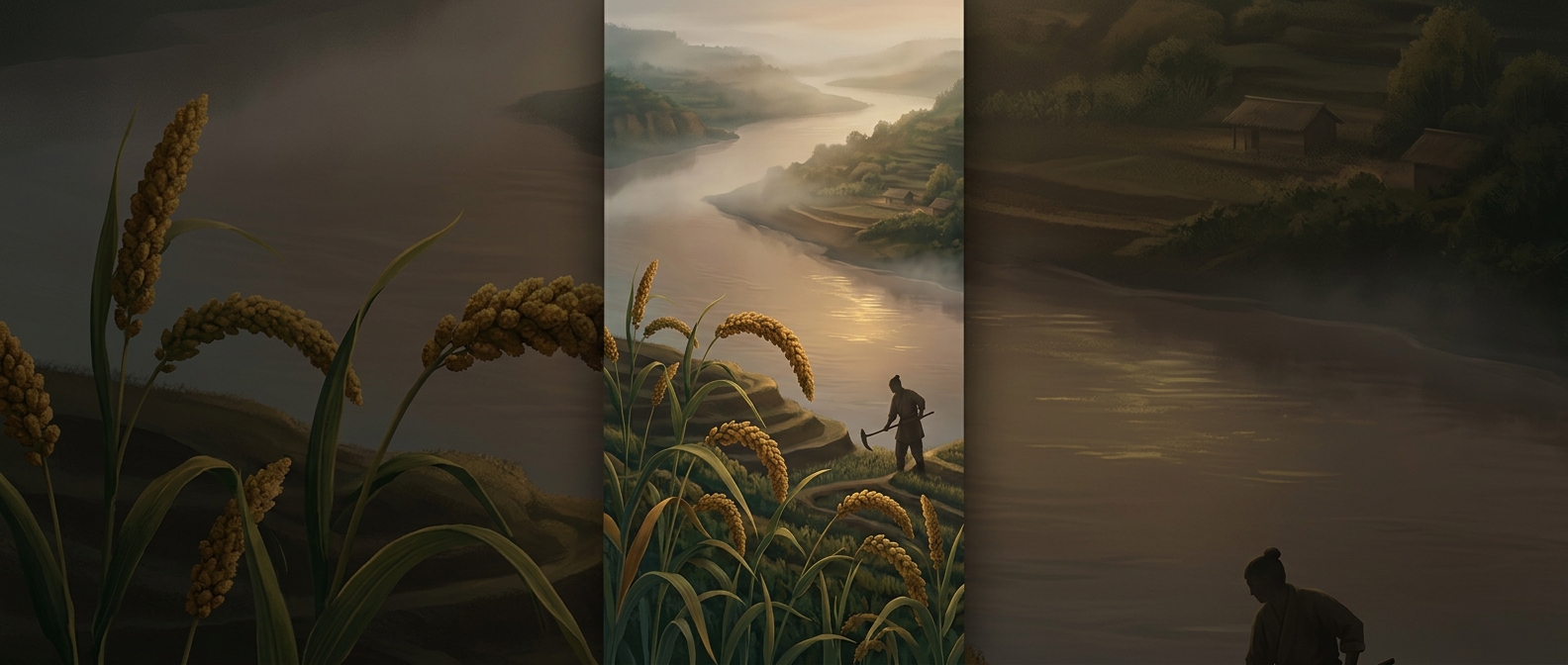
Why Millet Fit the Yellow River Valley
For early farmers in northern China, millet was a practical crop for a landscape where rainfall could be unreliable. Two kinds—foxtail millet and broomcorn millet—were widely cultivated. They grow relatively quickly and can tolerate dry conditions better than rice, making them a better match for much of the Yellow River region’s climate and soils.
That did not make millet effortless: farmers still had to prepare fields, sow seed, weed, and harvest. But a crop that could mature without flooded paddies gave communities a dependable way to turn limited water and a short growing season into food.
From Field Grain to Household Staple
Millet’s small seeds could be stored after harvest and cooked into porridges and other simple foods. Reliable stores mattered beyond meals: they helped households bridge the gap between harvests and gave settled communities a buffer against a poor season. As farming expanded, millet became deeply established in northern China’s food supply.
Rice followed a different agricultural logic. It thrives in wetter environments and, in many places, is grown in flooded paddies. Its later prominence did not mean millet had been a minor crop; it reflected the spread of rice cultivation and changing regional food systems. The contrast is a reminder that ancient Chinese agriculture was not built around one grain: millet anchored the drier north while rice was better suited to wetter regions.