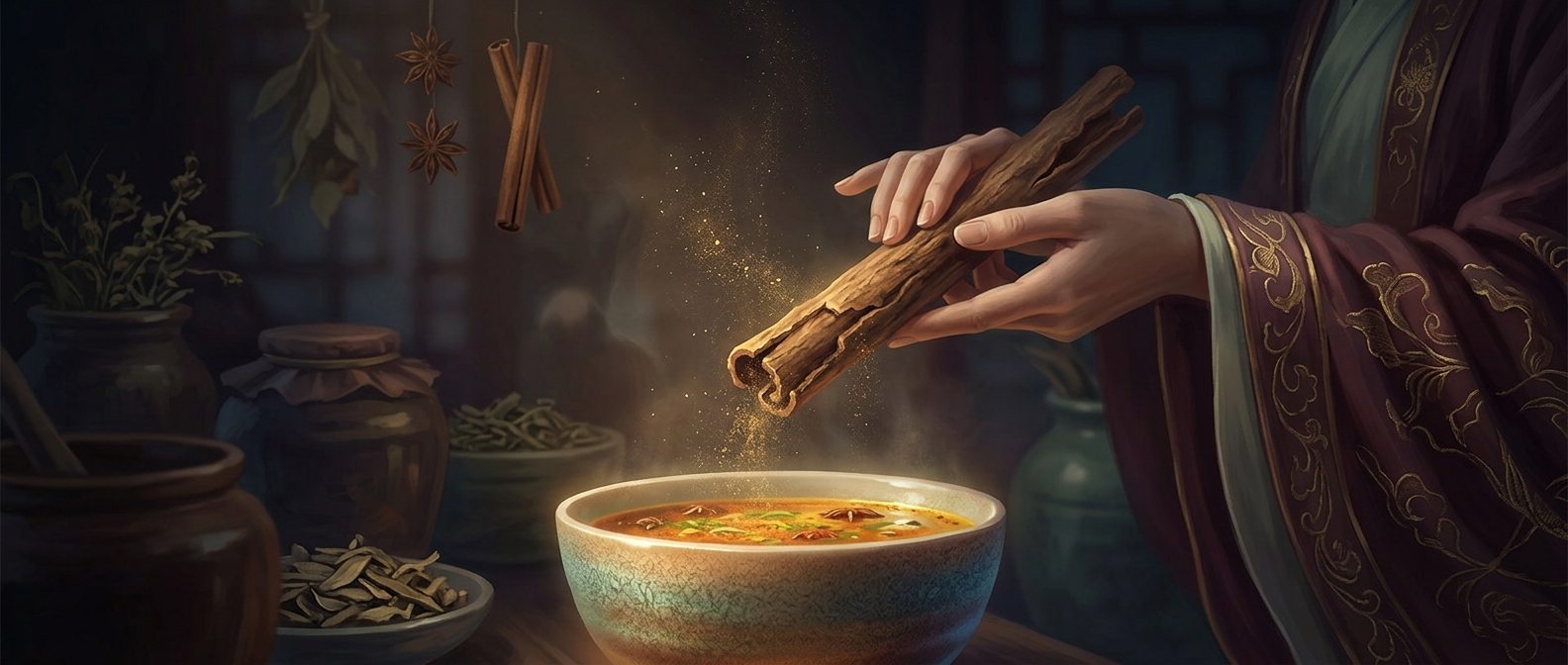
How tree bark became seasoning
Cassia bark did more than add a sweet, warm smell to a pot. Its flavor comes from aromatic compounds held in the bark. As a piece simmered, heat and water drew some of those compounds into the food, seasoning the liquid as it cooked. The cook could then remove the bark, leaving its flavor behind.
That made cassia useful in dishes that cooked slowly: the bark could steep while other ingredients softened, without needing to be ground or measured from a jar. Its tough, woody texture was a drawback to eating, but an advantage for simmering—it could flavor a pot without falling apart into it.
A seasoning gathered, not stored in a jar
Before prepared spices were commonplace, getting a flavoring could mean collecting it in the form it grew. Cassia turned part of a tree into a cooking ingredient: strip off the bark, add it to the pot, and let heat carry its aroma into the meal. The seasoning was not sprinkled on; it was steeped in. That simple method made a piece of bark useful even after it was lifted from the finished dish.