From Wild Nut to Managed Orchard
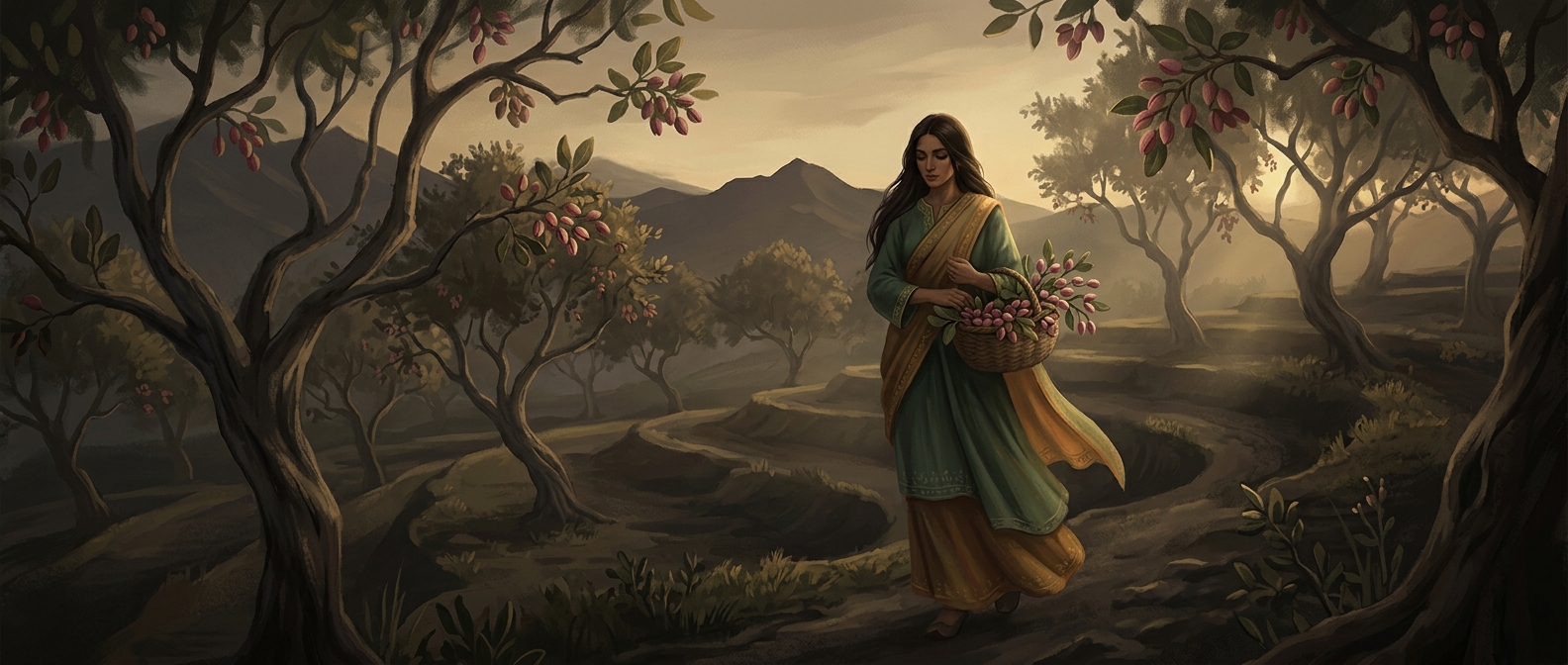
Pistachios grow on trees native to a broad region stretching across western and Central Asia. In Central Asia, cultivating them meant tending valuable, slow-growing trees rather than simply collecting nuts from the landscape. A pistachio orchard takes patience: young trees need years to mature before they produce a substantial crop, so planting one was a long-term investment in land and labor.
The trees also have a distinctive reproductive arrangement. Male and female flowers grow on separate trees, and wind carries pollen between them. Orchard growers therefore need both sexes in the right place; a stand of female trees alone will not reliably produce nuts. That practical knowledge turns cultivation into more than planting seeds—it requires managing how trees reproduce.
A Crop Suited to Dry Country
Pistachio trees can tolerate dry conditions, which makes them useful in landscapes where water is scarce and many other fruit crops struggle. Their value also comes from the nut itself: it can be dried and stored, making a harvest less perishable than fresh fruit. Those traits helped make pistachios a crop worth tending across a region where climate and distance shaped what people could grow and keep.
The shell that resists a fingernail is the final, familiar part of a much longer process: years of tree growth, careful orchard planning, and a harvest that could be preserved for later.