A landscape reduced to a tray
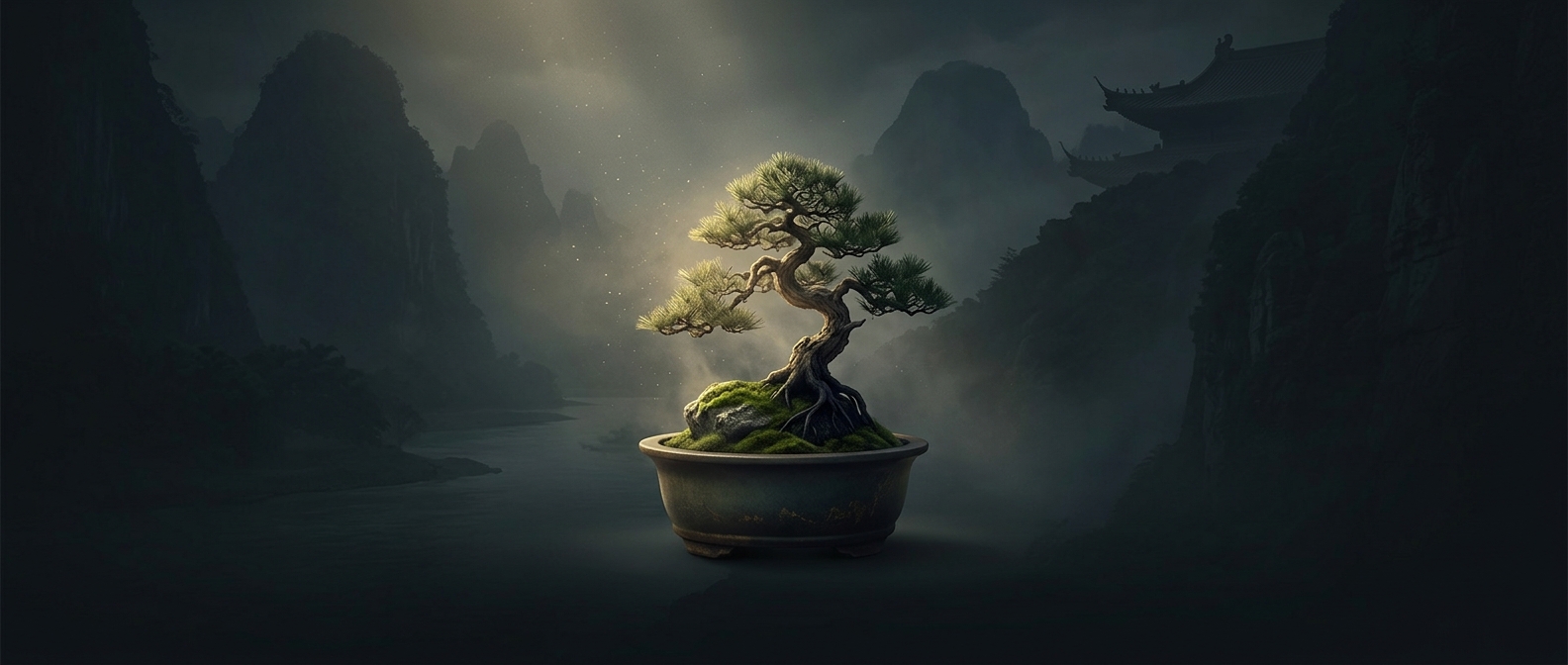
Penjing is often translated as “tray scenery”: pen refers to a basin or container, and jing to scenery. The practice is broader than shaping a single tree. A composition might pair a miniature tree with rocks, moss, or other small elements, suggesting a mountain slope, an old grove, or a scene beside water. The pot is not just a holder; its shape and empty space help define the landscape.
Scale created through care
The illusion depends on making a living plant appear aged and expansive while keeping it small. Growers guide its form over time, trimming shoots and managing roots so the tree can remain in a shallow container. The aim is not simply to make every branch short: the arrangement must still look balanced, as if its shapes belong to a larger natural scene.
That living quality makes penjing different from a finished sculpture. A tree keeps growing, so its outline can drift away from the composition. Watering, pruning, and other adjustments are part of maintaining the scene, not afterthoughts. Even a carefully arranged rock or patch of moss can change how the tree’s scale and direction are read.
A scene that never stays finished
The small container concentrates attention: a slight change in branch position may alter the whole landscape. Penjing therefore turns cultivation into ongoing composition. Its miniature world is never wholly fixed; the grower must keep negotiating between the plant’s growth and the scene the arrangement is meant to evoke.