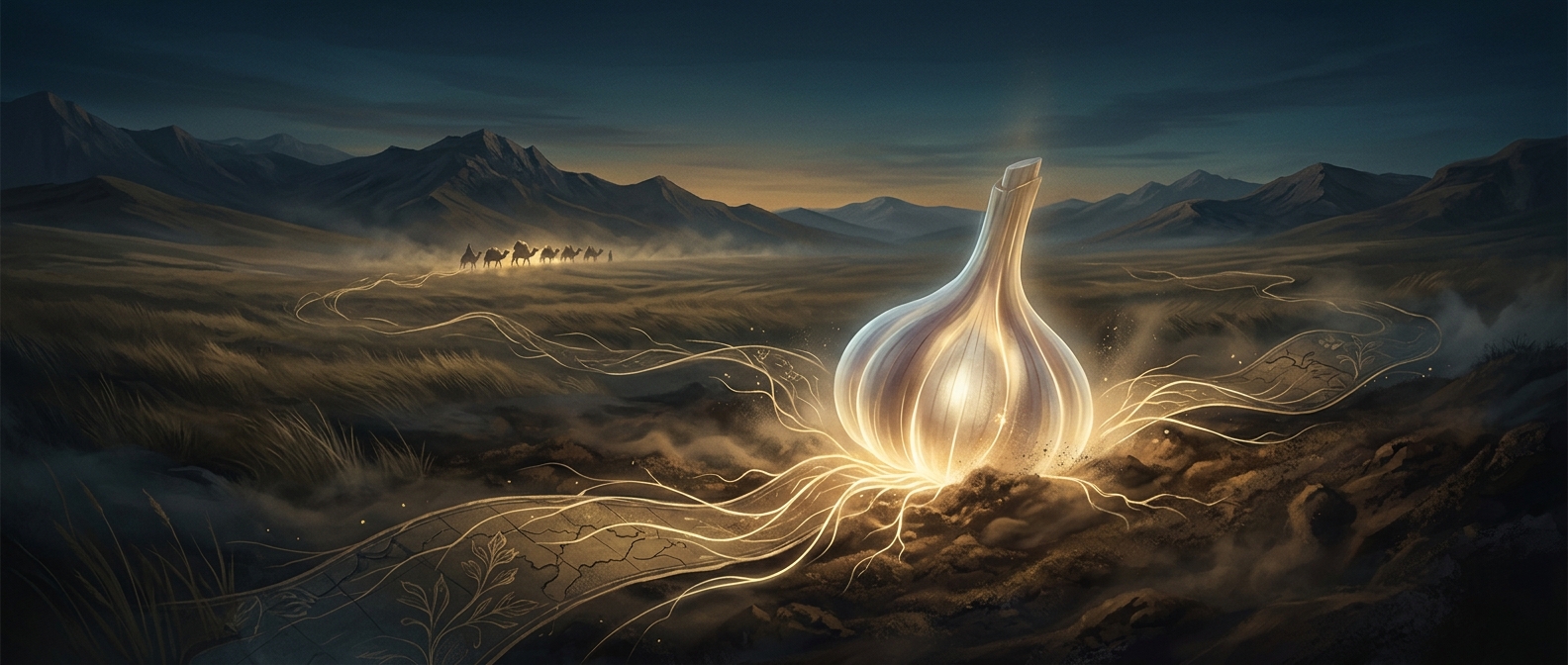
How a Wild Plant Became a Crop
Garlic’s path into cultivation began with a practical choice: people favored plants whose underground bulbs were useful in cooking and could be replanted. A garlic bulb is made up of cloves, and planting a clove can grow a new plant. That made it possible to preserve a valued type from one season to the next rather than rely only on finding it growing wild.
Over generations, tending and replanting favored garlic with traits people wanted, especially substantial bulbs and a strong flavor. This process—domestication—does not require a single inventor or one decisive moment. It can unfold gradually as communities repeatedly choose which plants to keep.
From Central Asia to Many Kitchens
Once people cultivated garlic, its small, portable cloves made it easier to carry and plant in new places. As communities traveled and exchanged goods, the crop could spread beyond the region where cultivation began. In each new setting, growers could keep replanting garlic suited to local conditions and tastes.
That long movement helps explain why garlic became more than a wild plant gathered for use: it became a crop that people could transport, reproduce, and adapt. The same clove that seasons a meal can also start the next generation of plants.