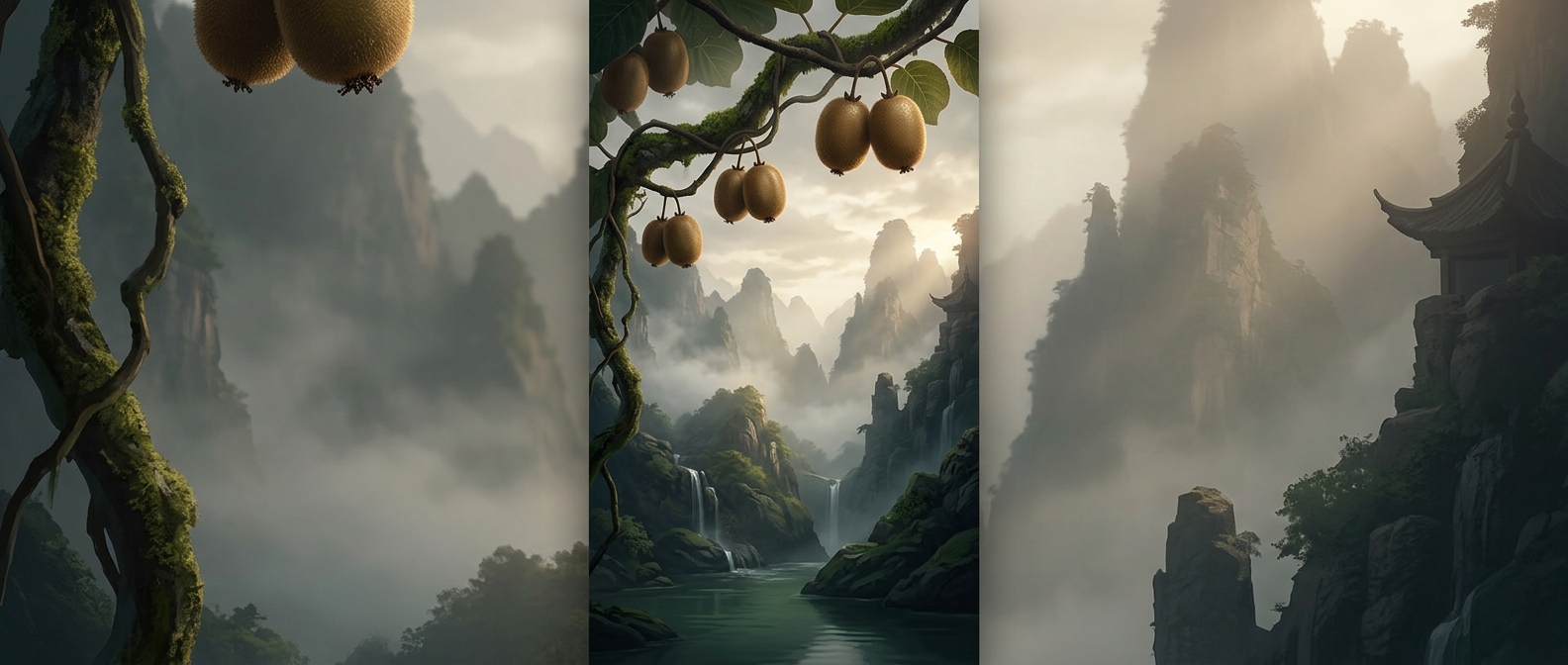
From Chinese Forests to New Zealand Orchards
Kiwifruit’s wild ancestors grew in China’s mountainous forests, where they climbed through vegetation rather than forming the tidy rows of a commercial orchard. The fruit belongs to the genus Actinidia, a group of climbing plants with many species. The familiar fuzzy, brown-skinned fruit is only one cultivated kind; its modern form reflects generations of selection and growing beyond its original habitat.
A Plant Crosses the Pacific
In the early 20th century, seeds of the Chinese vine were carried to New Zealand. Among the people who helped bring them there was Isabel Fraser, a school principal who returned from China in 1904 with seeds. New Zealand gardeners planted the vines, and growers gradually learned how to propagate and cultivate them. A plant that had been gathered in the wild was becoming an orchard crop.
That change took more than a new location. Growers needed vines that produced fruit reliably and could withstand the long journey to overseas markets. Selecting useful plants and improving cultivation made the crop commercially viable; it was not simply a matter of planting a Chinese wild vine and waiting for a global industry to appear.
A New Name for a New Market
The fruit was long known in New Zealand as the Chinese gooseberry. When growers began exporting it, they adopted the name “kiwifruit,” which gave the product a distinctive New Zealand identity and avoided a name that could be confused with gooseberries. The renaming helped connect the fruit to the country that had developed it as an export crop—not to the place where its wild ancestors first grew.
That contrast is the fruit’s unexpected history: China supplied the plant’s original home, while New Zealand shaped the crop and name that made it familiar around the world.