How rice became a crop in the Pearl River Valley
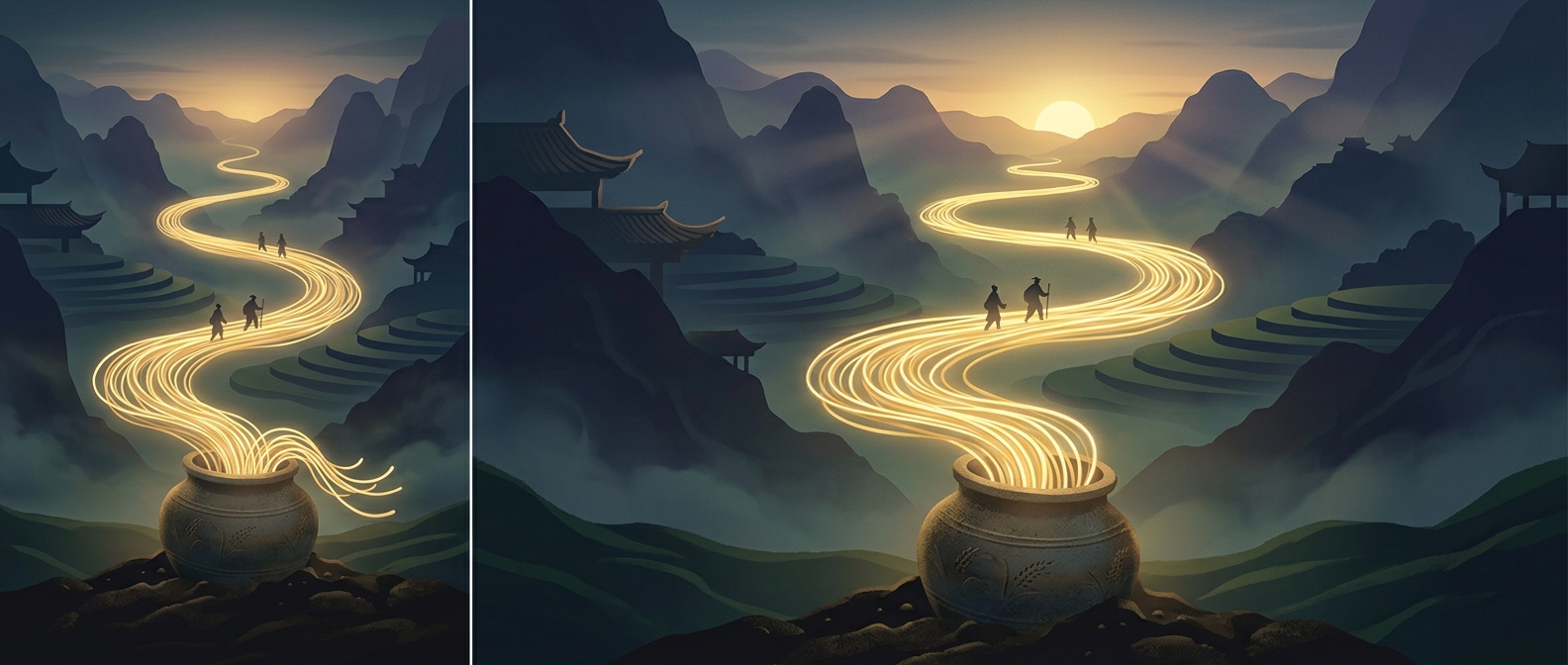
Domestication was not a single discovery. It was a gradual change in which people gathered and replanted rice, favoring plants whose seeds were easier to harvest and whose growth suited managed fields. Across generations, those choices made rice less like a wild plant people happened upon and more like a dependable crop they could cultivate.
That shift also changed the work around food. Farmers had to save seed, prepare growing areas, and return to the same fields. A harvest could now depend on decisions made months earlier, tying families more closely to a particular landscape and its seasonal rhythms.
Why farmers managed water
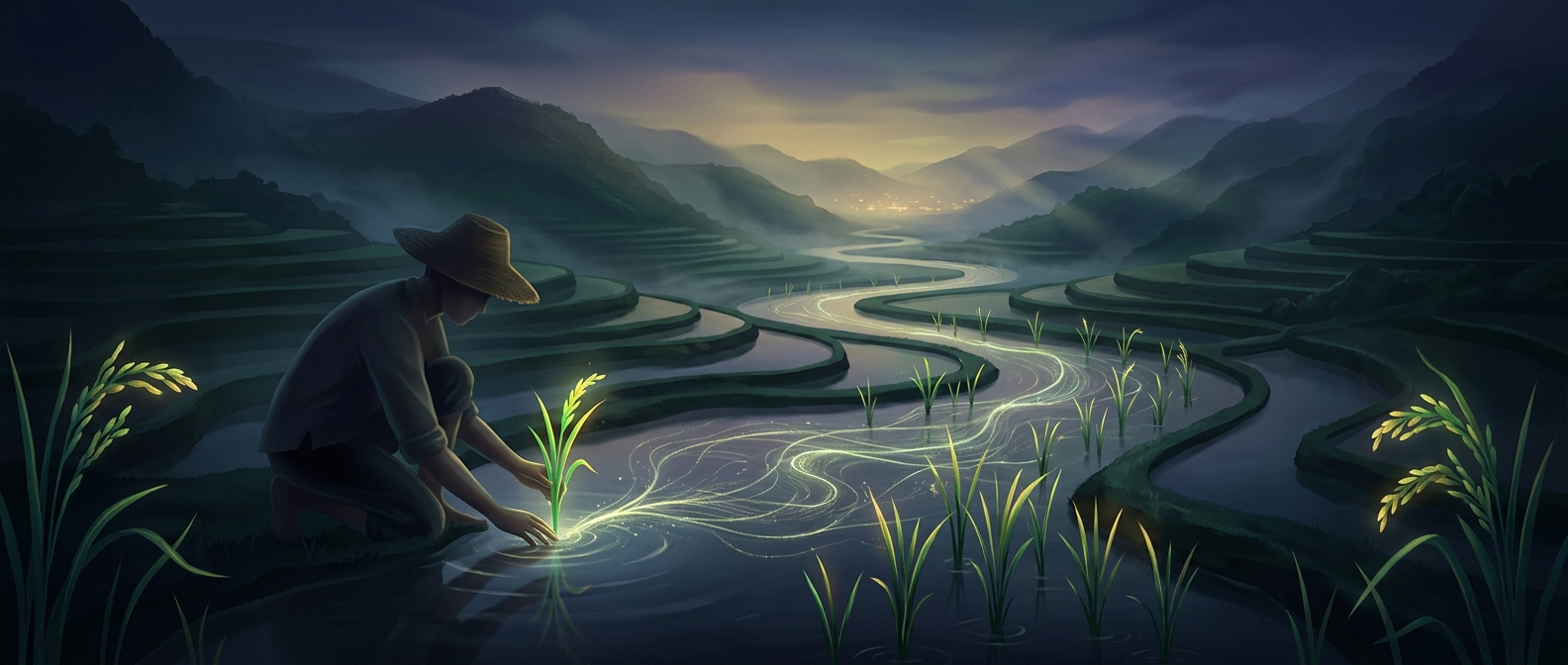
Rice can grow in wet ground, and flooding a field can help suppress weeds that compete with young plants. But a paddy is not simply a patch left underwater: farmers must guide and contain water, keep fields usable, and time the work to the crop’s growth. The method turns local water and terrain into part of the farming system.
That control came at a cost. Preparing and maintaining paddies required sustained labor, often making cultivation a shared undertaking rather than a task completed by one person. In return, careful water management could protect the crop from some competing plants and make harvests more reliable.
A landscape shaped by cultivation
The important change was therefore not just that people ate rice. They began organizing work and land around its needs. Fields, water, seed, and labor became linked: a decision about where to plant or how to manage water could affect the food available later.
That is the deeper consequence of rice’s early domestication in the Pearl River Valley. It helped turn a wet landscape into a deliberately managed source of food—and made farming depend on coordinating people as well as plants.