How a Hillside Turned a Kiln Into a Production Line
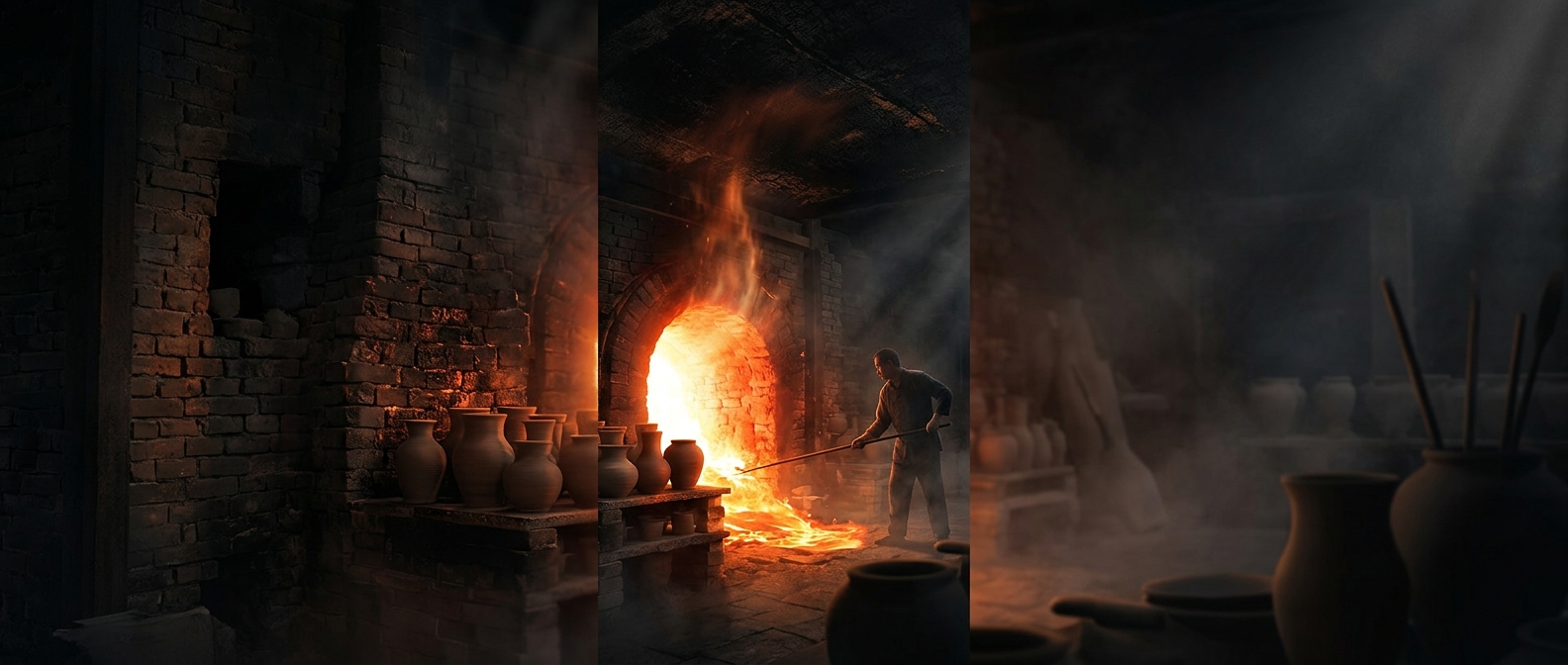
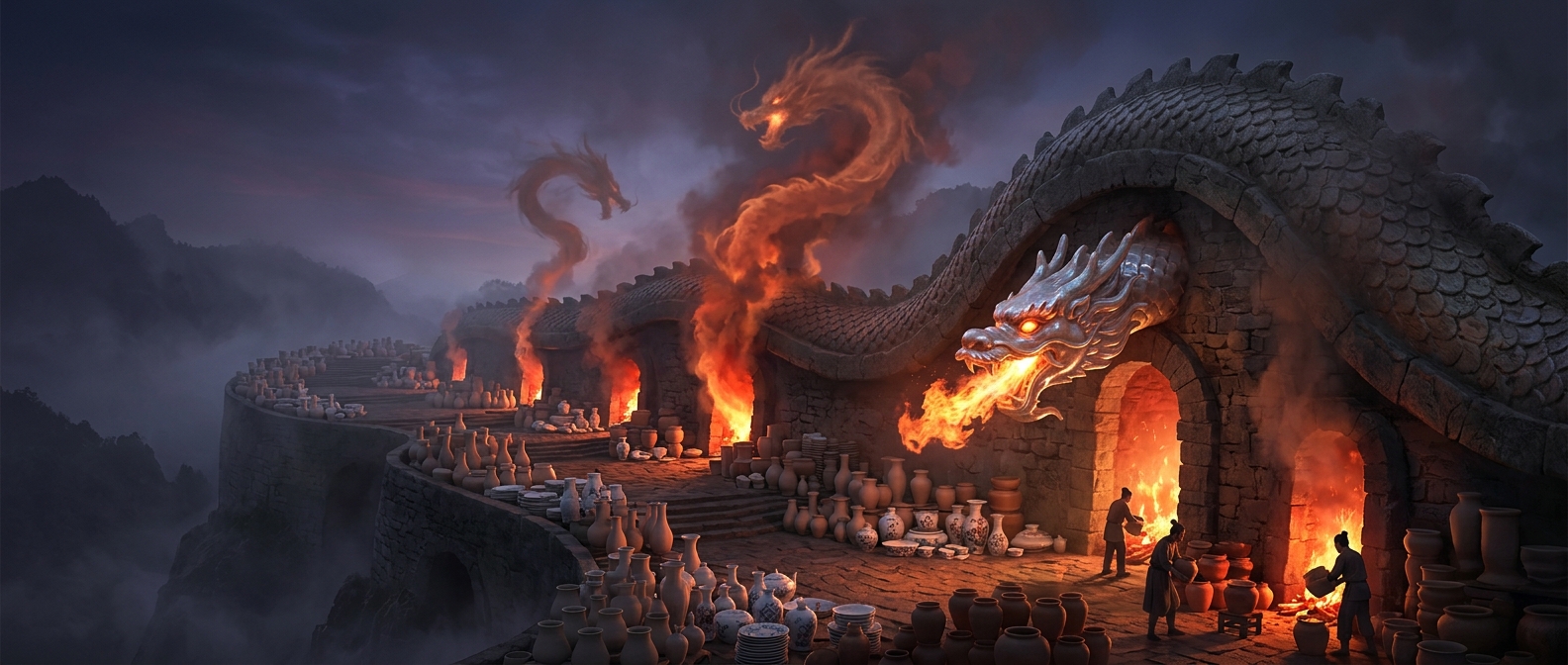
A dragon kiln was a long, sloping firing tunnel rather than a single oven. Its shape used gravity to help move hot gases: flames and smoke rose from the firebox at the lower end, passed over pottery arranged along the slope, and escaped near the top. The rising draft pulled fresh air in below, helping the fire burn without a mechanical blower.
The slope also let a firing serve many loads at once. Potters packed vessels into successive sections, then fed fuel through openings along the kiln as the heat traveled uphill. Instead of firing one small batch and starting over, a crew could bring a large quantity of ware through a single extended firing.
The Slope Created a Problem as Well as an Advantage
Heat did not reach every part of the tunnel in exactly the same way. Lower and upper sections could experience different temperatures and flame conditions, so where a vessel sat mattered. Potters had to arrange pieces with those differences in mind, protecting delicate ware and matching particular pieces to the heat they needed.
That made loading and firing skilled work, not merely a matter of building a big fire. The kiln’s scale increased output, but success depended on managing airflow, fuel, and placement across its length. The hillside supplied the draft; the potters had to make that draft useful. A long firing could turn thousands of carefully positioned pieces into a single production run—and a mistake in heat management could affect far more than one pot.