How a Mass Army Avoided Looking Mass-Produced
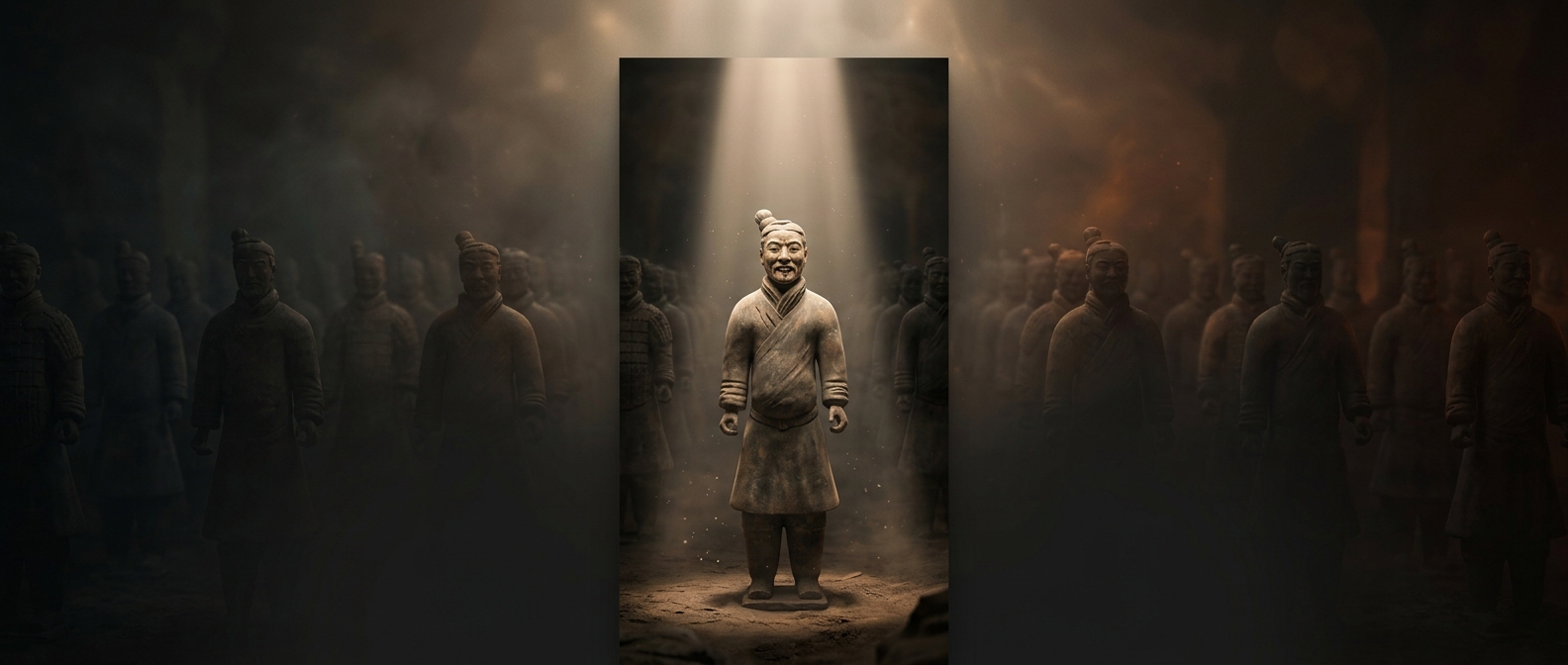
The terracotta army was made on a scale that called for repetition. Workshops could shape recurring parts—such as bodies, limbs, and armor details—in batches, then assemble them into full figures. But a line of identical faces would have made the ranks look like copies. Artisans gave the faces individual treatment, varying features and expressions as they finished the clay.
That mix of standard parts and hand-shaped details was a practical answer to a demanding commission: produce a vast force of life-size soldiers while making each figure read as a person.
Individual Features, Shared Purpose
The faces do not mean the warriors were portraits of named soldiers. Their differences instead give the army a striking human variety: one figure may have a broader face or heavier brows, while another seems more alert or composed. Rank, hairstyle, clothing, and posture also help distinguish figures within the formation.
The result serves the tomb’s larger purpose. The figures were arranged as an army for the burial complex of Qin Shi Huang, China’s first emperor, turning an enormous collection of clay sculptures into an organized force. Repetition built the ranks; variation made those ranks feel populated.