A sudden light entered the court record
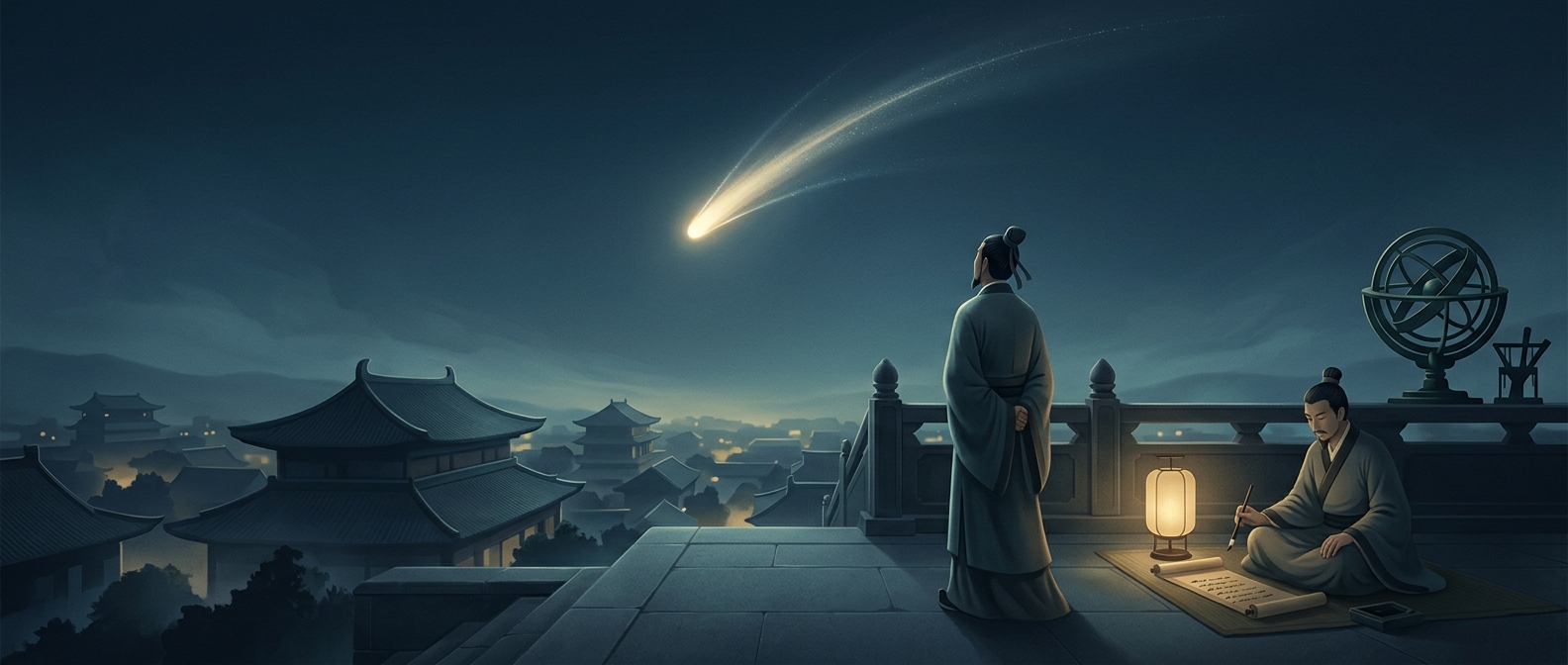
In 1054, Chinese astronomers described a new point of light as a “guest star”—a term for a star-like object that appeared where no bright star had been seen before. It was not a claim that a star had literally arrived from elsewhere. It was a practical way to distinguish a temporary celestial visitor from the familiar, fixed patterns of the sky.
The observation mattered beyond curiosity. Astronomers at the imperial court watched the heavens and kept records that could help interpret events for the ruler. A striking new light therefore belonged both to careful sky-watching and to a system in which unusual celestial signs carried political meaning.
From a guest star to a stellar explosion
The object was a supernova: a star’s catastrophic explosion. Its light traveled across space for thousands of years before reaching Earth, where observers could see it without a telescope. Once the brilliance faded, the event itself was over—but its remains continued to expand.
Those remains are now known as the Crab Nebula, a cloud of gas and debris in the constellation Taurus. At its center is a rapidly spinning neutron star, the compressed core left behind by the explosion. Connecting the old record to this object gave astronomers a rare way to link a written observation from the past with a physical remnant still visible in the sky.
The record’s lasting value is that it preserves more than a remarkable sight: it lets modern astronomers trace one stellar death across nearly a millennium.