From Forest Climber to Spice Crop
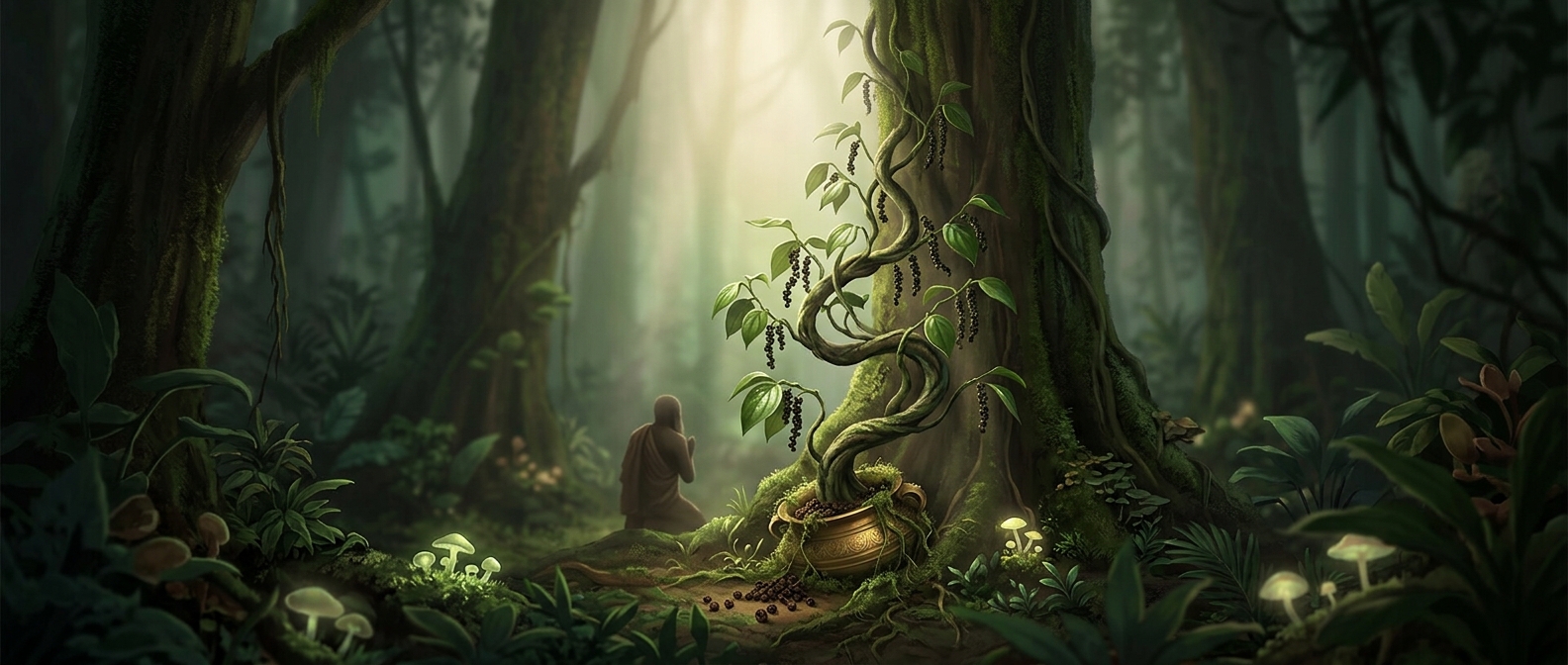
Black pepper comes from a climbing vine, Piper nigrum, native to the humid forests of Kerala and the wider Malabar region of southwestern India. In its forest habitat, the vine uses trees for support as it grows toward light. Farmers could cultivate that same habit: instead of letting the plant climb among wild trees, they trained it up supports in shaded, warm gardens.
The plant’s peppercorns are small fruits, not seeds or dried leaves. They are picked at different stages and processed to produce different forms of pepper. For familiar black pepper, the berries are harvested while still unripe, then dried; their skins darken and wrinkle as moisture leaves them.
A Forest Plant With Far-Reaching Consequences
Growing pepper required more than collecting a wild spice. Vines needed a suitable climate, support, and years of care before yielding well, making cultivation a settled agricultural practice. Once growers could produce the spice reliably, pepper became a valuable cargo moving from India across the Indian Ocean and, eventually, into wider trade networks.
That history began with a plant adapted to climb through a tropical forest. Its growth pattern still shapes how pepper is farmed: the vine needs something to climb, and the harvest depends on noticing when its clusters of berries are ready to pick.