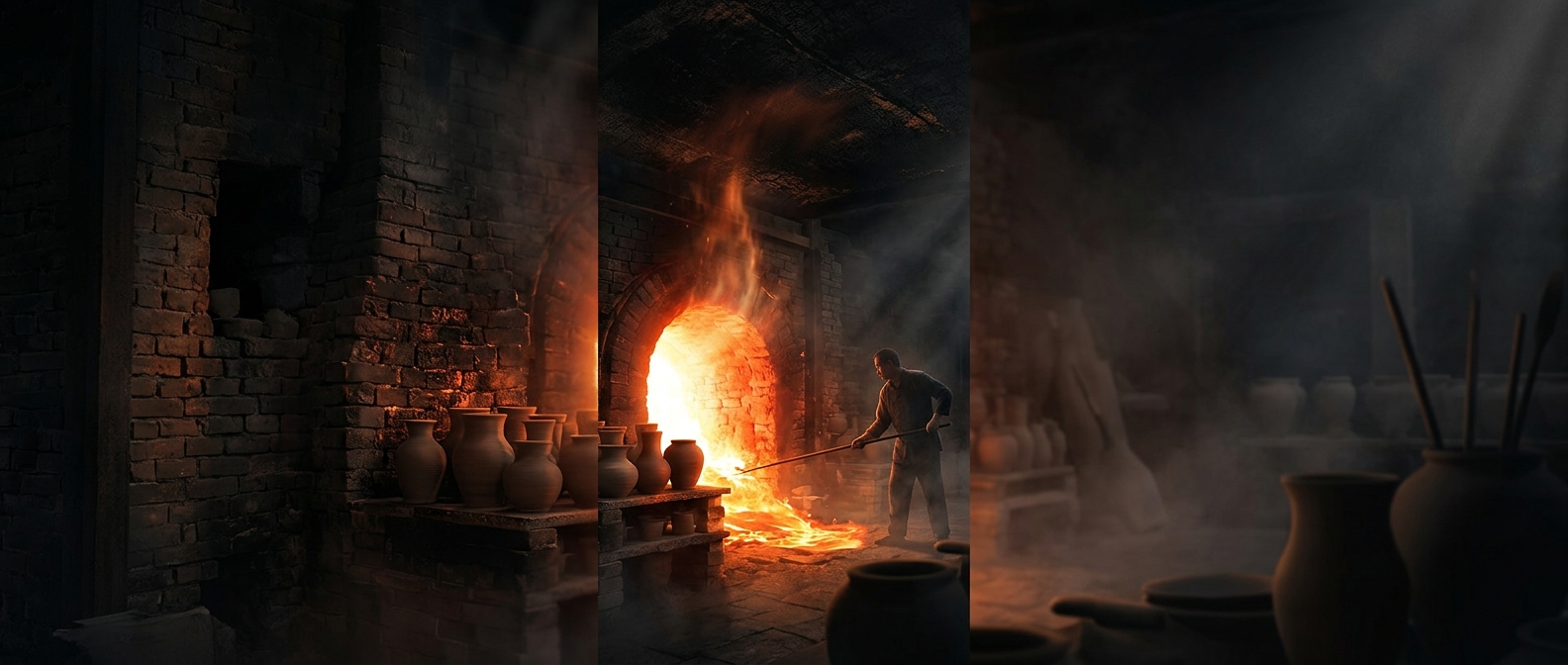
Why porcelain needed such intense heat
Porcelain is not simply clay hardened in a fire. Its ingredients had to change physically: at high temperatures, part of the ceramic body softens and forms a glassy material that binds the remaining particles together. This process, called vitrification, makes the fired ware dense, strong, and often translucent. If the kiln stayed too cool, the body could remain porous and weak; if heat was uneven or excessive, pieces could warp or fuse to their supports.
The kiln was part of the craft
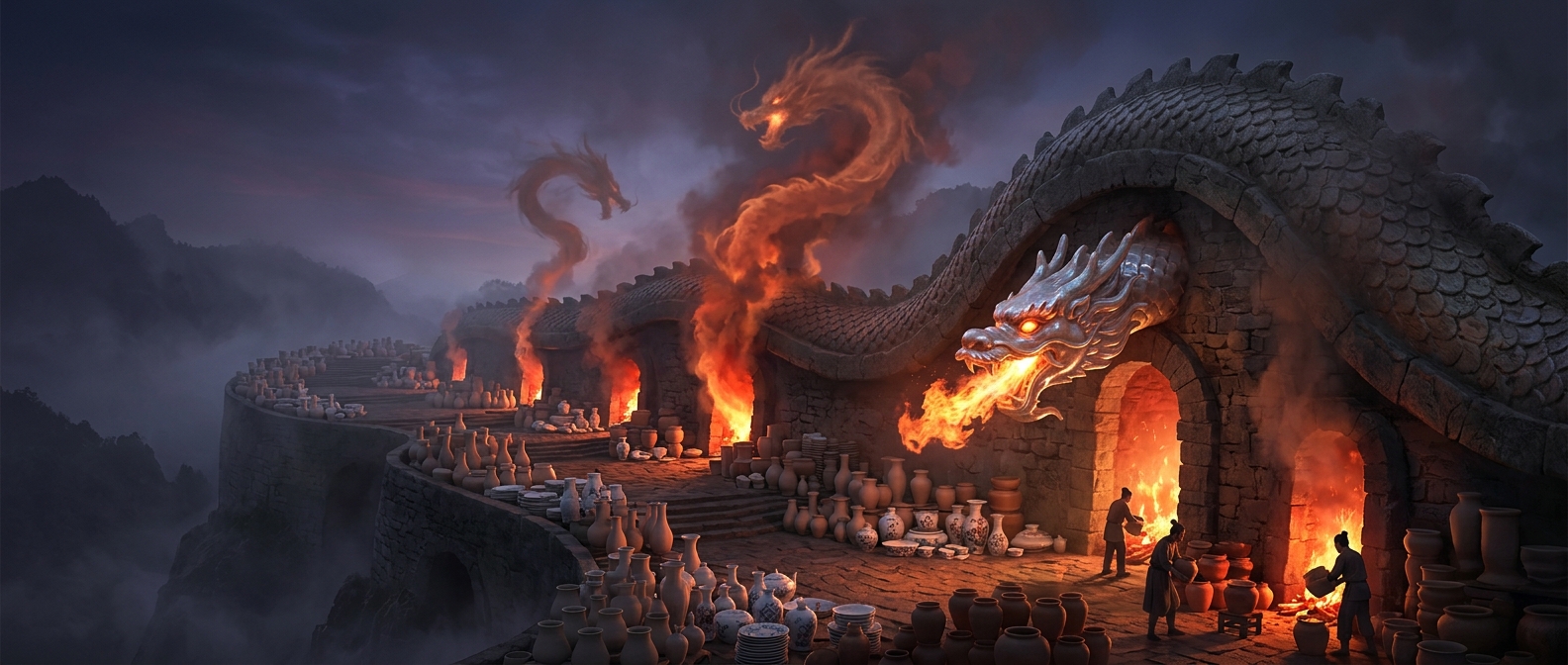
Reaching the necessary temperature was only half the challenge. A kiln had to hold heat long enough for the transformation to happen throughout each piece, while directing fuel and air so that the load did not fire unevenly. The arrangement of vessels, the path of hot gases, and the timing of firing all mattered. Small differences could separate a sound, refined vessel from one that cracked, sagged, or emerged with an unwanted surface.
The comparison with metalworking is literal but limited: a furnace at porcelain-firing temperatures can melt some common metals, though not every metal. That overlap shows what ceramic makers were managing—not just a hot flame, but a controlled high-temperature environment. Their kiln technology made it possible to turn mineral-rich clay into a material with qualities that ordinary low-fired pottery could not achieve.