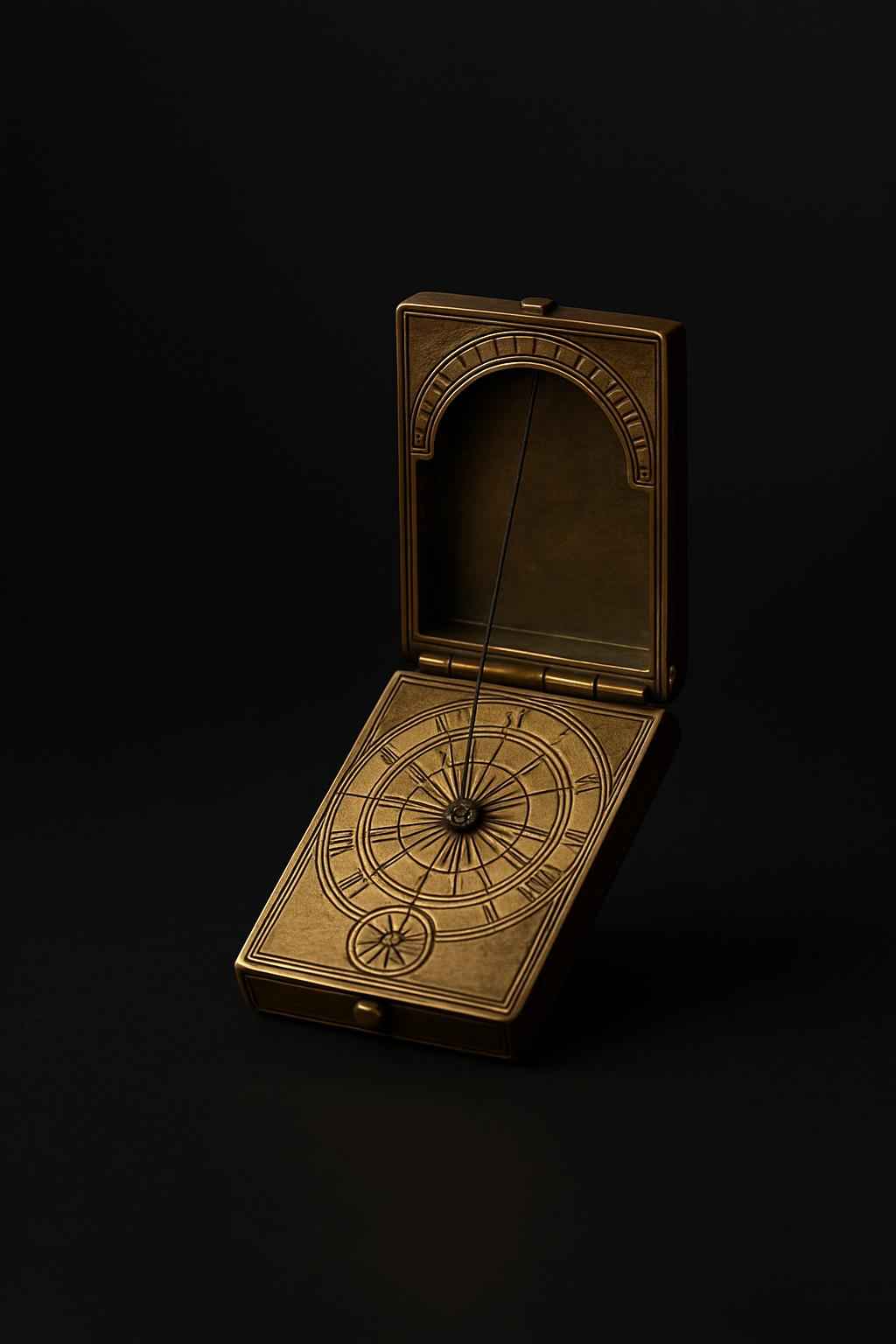
When an hour meant a share of daylight
A seasonal hour was not a fixed block of 60 minutes. It was a fraction of the daylight span: divide the time from sunrise to sunset into six equal parts, and each part counts as one daylight hour. The same division could be made for the night. Because daylight grows longer toward summer and shorter toward winter, a seasonal hour grew or shrank with it.
That made the clock’s job different from simply keeping a steady pace. It had to track a changing measure of time tied to the Sun’s daily path.
How moving a weight changed the clock
In a mechanical clock, a moving weight supplied power, while the clock’s regulating mechanism controlled how quickly its gears advanced. Shifting a regulating weight could alter that pace. A clock adjusted to seasonal hours therefore needed hands-on correction as the length of daylight changed; mechanics moved the weights to bring its rate into line with the day.
The adjustment mattered because the target itself was moving. A clock left at one speed would gradually disagree with the daylight-based hours as the season shifted. Its mechanism could keep time only by being reset to the Sun’s changing schedule.
Two different ideas of punctuality
Fixed hours make a day’s units equal, regardless of sunrise or sunset. Seasonal hours instead made the daylight span count as the same number of hours throughout the year, even though those hours had different durations. The clock did not make the day uniform; it made its divisions follow daylight. In summer, a daylight hour lasted longer than it did in winter—a practical reminder that “an hour” has not always meant 60 minutes.