From soybean milk to a set curd
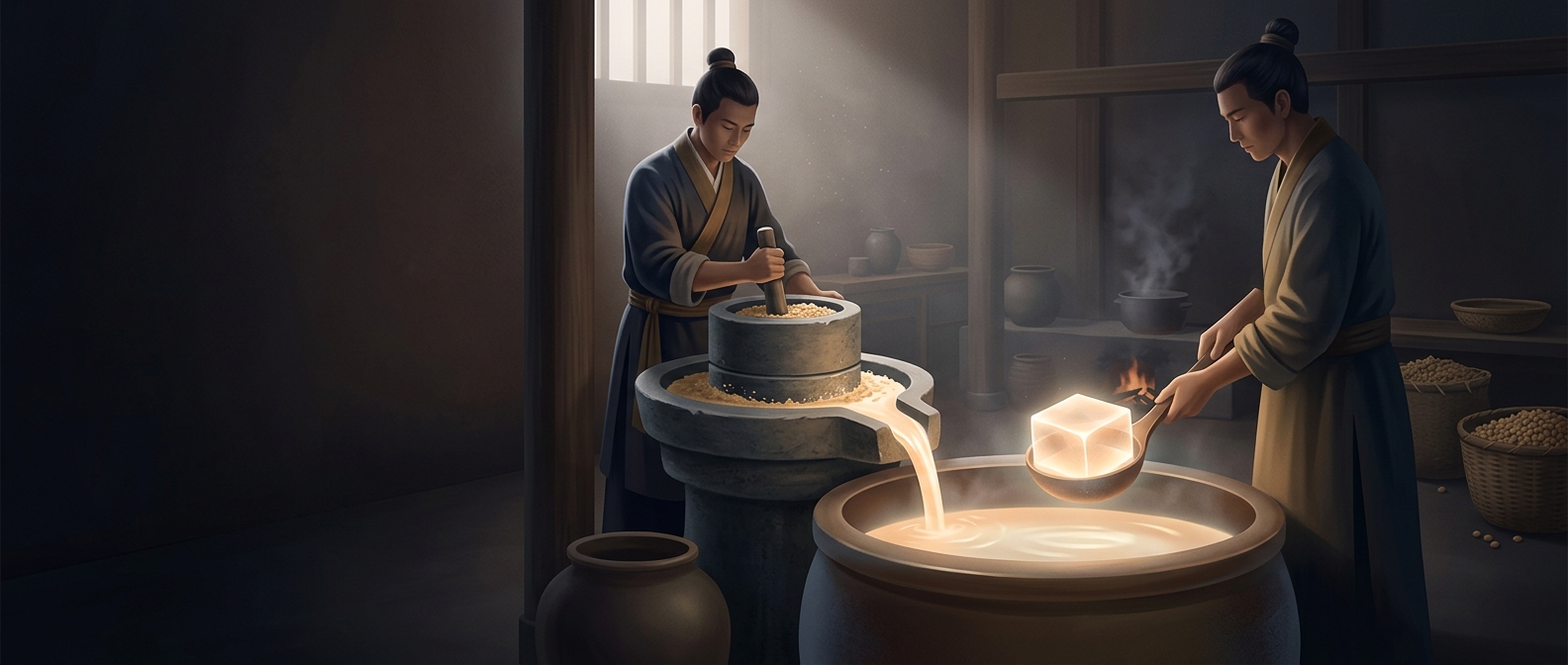
Mashing and boiling soybeans does more than soften them: it releases proteins into the cooking liquid. When a coagulant—a substance that makes dissolved proteins gather together—is added, those proteins form soft curds and separate from the thinner liquid. Draining and pressing the curds turns them into a block; the amount of pressure helps determine whether the tofu stays tender or becomes firmer.
A new form of an ancient crop
Tofu’s significance was not simply that it used soybeans, but that it made their protein-rich contents easy to shape and serve in a different way. Instead of eating the beans whole, cooks could turn them into a mild, soft food that took on flavors from other ingredients and worked in soups, stews, and other dishes. The transformation made soybean processing part of the cooking itself: the liquid was not just a byproduct, but the starting point for another food.
The result is a useful example of how a change in technique can widen the possibilities of a familiar crop. By separating, gathering, and shaping soybean proteins, traditional processing created a food with a texture and role distinct from the bean it came from.