A closer look
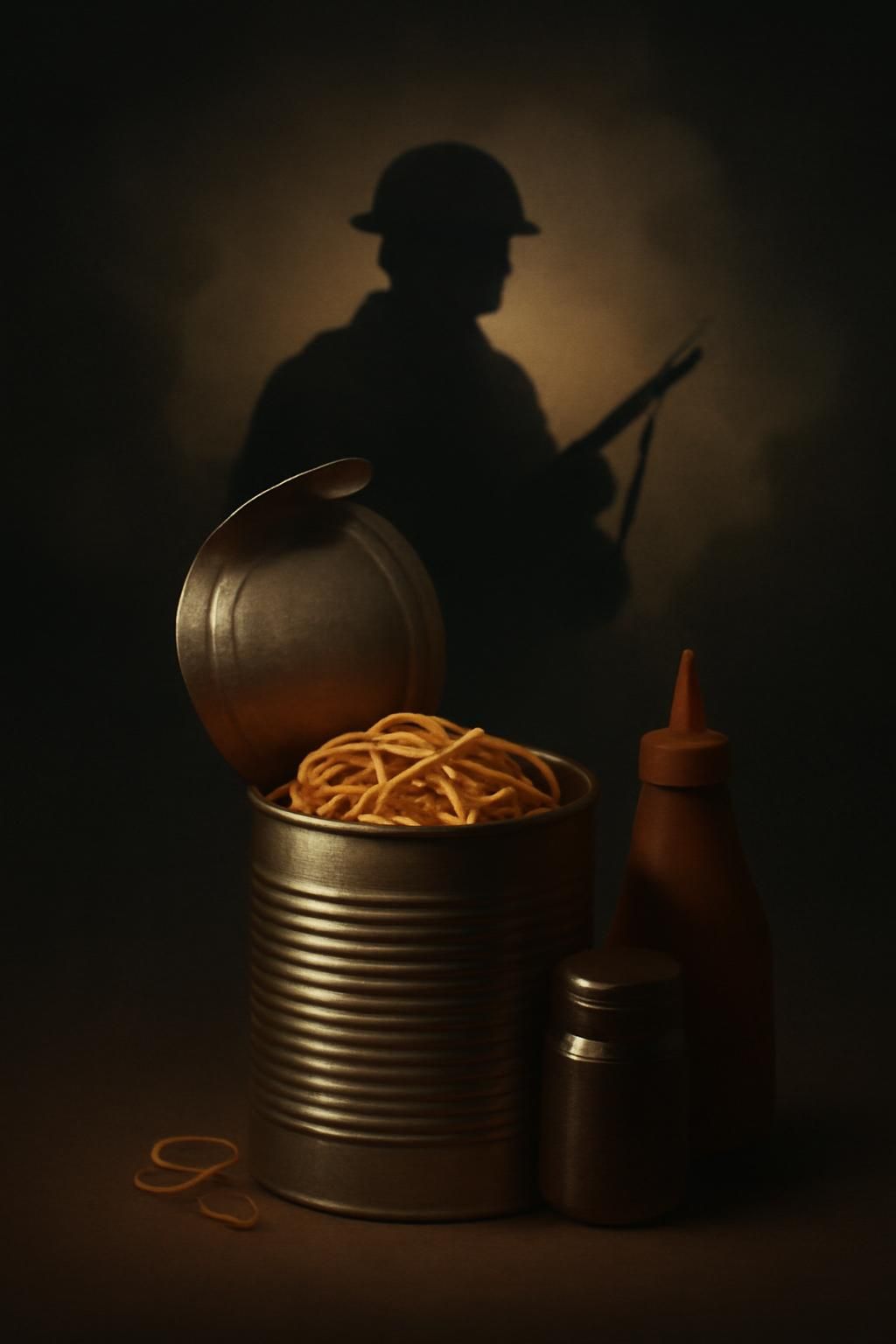
Next time you tear open an instant noodle pack or squeeze ketchup on fries, you're tasting the aftershocks of war and scarcity. Many everyday foods were born from desperate attempts to feed armies or survive blockades. Canned food emerged because Napoleon needed a way to keep soldiers alive on long campaigns. Instant coffee, powdered eggs, margarine, and many processed meats spread during world wars when fresh ingredients were rare. Even the classic American school lunch carton of milk and fortified cereals ties back to military nutrition research and concerns about underfed recruits. These survival foods later morphed into 'convenience' products marketed for busy families. We think we eat them by choice, but their popularity was shaped by factories designed for conflict. The supermarket aisle is less a temple of abundance than a museum of what it takes to keep humans alive when everything falls apart.