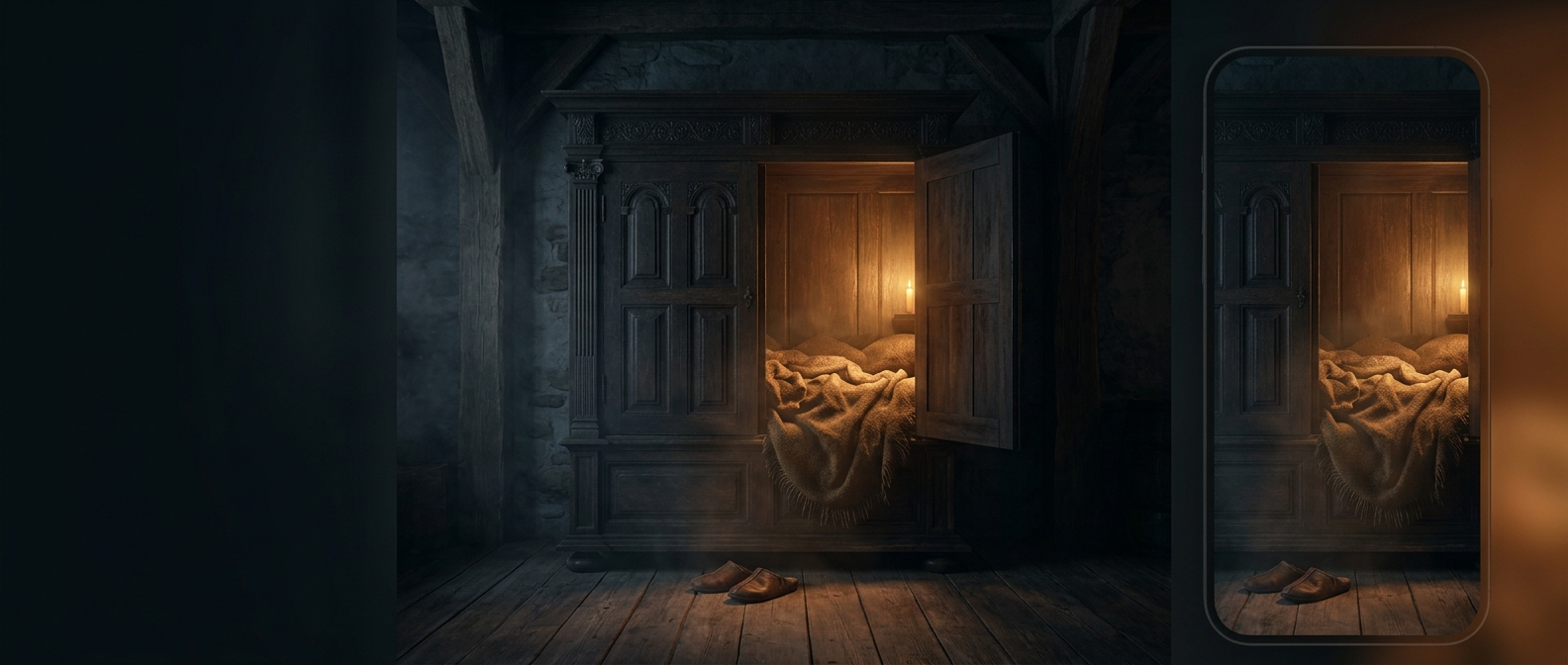
A bed built like a small room
In a cold house, the bed could be more than a place to lie down. Enclosed wooden beds—sometimes called box beds—surrounded sleepers with a frame and doors or panels. The enclosure reduced drafts and kept the sleepers’ warmth close, rather than letting it disperse into a large, chilly room.
That mattered when a household could not keep every room warm through the night. Instead of heating the whole space, people concentrated the warmth their bodies produced in a smaller area. Sharing the bed also meant several people contributed heat to that enclosed space.
Warmth came with a tradeoff
The same enclosure that blocked cold air also limited fresh air. With the doors shut, moisture and the air people exhaled accumulated around the sleepers. The bed could feel snug, but its air was less easily refreshed than air in an open bed.
These beds were practical responses to cold rooms and scarce heat, not simply unusual furniture. Their design made the sleeping area easier to keep warm while turning the bed into a close, shared space—one that had to balance protection from drafts against ventilation.