A tunnel that lets gravity do the work
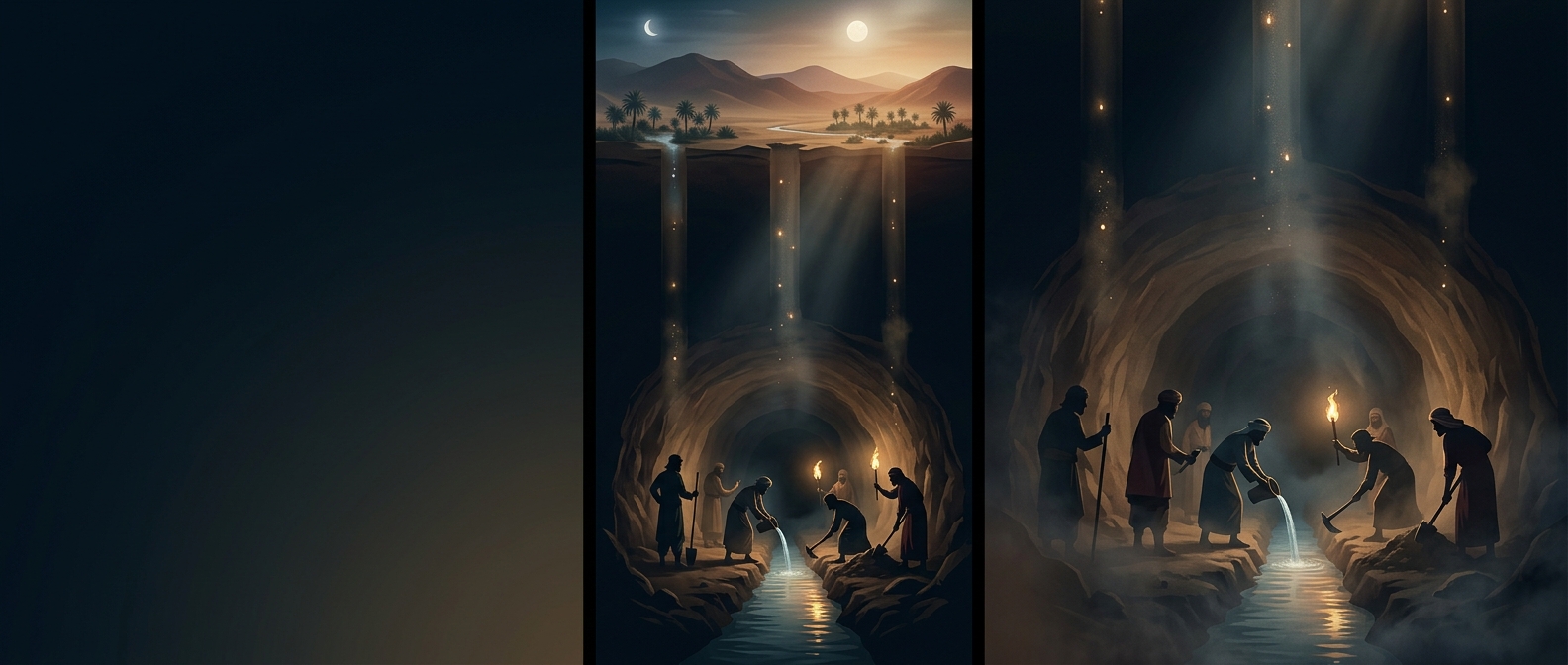
A qanat begins where groundwater collects near the foot of a mountain. Builders dug a gently descending tunnel from that source toward fields or a settlement below. Once the tunnel reached the water-bearing layer, gravity carried water along its floor—no pump or fuel required.
That steady slope was the engineering challenge. Make the tunnel too flat and water could stall; make it too steep and fast-moving water could erode the channel. Surveyors had to establish the route and grade across long distances, often through rock and dry soil.
Vertical shafts made construction possible
Workers excavated a line of vertical shafts along the planned route. These openings brought in air and provided access to remove spoil as the tunnel advanced. When the qanat was finished, the shafts also let crews inspect and clear blockages. From the surface, their evenly spaced openings can look like a dotted line across the landscape.
The tunnel’s underground path also reduced evaporation compared with an exposed canal. Water could travel from mountain foothills to farms with less loss to the hot, dry air.
A system built around shared maintenance
A qanat could serve several fields or a whole settlement, so keeping it flowing required coordination. Sediment, collapses, or damage to the channel could interrupt water for everyone downstream. Communities therefore had to maintain the shafts and tunnel, not just build them once.
The result was more than hidden plumbing: it was a durable way to bring groundwater to places where rain and surface streams could not reliably support farming. On the plain above, a dry line of shaft mounds could mark the route of the water moving out of sight below.