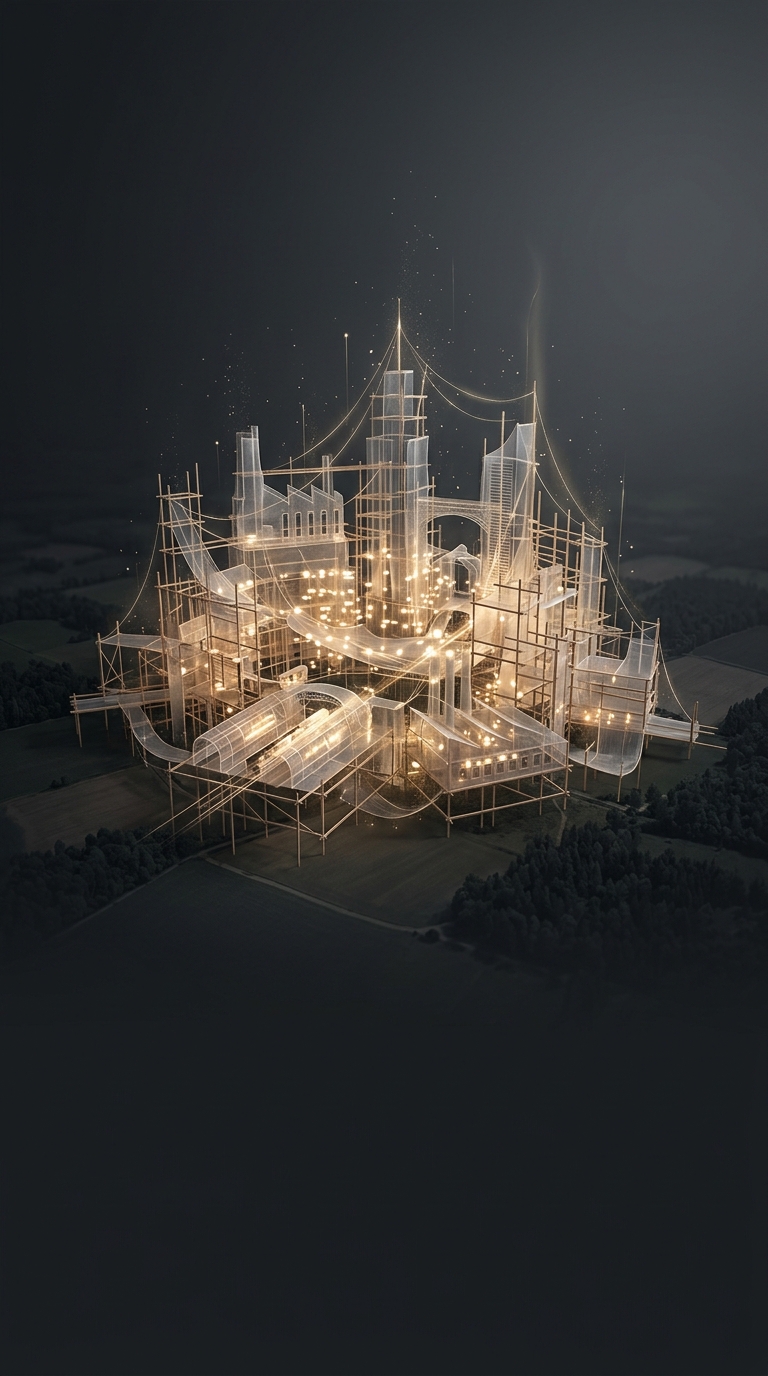
How a false city could misdirect a bomber
Before reliable electronic navigation, a crew flying at night had to make sense of what it could see below. The layout and lights of a city could serve as landmarks: a railway station, industrial buildings, and illuminated streets helped distinguish one area from another. A decoy did not need to fool someone standing on the ground. It needed to look convincing from the air, briefly and at a distance.
That shaped the project’s design. Rather than reproduce Paris in full, builders planned recognizable features on the outskirts of the real city. Wooden structures could suggest stations and factories, while translucent canvas allowed light to show through in patterns meant to resemble streets. The deception depended on the overall arrangement of shapes and lights, not on every building being a realistic replica.
A difficult illusion to finish
A nighttime decoy had to be visible enough to attract attention but plausible enough not to give itself away. Its lights and structures also had to be positioned so that an approaching crew might mistake them for the cues it expected to find near Paris. That made the project an exercise in coordinating construction, lighting, and location—not simply putting up a few false buildings.
The plan was unfinished when the war ended, so it was dismantled without being tested against an actual bombing raid. Its intended effect remains hypothetical: there was no wartime result to show whether German crews would have mistaken the imitation for the city. The project’s lasting significance is more modest but striking: in an age when pilots navigated by what they could recognize from above, a carefully arranged landscape could itself become a weapon of deception.