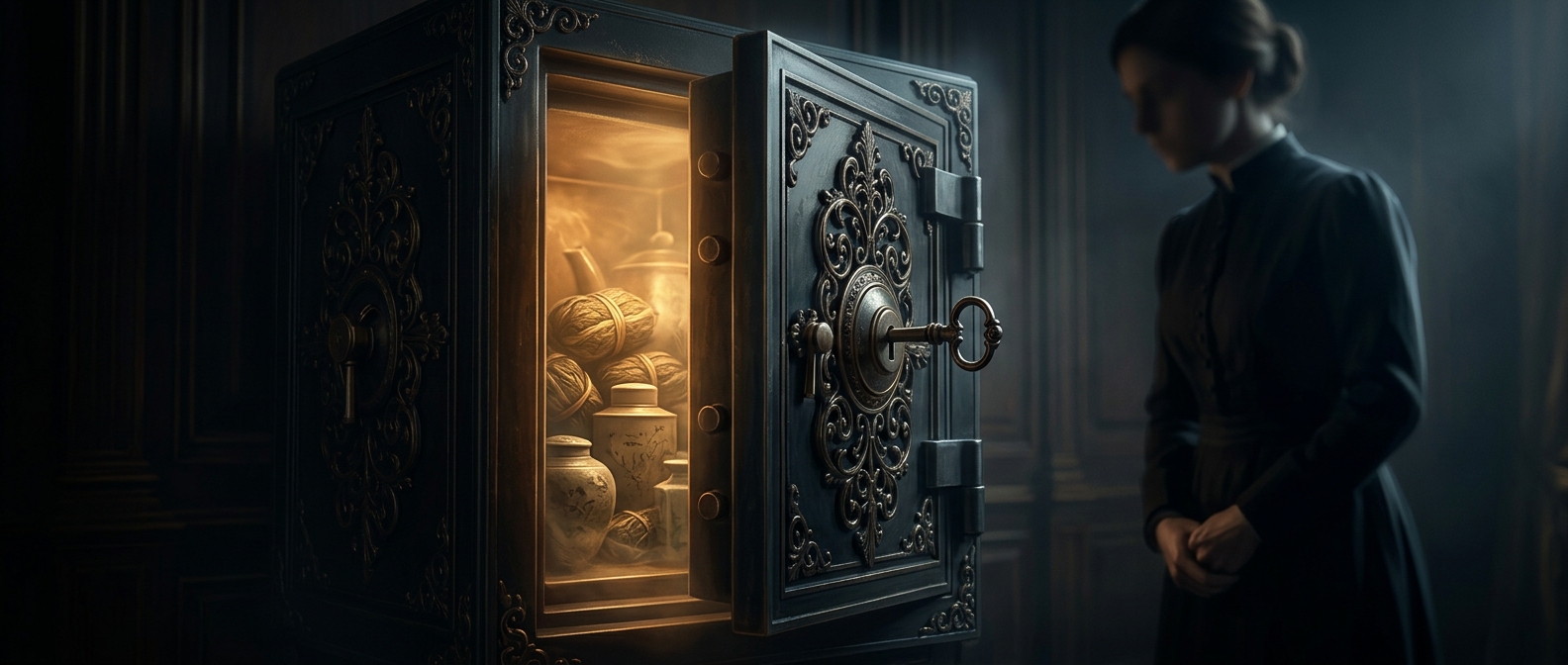
A cupboard staple with the value of a luxury
For many households, tea was not an everyday ingredient to leave within anyone’s reach. In Britain, imported tea remained expensive for much of the 18th and early 19th centuries, in part because it crossed long-distance trade routes and was heavily taxed. A small quantity could represent a meaningful household expense, so losing it a pinch at a time mattered.
The caddy made access deliberate
A tea caddy was a purpose-built container, often made of wood or metal and fitted with a lock. The lock did more than keep the leaves fresh: it made taking tea a controlled act. The person holding the key could decide when it was opened and how much was measured out, rather than trusting an open jar on a shared shelf.
That arrangement reflected the structure of a well-to-do household, where servants might handle food and drink but did not necessarily have unrestricted access to costly provisions. Securing tea helped prevent casual use or theft—and made the owner’s authority over household supplies visible in an ordinary daily routine.
Security became part of serving tea
Tea’s expense also shaped how it was presented. Keeping it in a carefully made, lockable container treated the leaves as something to protect, not merely store. When tea was prepared, the caddy could be brought out, unlocked, and put away again. A familiar cup of tea thus began with a small act of household accounting: control the leaves, and control the cost of the next pot.