From hard rye to a fermenting drink
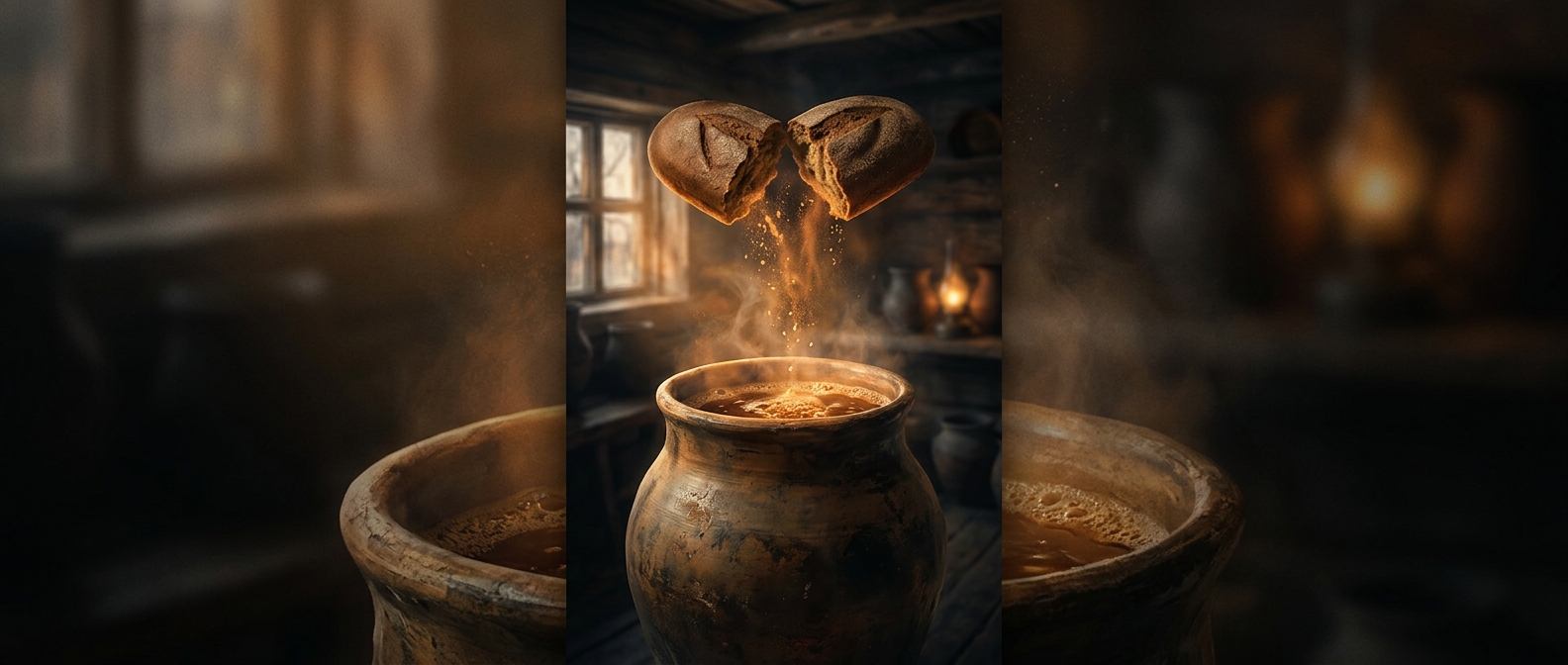
Rye bread does not dissolve into kvass; soaking it draws out flavor and some of its available sugars into the water. In traditional preparations, the bread might first be dried or toasted, adding a deeper, roasted taste. The liquid is then left to ferment, sometimes with a little added sugar or yeast to get the process moving.
Fermentation is the work of microorganisms already present or introduced during preparation. Yeasts turn sugars into alcohol and carbon dioxide, while bacteria can contribute a gentle tartness. The result is usually lightly fizzy and only mildly alcoholic, though strength varies with the recipe and how long it ferments.
A practical use for what the kitchen already had
The method made use of bread that had become too hard to enjoy as a meal. Rather than treating it as waste, households could extract its flavor and turn it into a drink. That is a small but telling example of everyday food economy: a staple grain could serve twice, first as bread and then as the base for fermentation.
Kvass also suited home production. Its ingredients were familiar, and the process required no specialized equipment beyond a vessel for soaking and fermenting. Recipes could differ from one household to another, with variations in sweetness, sourness, and flavor. The bread’s second life was therefore not just a way to salvage leftovers; it helped make kvass a flexible, locally made drink.